Cavill: Micronesia poised for cruise-based tourism
BY SKYLER OBISPO
Journal Staff
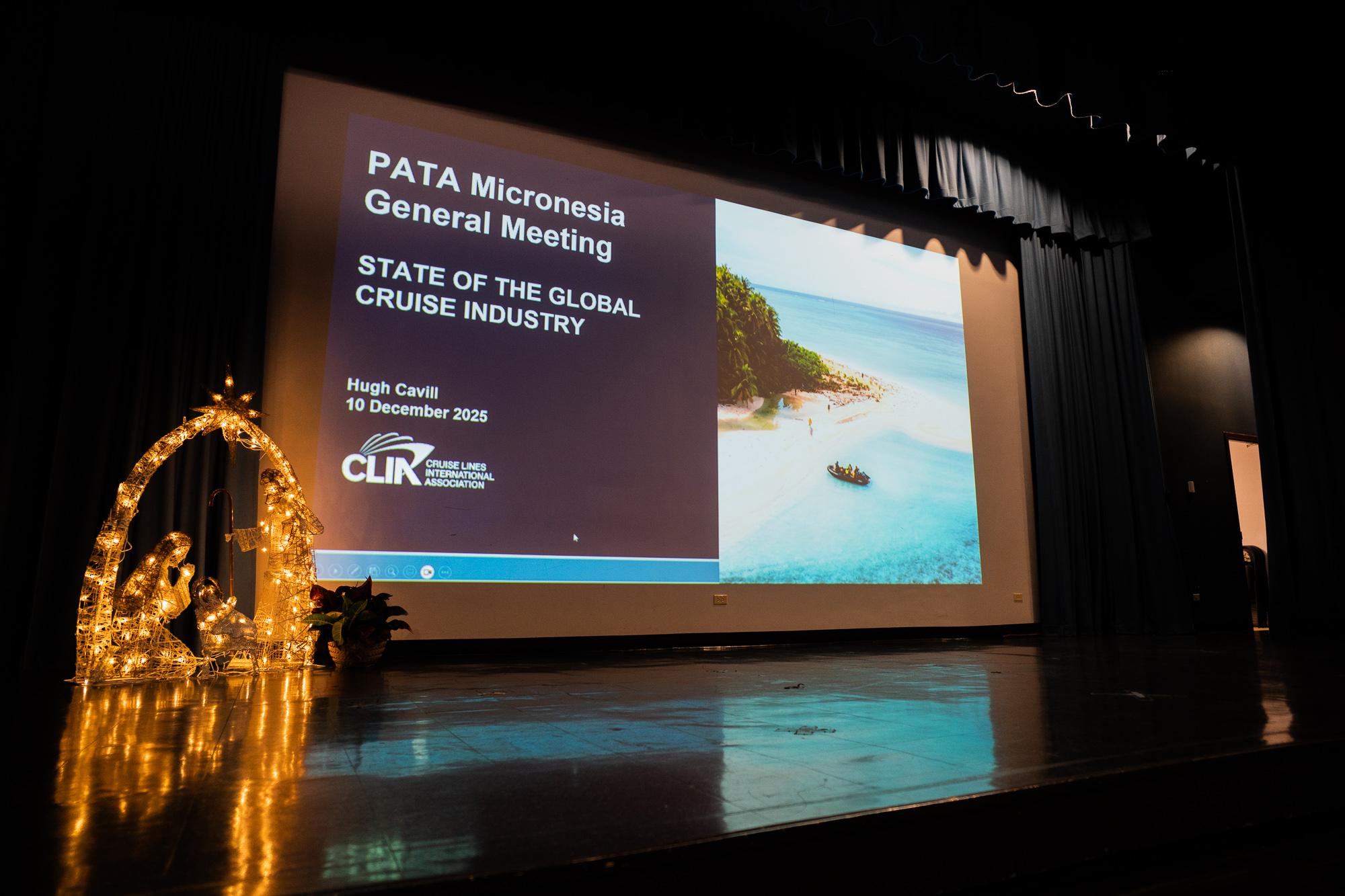
Hugh Cavill, director of government affairs for the Cruise Lines International Association, said Micronesia is positioned well for cruise-based tourism.
Cavill spoke virtually on Dec. 10 during day three of the Pacific Asia Travel Association Micronesia Chapter’s third tri-annual general membership meeting.
Cavill spoke virtually at the Pacific Asia Travel Association Micronesia Chapter’s third tri-annual conference on Dec. 10. Photo by Skyler Obispo
CLIA represents about 95% of global cruise line capacity — from large companies such as Carnival Cruise Line to smaller operators with one or two ships. The association is among the leading global industry groups advising member cruise lines on safe, responsible, and successful operations.
Globally, the industry contributes about $168 million annually in economic output and creates 1.6 million jobs.
It represents about 2% of global tourism, but is expected to grow within the next three years. By the end of 2025, CLIA expects total passengers on cruises to number 37.7 million and by 2028, that number will grow to about 42 million.
“We’re seeing a huge acceleration since the pandemic — in fact, outstripping a lot of other types of tourism, particularly airlines,” Cavill said.
Cruise itineraries are typically planned two to three years in advance. Cavill said this gives destinations such as Micronesia the advantage of predictable, managed, and scalable visitor arrivals, tailored to local capacity.
He said demand for cruise travel is increasingly driven by the desire for authentic cultural and environmental experiences — something Micronesia can offer.
“Micronesia has its reefs, roots, traditions, history, and unspoiled landscapes,” he said. “It’s exactly the type of destination that the market is looking for.”
CLIA estimates that more than $70 billion has been invested into 80 new ships on order through 2036 across the large, midsize, and small-ship sectors. Cavill said the region will likely see more small vessels, but that investments in cruise-ready infrastructure would help position Micronesia for long-term visitation.
However, he said developing a cruise industry in the region requires a “unified Micronesia approach.” Collaboration among regional governments, he said, would signal to cruise operators that Micronesia is open for business and capable of managing the industry responsibly.
Cavill said the economic benefits of cruise arrivals extend broadly — touching tourism operators, food vendors, cultural performers, and others — strengthening the visitor experience.
He also noted that advance planning for cruise arrivals allows local communities to better manage cultural sites and ecological resources in areas that require preservation. CLIA, he said, is prepared to work with local governments to support those efforts.mbj
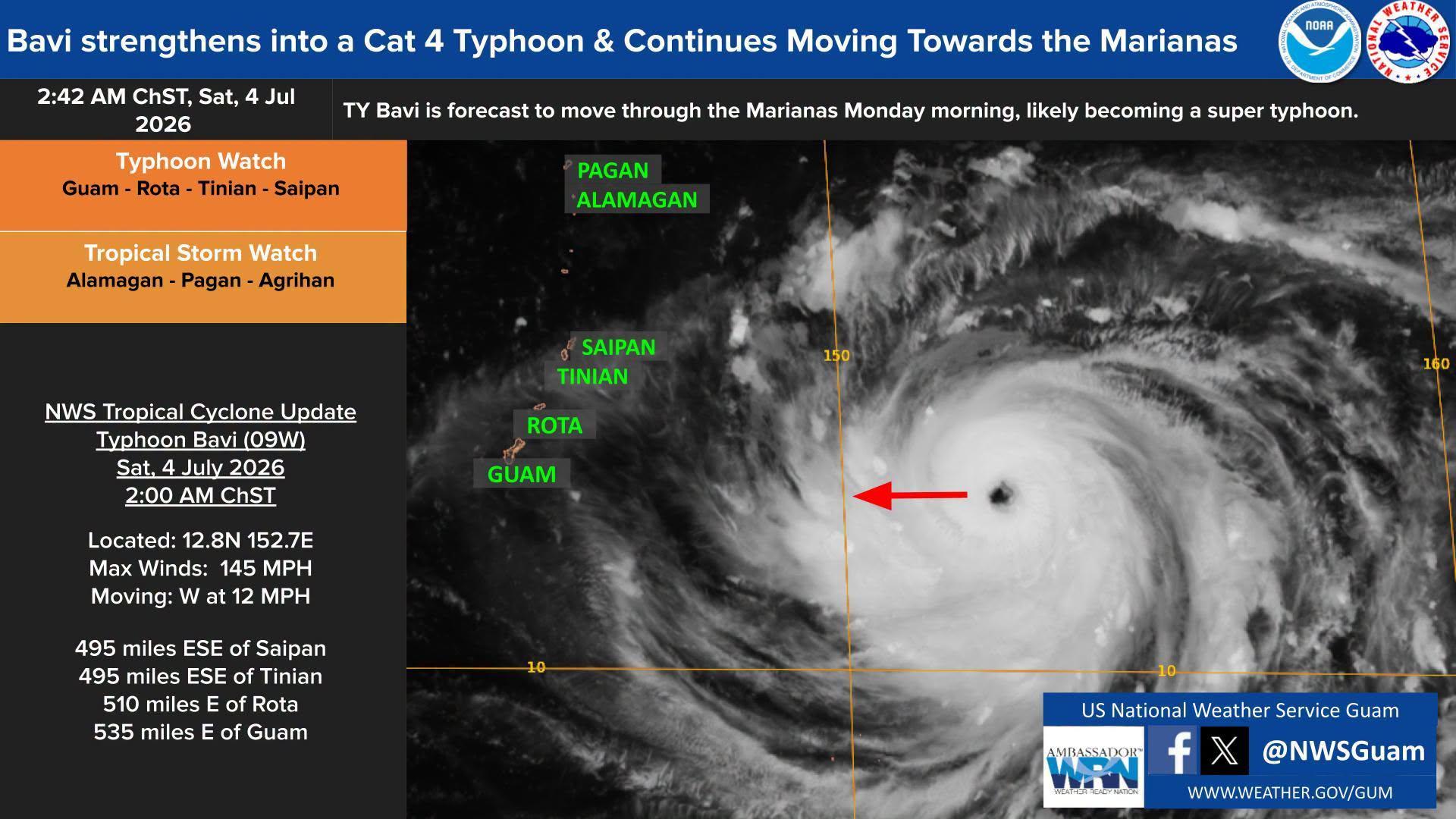
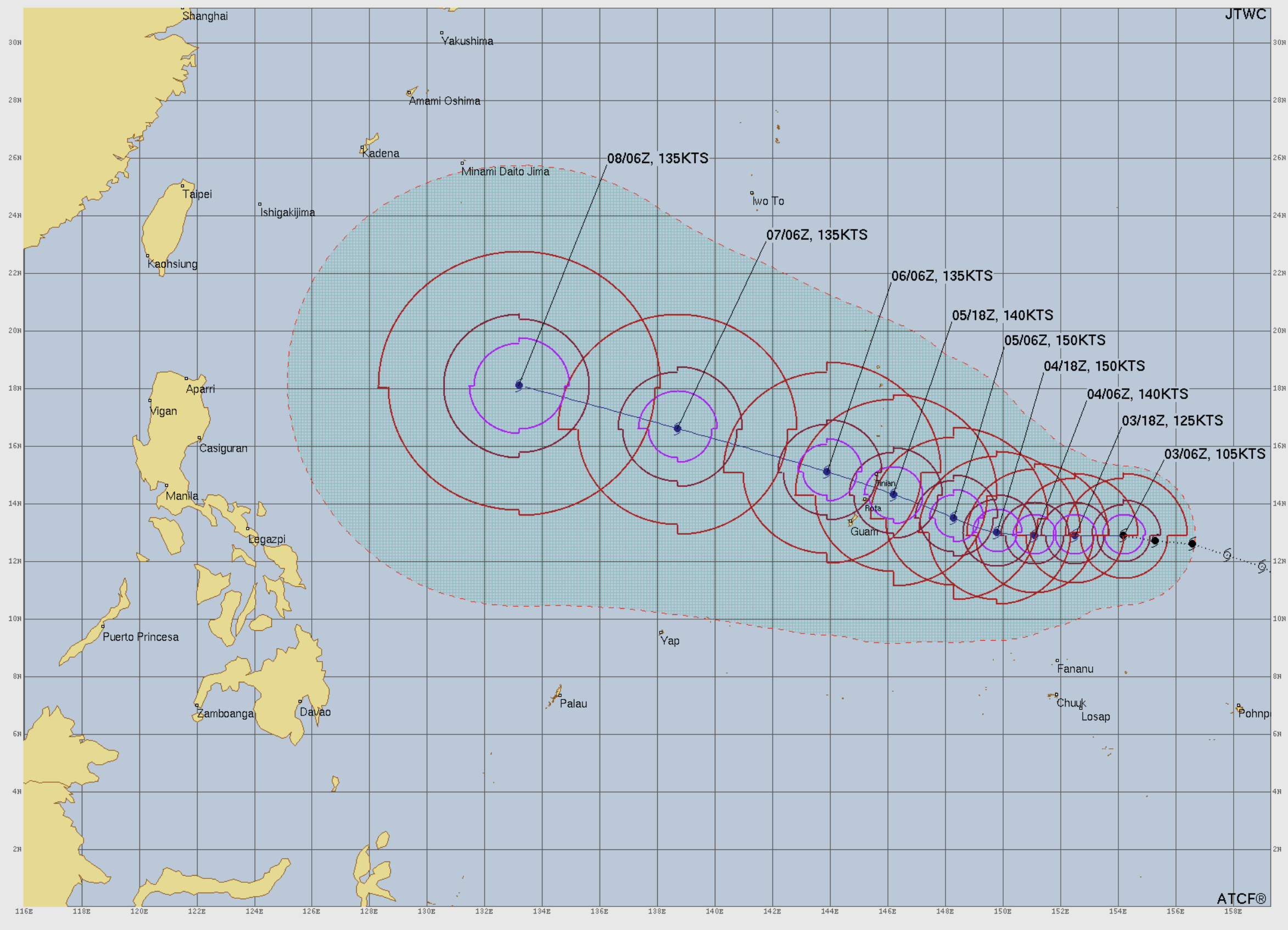
With Super Typhoon Bavi now packing maximum sustained winds of 160 mph and forecast to strengthen further as it moves toward the Marianas, emergency officials are urging businesses and residents to treat this weekend as their critical window to prepare for potentially damaging winds.
Guam and the Northern Mariana Islands are now in Condition of Readiness 3 as Typhoon Bavi approaches, with both governors urging residents and businesses to use the remaining hours of fair weather to prepare.
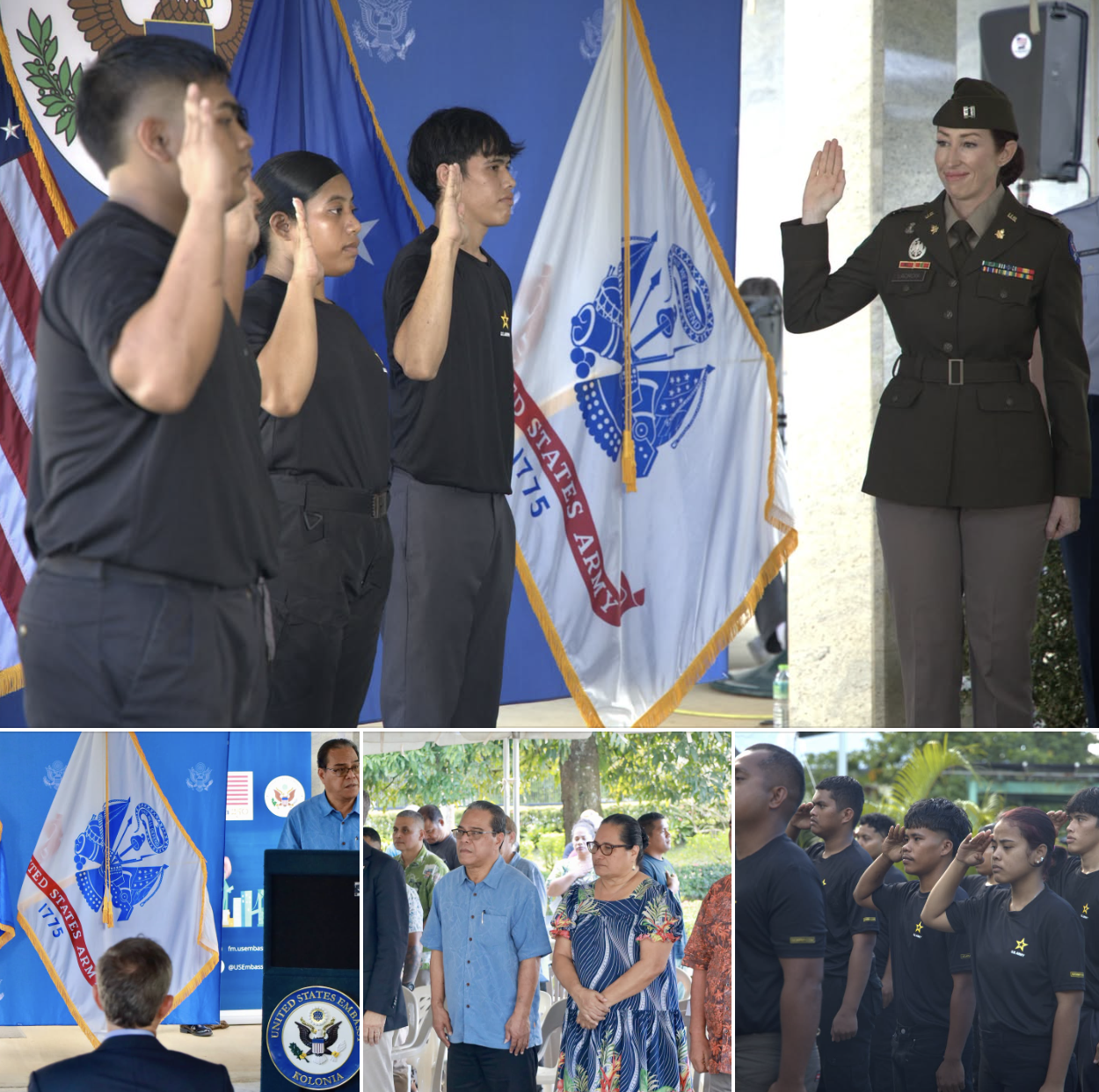
President Wesley W. Simina congratulated 17 young men and women from across the Federated States of Micronesia during an Enlistment Ceremony held at the U.S. Embassy compound on June 17.