













BY DANIEL M. PEREZ
Journal Staff
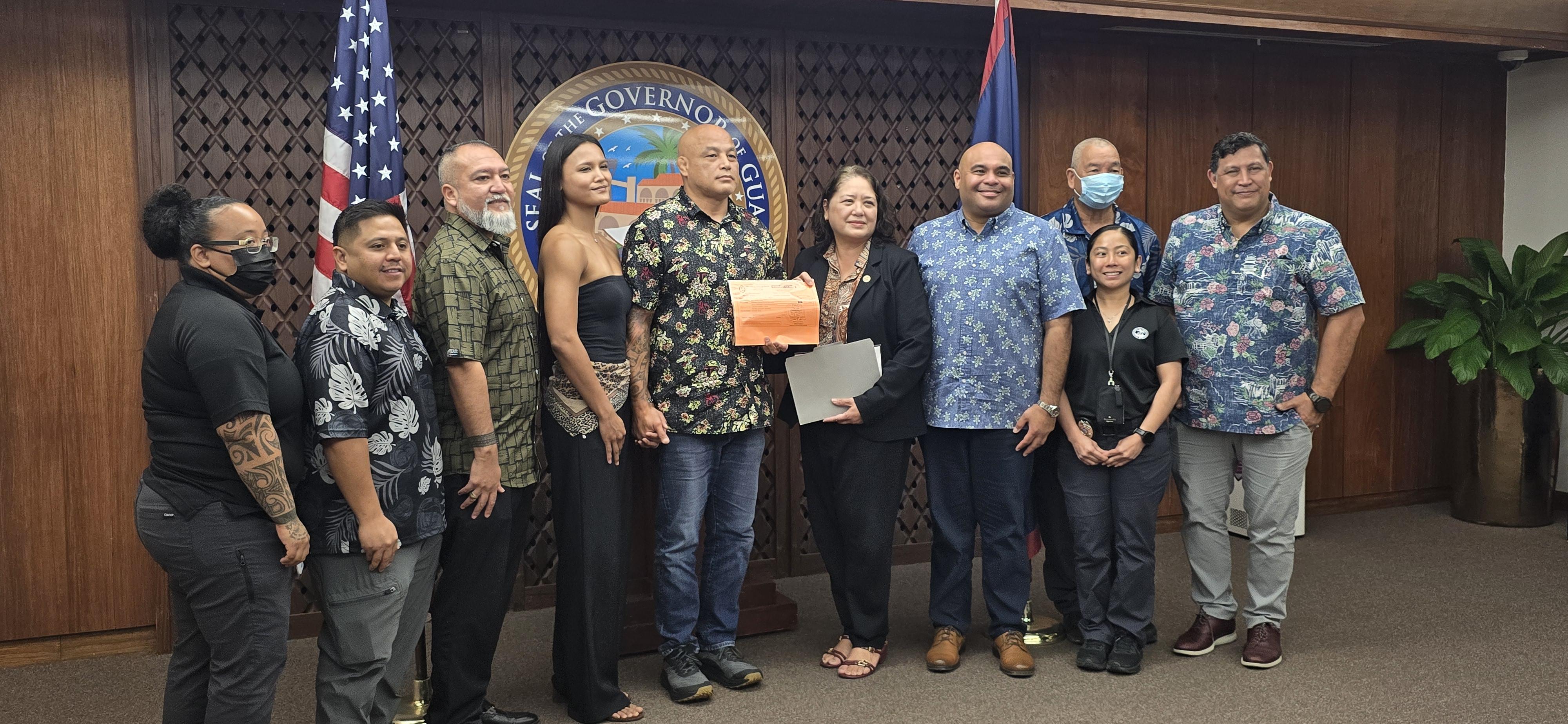
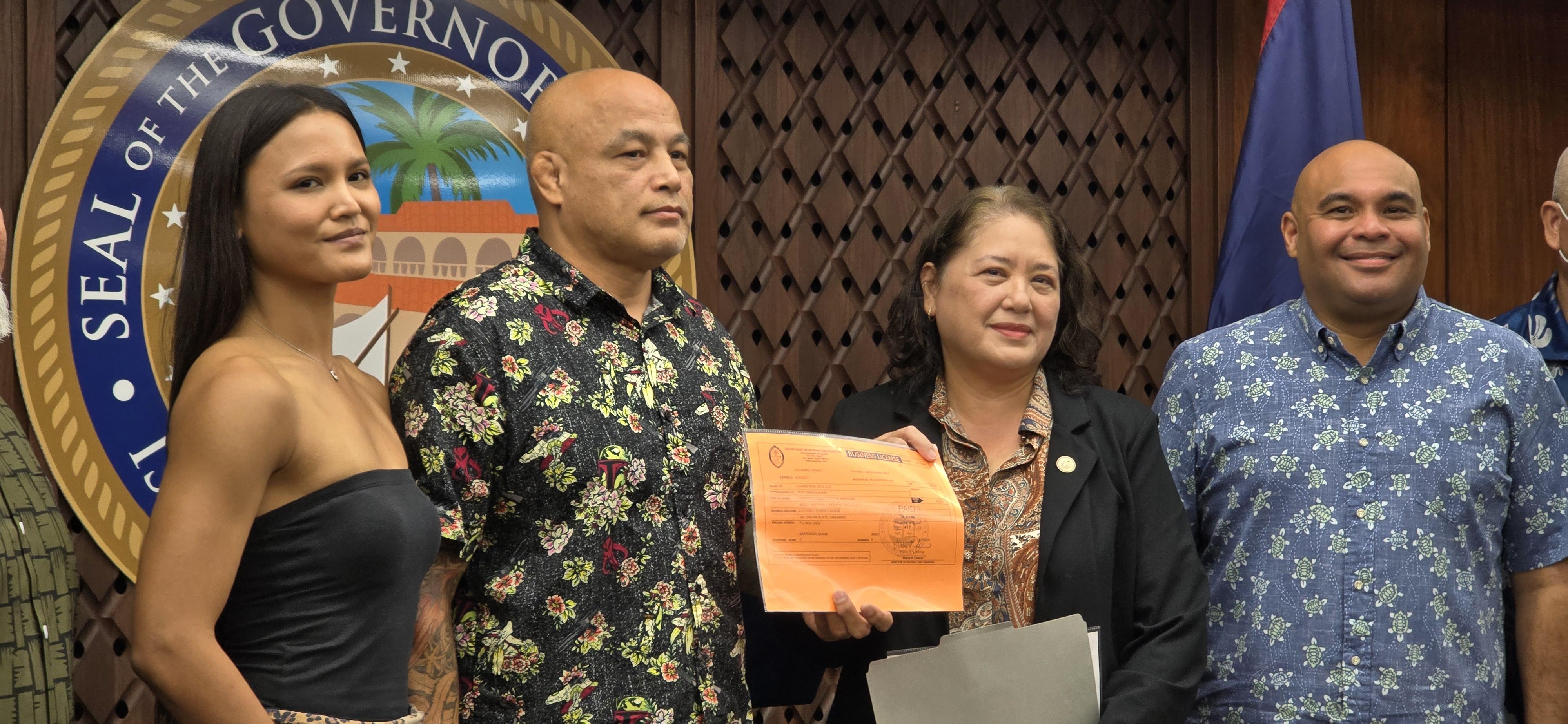
The commercial adult-use cannabis industry on Guam has officially launched following the issuance of the island's first recreational cannabis cultivation license to local grower Stephen Roberto, operator for Deep Green Guam of Guam Real Deal, LLC.
The license presentation, held at the Ricardo J. Bordallo Governor’s Complex in Adelup, follows years of regulatory drafting under the Guam Cannabis Industry Act of 2019 also known as Public Law 35-5. The legislation established a structured framework designed to transition the illicit market into a locally regulated commercial sector.
Former senator Clynton Ridgell, who originally introduced the underlying legislation, opened the proceedings by recognizing the milestone for the local business community.
Lt. Gov. Joshua F. Tenorio emphasized that the implementation represents a significant policy shift for the island, moving public resources away from cannabis enforcement toward more critical substance abuse challenges. "For such a long time, efforts were spent on enforcing cannabis laws when they should have been spent really addressing the real ills," Tenorio said, identifying methamphetamine as the island's primary substance abuse problem.
Tenorio added that a regulated commercial market ensures safe access for consumers seeking therapeutic relief. He said that the local government intentionally adopted a risk-averse regulatory approach to protect homegrown enterprises from being immediately overshadowed by well-capitalized off-island corporations. "We were very fearful that we would have big players come in to get this market, when we know there are local people with the know-how and the determination to get things done," Tenorio said. "This is an example of how local business can flourish and be pioneers on our own island."
Department of Revenue and Taxation director Marie Lizama presented the final permit alongside members of the agency's regulatory team. Lizama acknowledged the steep learning curve involved in building the new industry framework from scratch and credited the interagency cooperation of the Cannabis Control Board and DRT’s compliance branch.
To achieve full compliance and secure the final business license, Roberto disclosed that Guam Real Deal invested nearly $4 million. The capital was primarily deployed to meet stringent engineering, water, and wastewater infrastructure mandates. "We looked at this like an elephant and the best way to eat an elephant is one bite at a time," Roberto said. "We've just been eating it one bite at a time, dealing with the moment-to-moment reality of getting into business with the government."
Under Guam's current regulatory framework, commercial operators must successfully clear a multi-tiered permitting process to secure a cannabis identification card, an establishment license, and an operating permit. The law mandates separate licenses for cultivators, manufacturers, testing laboratories and retailers. To encourage market diversity and prevent vertical monopolies, local residents are restricted to owning only one type of cannabis business classification.
Furthermore, all licensed operations must integrate into a government-mandated seed-to-sale electronic tracking system. With the cultivation permit finalized, Guam Real Deal is moving directly into biomass production and tracking integration.
However, Roberto noted that a fully operational consumer market will take time to materialize as downstream businesses navigate the same compliance pathways. "The retailers are going to have to go through the same processes that we do," Roberto said. "They need Cannabis Control Board approval, they need to work with the compliance branch, and they need to get all the necessary clearances from the other line agencies... It’s going to create a domino effect of education, touching security, technology, and healthcare."
Roberto expressed optimism regarding the long-term economic impacts of the industry, noting that legal compliance will safeguard the market while generating vital public funding. "Hopefully, that tax money goes back into our schools, feeding our children, creating jobs, and generating tax revenue," he said. mbj
Journal Staff
The commercial adult-use cannabis industry on Guam has officially launched following the issuance of the island's first recreational cannabis cultivation license to local grower Stephen Roberto, operator for Deep Green Guam of Guam Real Deal, LLC.
The license presentation, held at the Ricardo J. Bordallo Governor’s Complex in Adelup, follows years of regulatory drafting under the Guam Cannabis Industry Act of 2019 also known as Public Law 35-5. The legislation established a structured framework designed to transition the illicit market into a locally regulated commercial sector.
Former senator Clynton Ridgell, who originally introduced the underlying legislation, opened the proceedings by recognizing the milestone for the local business community.
Lt. Gov. Joshua F. Tenorio emphasized that the implementation represents a significant policy shift for the island, moving public resources away from cannabis enforcement toward more critical substance abuse challenges. "For such a long time, efforts were spent on enforcing cannabis laws when they should have been spent really addressing the real ills," Tenorio said, identifying methamphetamine as the island's primary substance abuse problem.
Tenorio added that a regulated commercial market ensures safe access for consumers seeking therapeutic relief. He said that the local government intentionally adopted a risk-averse regulatory approach to protect homegrown enterprises from being immediately overshadowed by well-capitalized off-island corporations. "We were very fearful that we would have big players come in to get this market, when we know there are local people with the know-how and the determination to get things done," Tenorio said. "This is an example of how local business can flourish and be pioneers on our own island."
Department of Revenue and Taxation director Marie Lizama presented the final permit alongside members of the agency's regulatory team. Lizama acknowledged the steep learning curve involved in building the new industry framework from scratch and credited the interagency cooperation of the Cannabis Control Board and DRT’s compliance branch.
To achieve full compliance and secure the final business license, Roberto disclosed that Guam Real Deal invested nearly $4 million. The capital was primarily deployed to meet stringent engineering, water, and wastewater infrastructure mandates. "We looked at this like an elephant and the best way to eat an elephant is one bite at a time," Roberto said. "We've just been eating it one bite at a time, dealing with the moment-to-moment reality of getting into business with the government."
Under Guam's current regulatory framework, commercial operators must successfully clear a multi-tiered permitting process to secure a cannabis identification card, an establishment license, and an operating permit. The law mandates separate licenses for cultivators, manufacturers, testing laboratories and retailers. To encourage market diversity and prevent vertical monopolies, local residents are restricted to owning only one type of cannabis business classification.
Furthermore, all licensed operations must integrate into a government-mandated seed-to-sale electronic tracking system. With the cultivation permit finalized, Guam Real Deal is moving directly into biomass production and tracking integration.
However, Roberto noted that a fully operational consumer market will take time to materialize as downstream businesses navigate the same compliance pathways. "The retailers are going to have to go through the same processes that we do," Roberto said. "They need Cannabis Control Board approval, they need to work with the compliance branch, and they need to get all the necessary clearances from the other line agencies... It’s going to create a domino effect of education, touching security, technology, and healthcare."
Roberto expressed optimism regarding the long-term economic impacts of the industry, noting that legal compliance will safeguard the market while generating vital public funding. "Hopefully, that tax money goes back into our schools, feeding our children, creating jobs, and generating tax revenue," he said. mbj