













BY GIFF JOHNSON
Marshall Islands Correspondent
MAJURO — With fuel prices skyrocketing in the wake of the United States and Israel’s Feb. 28 attack on Iran, Marshall Islands President Hilda C. Heine declared a “state of economic emergency” for the country on March 26.
As of April 2, Mobil Oil Micronesia-supplied gas stations had raised their prices three times, with gas at the pump up 17%, from $6.80 to $7.95 per gallon. Diesel, meanwhile, jumped nearly 40%, from $6.60 before the war started to $9.10 per gallon.
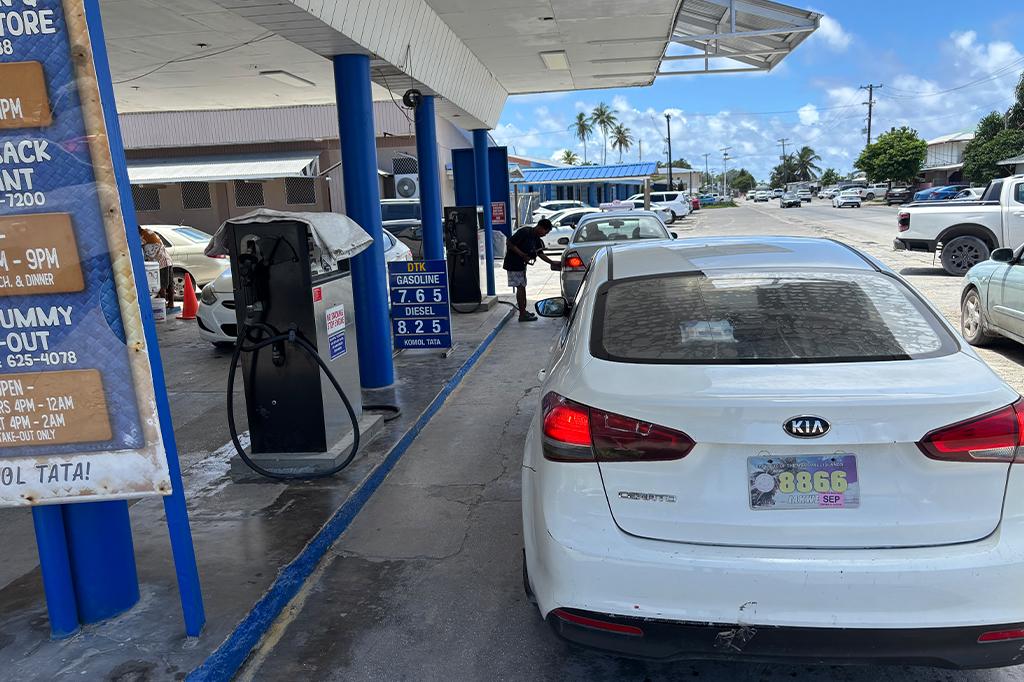
One of the first serious impacts felt by hundreds of Marshall Islanders in the nation’s capital, particularly those in lower income brackets, was the Majuro Taxi Association’s announcement of rate hikes after the second gas price increase. In the absence of any bus service, taxis serve as de facto public transportation. The bump in price from $2 to $3 per person per ride in the downtown area and from $5 to $7 for the people in the rural village of Laura to get downtown sent shockwaves through the local community where many people live paycheck to paycheck.
Much worse is anticipated for April. The government’s power utility, the Marshalls Energy Co., announced in late March its need to respond to the spike in diesel costs by increasing rates by nearly 25% in April. If it happens, it will raise power costs from a February record high of 43 cents per kWh to well over 53 cents a kWh for residential customers. Businesses are expected to be paying more than 64 cents per kWh once the new rates kick in.
Meanwhile, with more than 90% of all food imported from the United States, Australia, New Zealand and Asia, people are bracing for food prices skyrocketing as new shipments arrive on container ships in April.
The Marshall Islands cabinet endorsed the decision to declare the economic emergency at its meeting March 26.
“This action comes in response to the ongoing conflict in the Middle East, which has caused rising global fuel prices that are expected to significantly impact the cost of goods in the Marshall Islands,” the President’s Office said in a statement posted to social media. “As a nation that relies heavily on imported fuel, food, building materials, and other essential supplies, these increases pose a serious risk to the livelihoods of the people.”
The three-page executive order is effective for 90 days and does a variety of things:
The executive order assigns various tasks to different ministries, the planning office, and Marshalls Energy Co.
The government had already taken steps to put more cash into the pockets of island residents prior to the March 26 emergency declaration.
In mid-March, the Nitijela (parliament) endorsed a bill introduced by Finance Minister David Paul to exempt the first $8,320 in income from the 8% withholding tax. This will increase workers’ net take home income by more than $600 a year, Paul said.

The new law, he said, “will provide some relief to people” in view of the escalating costs of fuel that are affecting every part of life in the Marshall Islands. It was signed into law by Speaker Brenson Wase April 1 and is expected to go into effect by the end of April.
The government will lose $3.1 million over the next six months in tax revenue with this exemption. But, the finance minister said, “It isn’t like we are losing this money. It is going into people’s pockets and they will spend it, so it will circulate in the local economy.”
On March 27, the government released the second quarter “Enra” — or universal basic income — payment to over 40,610 citizens living in the country. The Marshall Islands is reportedly the only country in the world to establish a universal basic income program for all citizens without conditions.
“What other country in the world do you get paid because you're a citizen,” government Minister Tony Muller said about the Enra program, which is paying every Marshallese in the country $163 per quarter this year.
While fuel prices jumped in the month since the start of the war, supply is yet to be an issue. One Majuro fuel station manager said April 1 that its supplier in New Zealand has given no indication of any shortage in supply. The Marshall Islands Journal reported in its April 3 edition that Mobil Oil Micronesia was asked if it anticipated any changes in supply of gas, diesel and jet fuel to the Marshall Islands market. Guam-based Commercial Fuels Sales Area Manager Rose Garcia responded: “At this time, we do not have any comment on this.”
Mobil supplies a majority of Majuro fuel stations with gas and diesel and provides jet fuel for operations at Amata Kabua International Airport.
Pacific International Inc. fuel Manager Kenneth Kramer said April 1 the company’s New Zealand-based supplier has not indicated any issue with the supply of gas for Majuro. “We have orders on the water headed here,” he said Kramer said he had also been listening to news of fuel shortages developing in other countries, but added, “We’re not there yet.” mbj
Marshall Islands Correspondent
MAJURO — With fuel prices skyrocketing in the wake of the United States and Israel’s Feb. 28 attack on Iran, Marshall Islands President Hilda C. Heine declared a “state of economic emergency” for the country on March 26.
As of April 2, Mobil Oil Micronesia-supplied gas stations had raised their prices three times, with gas at the pump up 17%, from $6.80 to $7.95 per gallon. Diesel, meanwhile, jumped nearly 40%, from $6.60 before the war started to $9.10 per gallon.
One of the first serious impacts felt by hundreds of Marshall Islanders in the nation’s capital, particularly those in lower income brackets, was the Majuro Taxi Association’s announcement of rate hikes after the second gas price increase. In the absence of any bus service, taxis serve as de facto public transportation. The bump in price from $2 to $3 per person per ride in the downtown area and from $5 to $7 for the people in the rural village of Laura to get downtown sent shockwaves through the local community where many people live paycheck to paycheck.
Much worse is anticipated for April. The government’s power utility, the Marshalls Energy Co., announced in late March its need to respond to the spike in diesel costs by increasing rates by nearly 25% in April. If it happens, it will raise power costs from a February record high of 43 cents per kWh to well over 53 cents a kWh for residential customers. Businesses are expected to be paying more than 64 cents per kWh once the new rates kick in.
Meanwhile, with more than 90% of all food imported from the United States, Australia, New Zealand and Asia, people are bracing for food prices skyrocketing as new shipments arrive on container ships in April.
The Marshall Islands cabinet endorsed the decision to declare the economic emergency at its meeting March 26.
“This action comes in response to the ongoing conflict in the Middle East, which has caused rising global fuel prices that are expected to significantly impact the cost of goods in the Marshall Islands,” the President’s Office said in a statement posted to social media. “As a nation that relies heavily on imported fuel, food, building materials, and other essential supplies, these increases pose a serious risk to the livelihoods of the people.”
The three-page executive order is effective for 90 days and does a variety of things:
- Government rules and procedures are suspended to fast track any needed actions by government.
- A Recovery Coordination Committee is established under the National Disaster Council, which is directed to initiate a response plan and regularly update the Cabinet and the NDC.
- Requires all government ministries, departments and agencies to cooperate on implementing a response including “energy saving measures and managing fuel consumption and public awareness…”
The executive order assigns various tasks to different ministries, the planning office, and Marshalls Energy Co.
The government had already taken steps to put more cash into the pockets of island residents prior to the March 26 emergency declaration.
In mid-March, the Nitijela (parliament) endorsed a bill introduced by Finance Minister David Paul to exempt the first $8,320 in income from the 8% withholding tax. This will increase workers’ net take home income by more than $600 a year, Paul said.
The new law, he said, “will provide some relief to people” in view of the escalating costs of fuel that are affecting every part of life in the Marshall Islands. It was signed into law by Speaker Brenson Wase April 1 and is expected to go into effect by the end of April.
The government will lose $3.1 million over the next six months in tax revenue with this exemption. But, the finance minister said, “It isn’t like we are losing this money. It is going into people’s pockets and they will spend it, so it will circulate in the local economy.”
On March 27, the government released the second quarter “Enra” — or universal basic income — payment to over 40,610 citizens living in the country. The Marshall Islands is reportedly the only country in the world to establish a universal basic income program for all citizens without conditions.
“What other country in the world do you get paid because you're a citizen,” government Minister Tony Muller said about the Enra program, which is paying every Marshallese in the country $163 per quarter this year.
While fuel prices jumped in the month since the start of the war, supply is yet to be an issue. One Majuro fuel station manager said April 1 that its supplier in New Zealand has given no indication of any shortage in supply. The Marshall Islands Journal reported in its April 3 edition that Mobil Oil Micronesia was asked if it anticipated any changes in supply of gas, diesel and jet fuel to the Marshall Islands market. Guam-based Commercial Fuels Sales Area Manager Rose Garcia responded: “At this time, we do not have any comment on this.”
Mobil supplies a majority of Majuro fuel stations with gas and diesel and provides jet fuel for operations at Amata Kabua International Airport.
Pacific International Inc. fuel Manager Kenneth Kramer said April 1 the company’s New Zealand-based supplier has not indicated any issue with the supply of gas for Majuro. “We have orders on the water headed here,” he said Kramer said he had also been listening to news of fuel shortages developing in other countries, but added, “We’re not there yet.” mbj