Bird in the hand: Palau walks away with hospital deal
BY SKYLER OBISPO
Journal Staff
HONOLULU, Hawaii — While connections were made and meetings were held throughout the East West Center’s investment summit in Hawaii, at least one island leader and one company can already claim success.
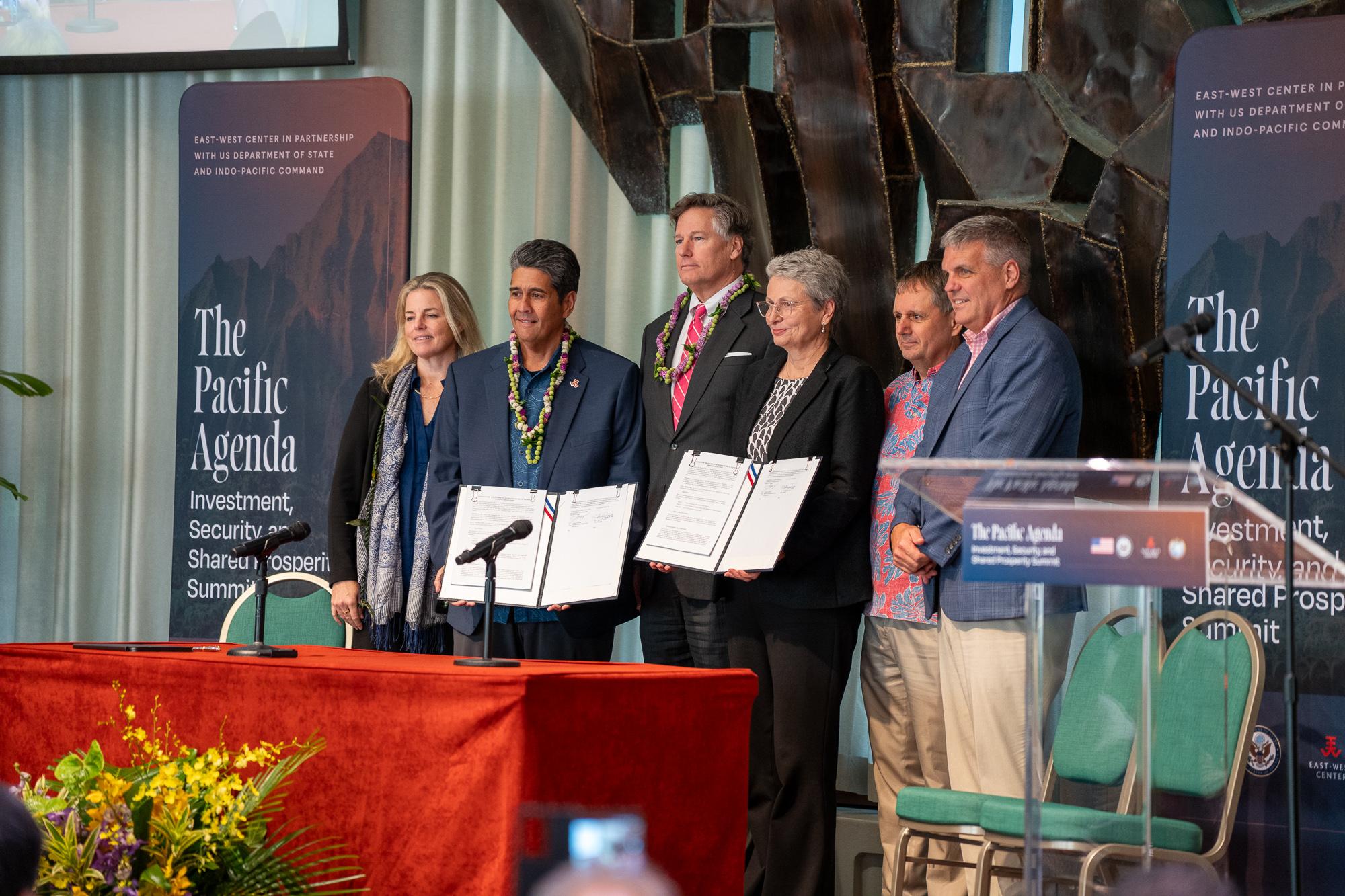
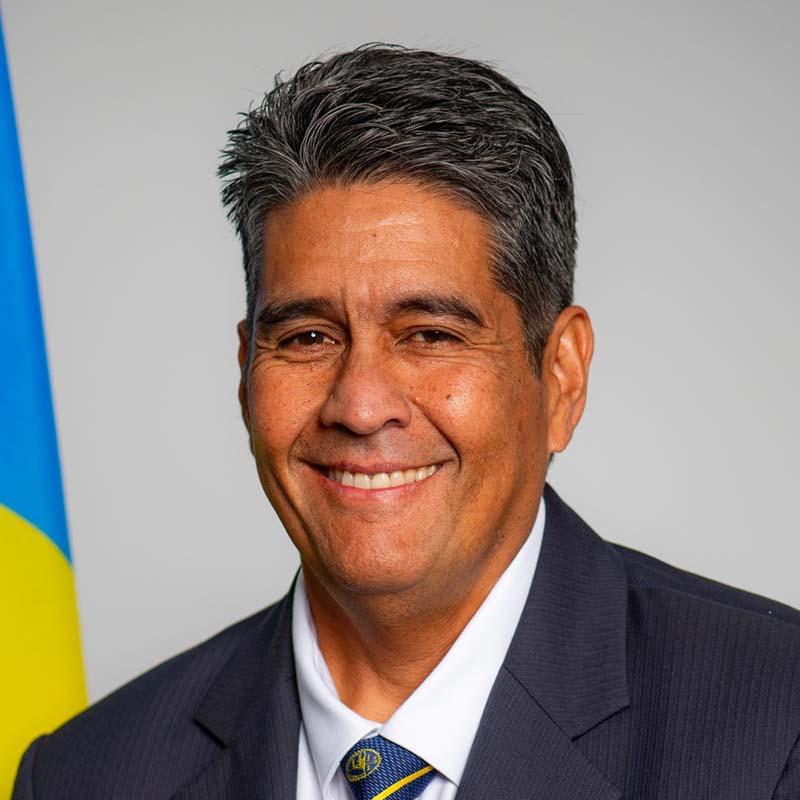
Palau President Surangel S. Whipps Jr. and Bettina Mehnert, president and CEO of the Hawaii-based construction design firm Architects Hawaii Ltd., signed an agreement to conduct a study on the planning and design of a replacement and relocation of Belau National Hospital.
The agreement was signed during the Pacific Agenda: Investment, Security, and Shared Prosperity Summit on Feb. 24 at the Imin International Conference Center at Jefferson Hall in the University of Hawaii Manoa campus.
A feasibility study signing for the Belau National Hospital replacement was held on Feb. 24. Photo by Skyler Obispo
Funded by the U.S. Trade and Development Agency, the study will determine the optimal site for the new hospital, outline its configuration and provide design and financing options, along with an implementation roadmap, according to the Office of the President of Palau. The study will also identify U.S. suppliers for construction and operations.
Whipps called the deal signing a “first concrete step towards a modern, resilient national hospital” and a significant investment in Palau’s healthcare system and future.
The envisioned hospital will include 120 to 150 beds and modern facilities equipped with advanced medical technology.
Whipps said the new hospital would address critical gaps in Palau’s healthcare system, including expanding emergency care, surgical capabilities, and diagnostics. Many Palauans currently seek treatment off island, according to the president who said the facility would also provide care for U.S. service members stationed in Palau.
“We’re hoping that this project, when completed, can keep people home and close to their families,” he said.
Reducing the need for overseas medical treatment would lower costs, with savings reinvested into the local economy, he said.
The Journal reported on Dec. 24 last year on a memorandum of understanding between Palau and the United States, in which the U.S. pledged its support for a new national hospital. The MOU builds on a $2.37 million USDTA feasibility study similar to the agreement signed between Palau and Architects Hawaii Ltd.
“The signing is a tangible demonstration — the U.S. government’s commitment, not just to Palau, but to all of our partners across the Pacific for greater connections,” U.S. Trade and Development’s Deputy Director and Chief Operating Officer Thomas R. Hardy said at the signing. “At the end of the day, this goes to the heart of the Pacific Agenda as we look at what we’ve been here for the last three days. It's been focused on investment, security, and shared prosperity.”
U.S. Trade and Development has additional projects underway in Palau, including initiatives to expand air transportation and communications infrastructure. Whipps mentioned Palau is also speaking to several airlines to increase regional
aviation connectivity.
WhippsOn Feb. 18, the USDTA awarded $1.37 million in technical assistance funding to the Palau National Aviation Administration.
The funding will update the airport’s master plan to extend the runway at the Palau International Airport, something Whipps has been calling for years.
According to Journal files, the airport has one runway with an asphalt and concrete surface that measures 7,200 by 150 feet. A longer runway means larger military and commercial planes can land in Palau.
In 2025, the U.S. Pacific Air Force met with the Palauan government for design work for the Peleliu airfield. According to Joint Task Force-Micronesia, the airfield improvement project will take approximately one year to complete.
For telecommunications projects, the Palau National Communications Corp. is working to expand the nation’s 4G and 5G mobile network, marking the first commercial deployment of Open Radio Access Network equipment in the Pacific islands according to the USTDA.
PNCC wrote in a Feb. 20 statement that the USTDA provided technical assistance for the upgrade project, helping PNCC design the procurement process and evaluating vendor proposals. Of the vendors selected, three are U.S. suppliers.
The U.S. Department of the Treasury, the U.S. Department of the Interior and the Australian Department of Home Affairs funded the project and it is sponsored by member countries of the Quadrilateral Security Dialogue: the U.S., Australia, India, and Japan. The QUAD as it is also called is a strategic partnership of the four countries.
The ORAN network will replace Palau’s existing mobile infrastructure and PNCC expects the network to be fully operational by the end of the first quarter of 2027.
Other infrastructure projects in the island nation include the expansion of the Malakal Port, which seeks to extend the northeast face of the wharf by 181 feet, providing roughly 112,000 square feet of additional container storage and operational space according to Joint Task Force-Micronesia.
Whipps said the expansion could also serve Palau’s tourism industry, and other countries should look at the kinds of investments the U.S. are making in Palau and see where it could benefit them.
Among other businesses attending the summit, Whipps told the Journal renewable energy companies represent major opportunities for Palau and other Pacific island nations.
Energy resilience and affordability were shared concerns among participating nations.
“If we solve [the energy problem], and drive energy costs down, it opens up other opportunities,” he said.
Whipps also referenced discussions at the World Governments Summit in Dubai earlier this year, where it was reported that $192 trillion would be needed globally to transition energy production to renewables. However, he said the greater challenge is the availability of critical minerals required for renewable energy systems.
Nuclear energy was also discussed at the summit, though some Pacific nations remain cautious following the 2011 Fukushima nuclear disaster.
But Whipps sees it as another opportunity for the region given some of the challenges with renewable energy.
He said nuclear energy could present opportunities for larger Pacific islands but noted Palau’s energy demand — about 15 megawatts — is far below the 300-megawatt output typical of small modular reactors.
“We’re still a long ways away [before] they bring it down to our scale,” he said.
Whipps said nuclear energy could be more feasible for larger islands such as the Northern Mariana Islands and Guam.
The Journal was not granted access to other panel discussions or roundtables at the summit. mbj
— Skyler Obispo was hosted by the East-West Center through the Investment Summit Journalism Program.
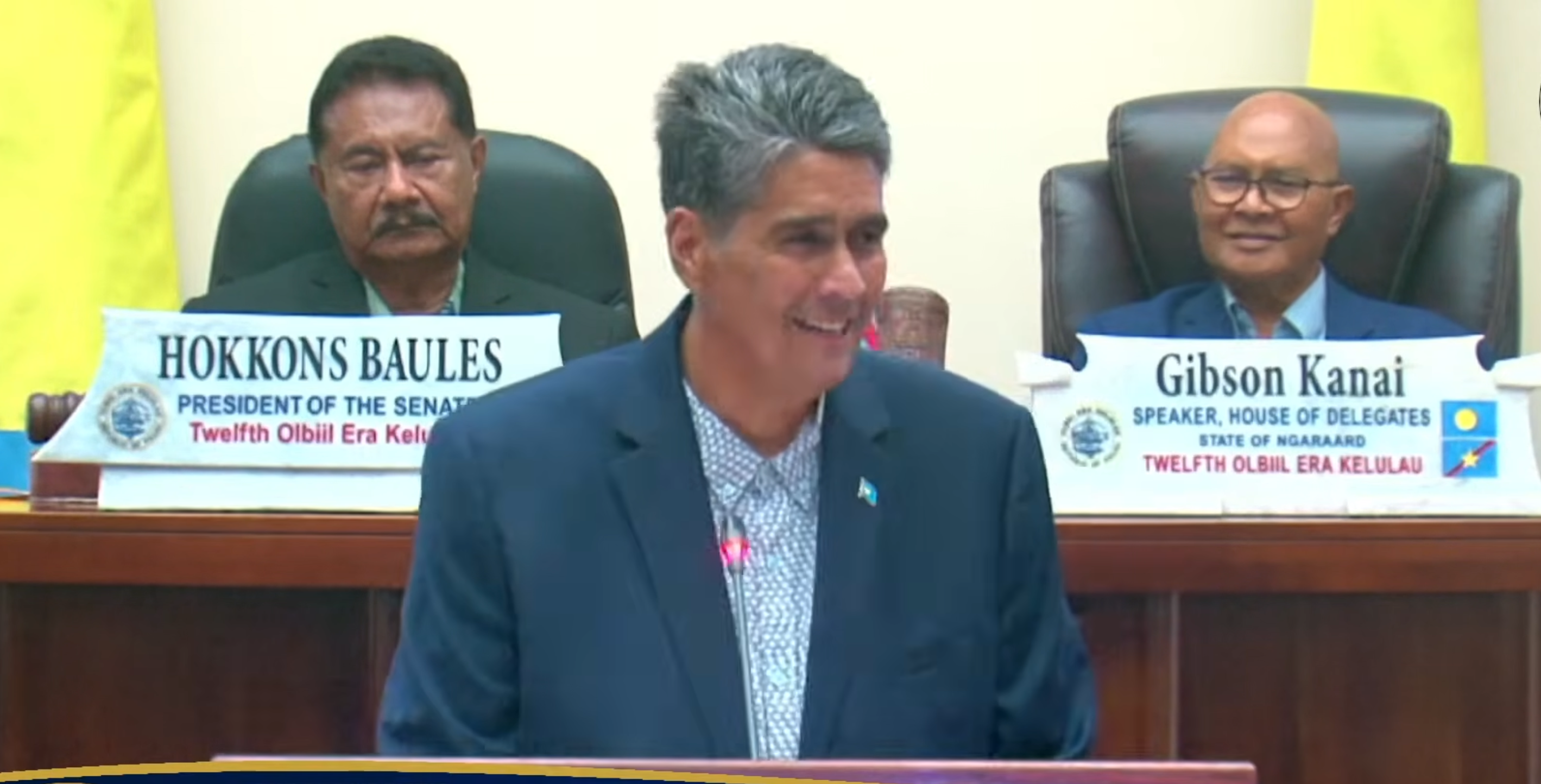
Ngerulmud, Palau — Within the next few weeks, Palau expects a report on the new national hospital relocation project, President Surangel Whipps Jr. told lawmakers in a rescheduled State of the Republic Address on July 22.
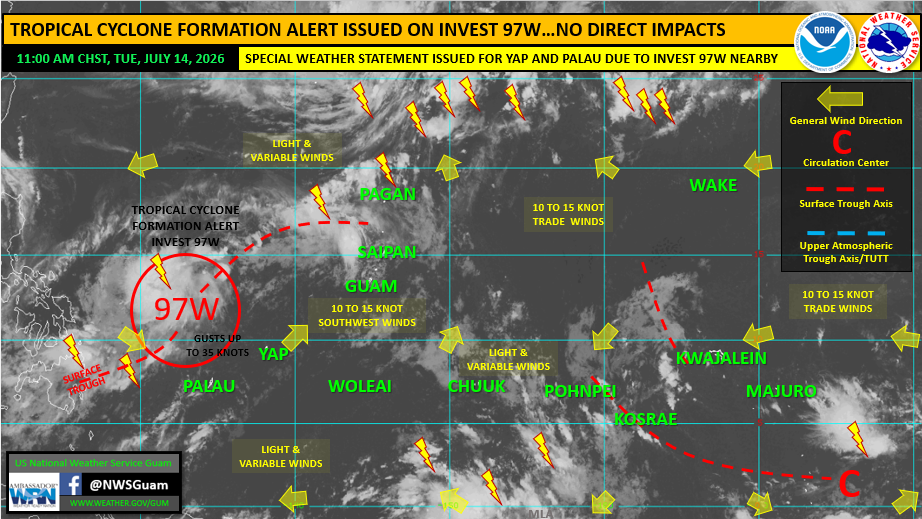
A regional tropical cyclone formation alert has been issued as a developing weather disturbance northwest of Yap threatens to strengthen the seasonal monsoon across western Micronesia and the Mariana Islands.
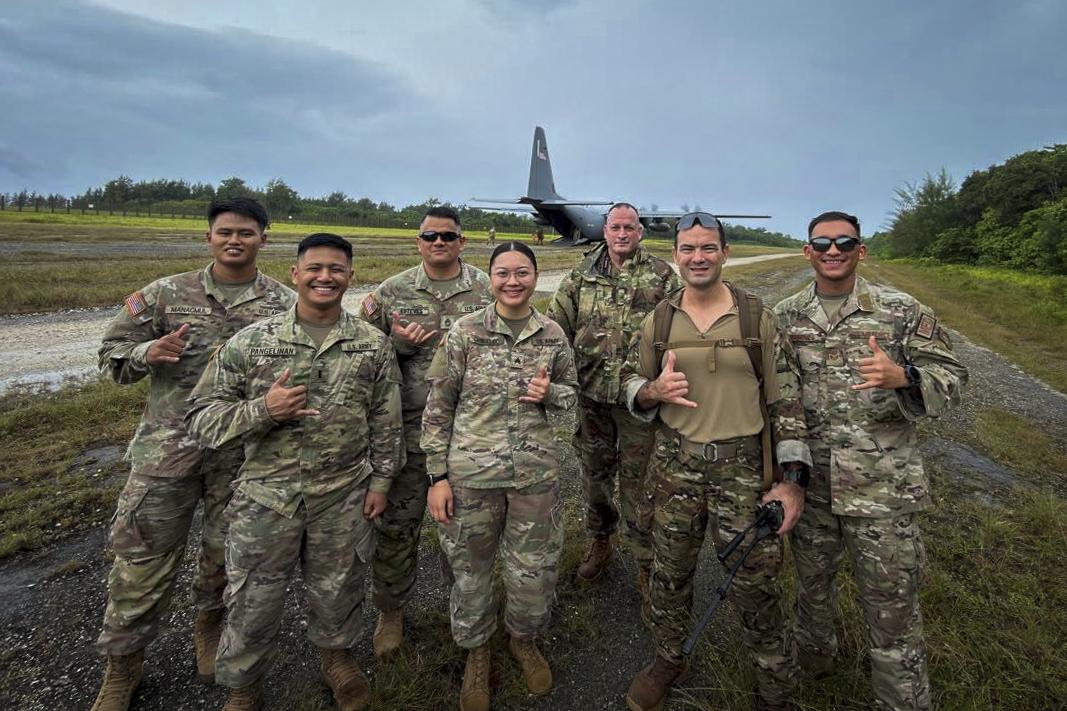
Contributing to Valiant Shield 2026, the Guam National Guard joined the Washington National Guard in Palau to demonstrate expeditionary sustainment exercises providing logistics, medical, and communication support.
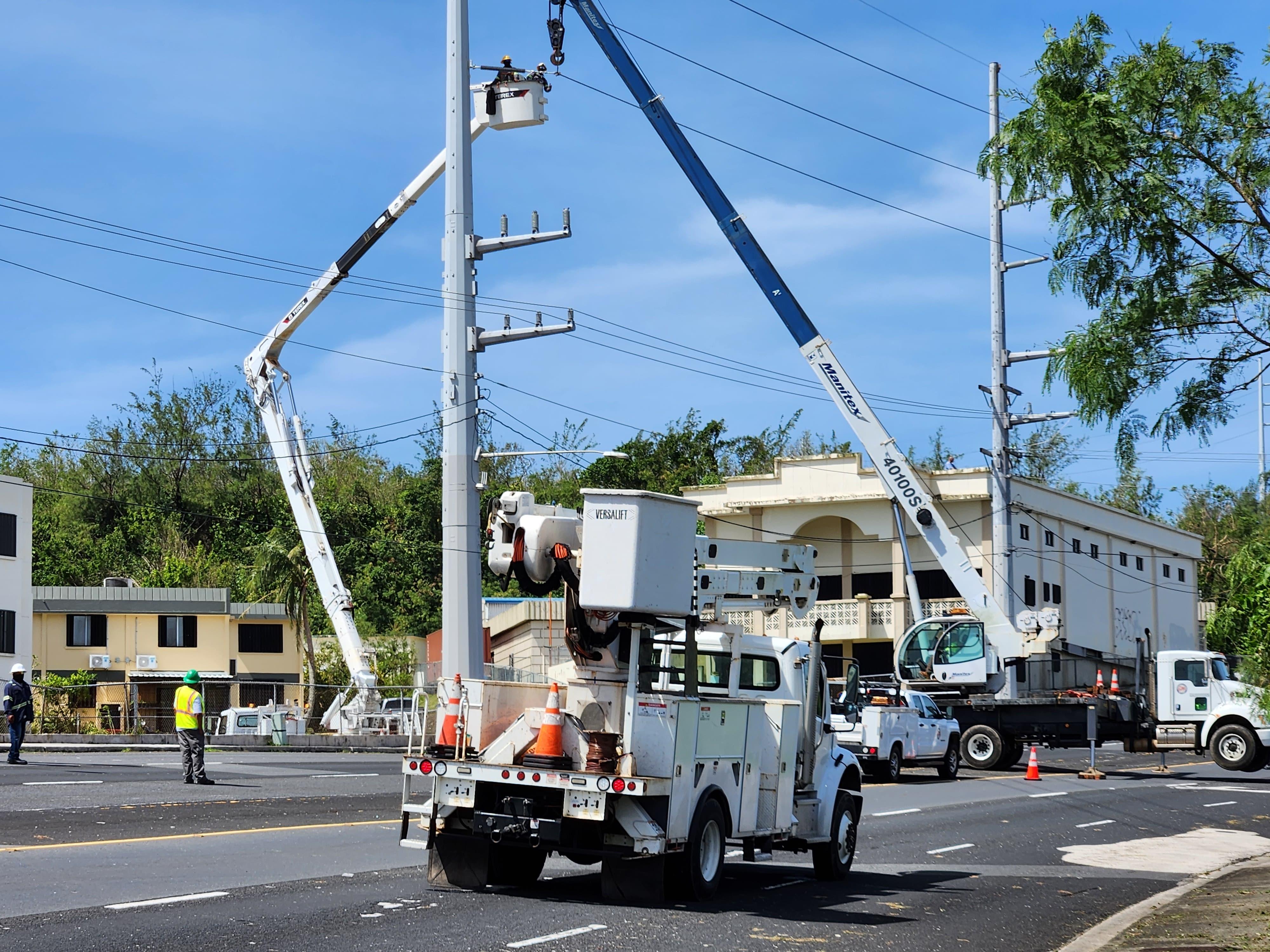
Super Typhoon Bavi slammed into Rota, the eye making landfall Monday morning. Bavi's winds and rains also swept across the other islands. All of the islands, with Rota being the hardest hit, had disruptions to power, water and communications. There also were extensive coastal inundation and erosion across the region.