Shared Prosperity: Government officials, businesses talk investment in the Pacific
BY SKYLER OBISPO
Journal Staff
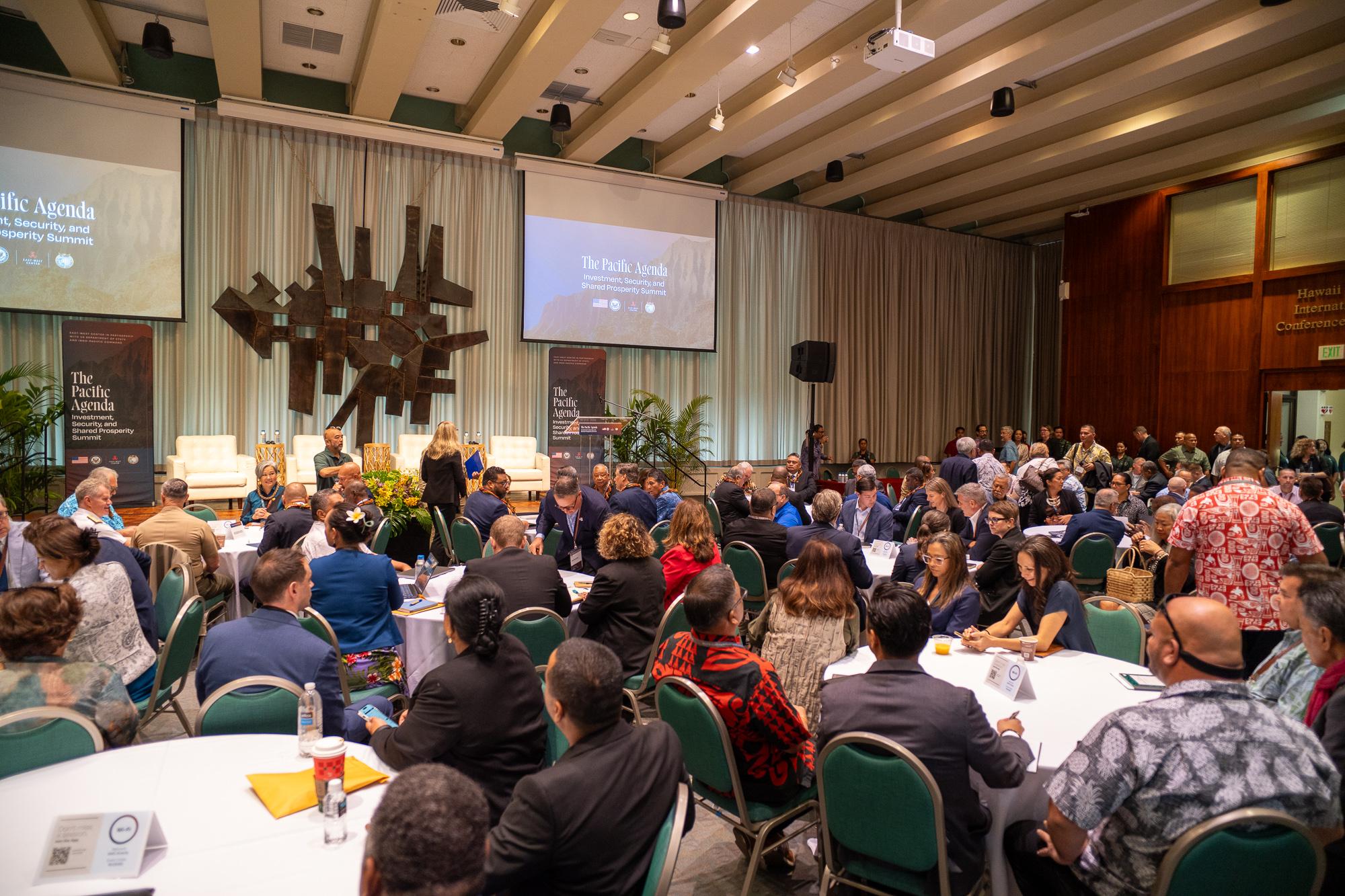
HONOLULU, Hawaii — More than 170 representatives from Pacific Island nations, the U.S. government, and the private sector convened at the inaugural Pacific Agenda: Investment, Security, and Shared Prosperity Summit held at the Imin International Conference Center at Jefferson Hall in the University of Hawaii Manoa campus from Feb. 23 to Feb. 24.
Among the 170 were the leadership of Guam, the Northern Mariana Islands, the Marshall Islands, and Palau, including 80 plus private sector companies.
The senior-level, invite-only forum brought together these representatives to "identify commercially viable projects that align with U.S. and Pacific national priorities, advance investment opportunities, and support real progress,” according to the East-West Center, which helped organize the event along with the U.S.State Department.
More than 170 attendees convened at the Pacific Agenda in Honolulu. Photo by Skyler Obispo
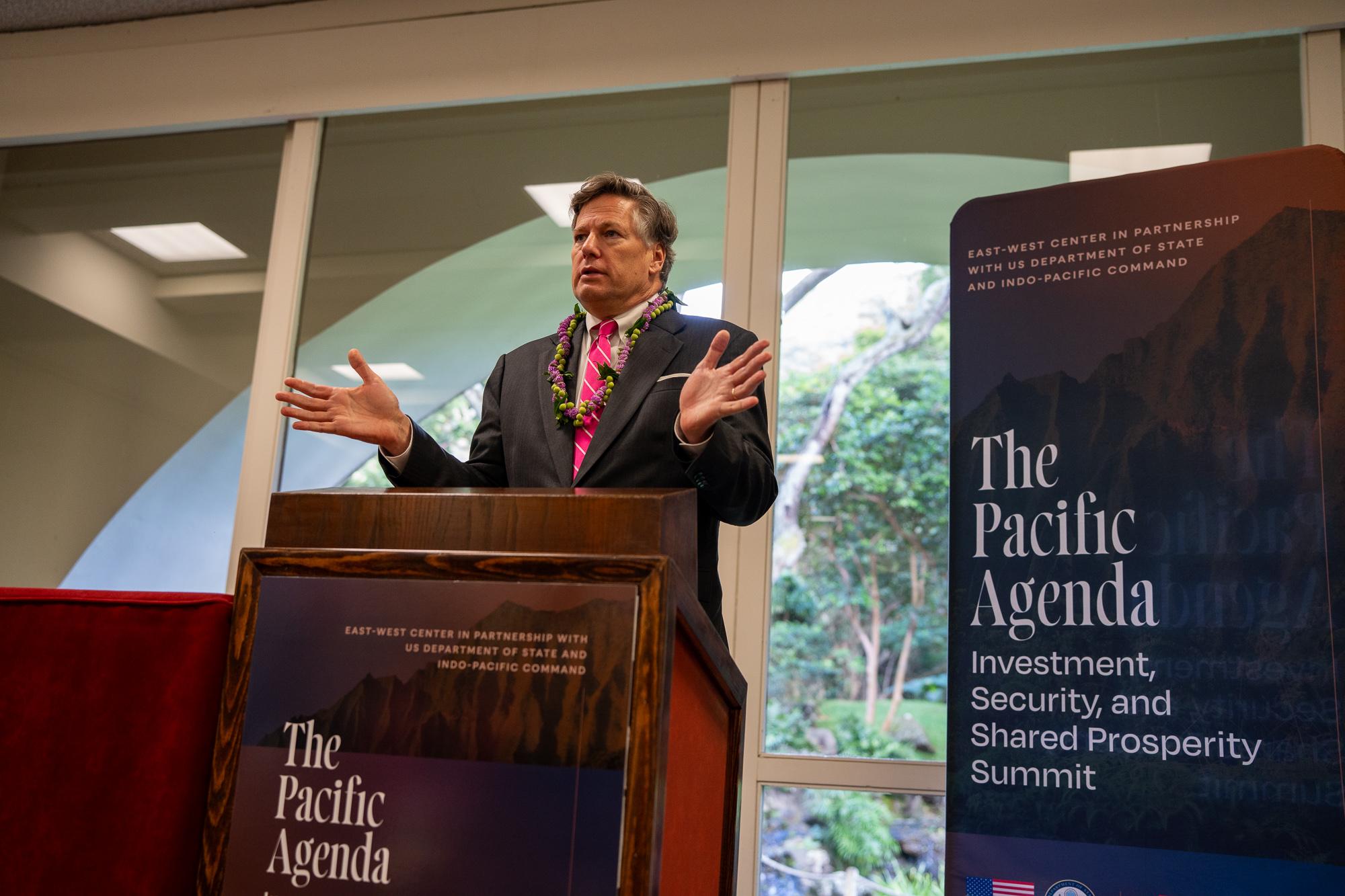
Speaking at the opening remarks of the summit was U.S. Deputy Secretary of State Christopher T. Landau, who described the United States as a Pacific nation, underscoring the importance the region has in regard to human and natural resources.
“We are very much a part of the Pacific, and I think it is important that the United States play a leading role in partnership with Pacific nations, to foster the prosperity and security of everyone,” he said. Landau referenced other nations making aggressive moves in the Pacific, which he said gave the U.S. “a kick in the butt to up our game in the region.”
Landau said the State Department’s role at the summit was to connect the U.S. private sector to the Pacific island nations, calling it a place for “beautiful deal making” to take place; a reference to President Donald J. Trump. The deputy secretary said also that the U.S. is there to help limit risks for private sector investors in the region.
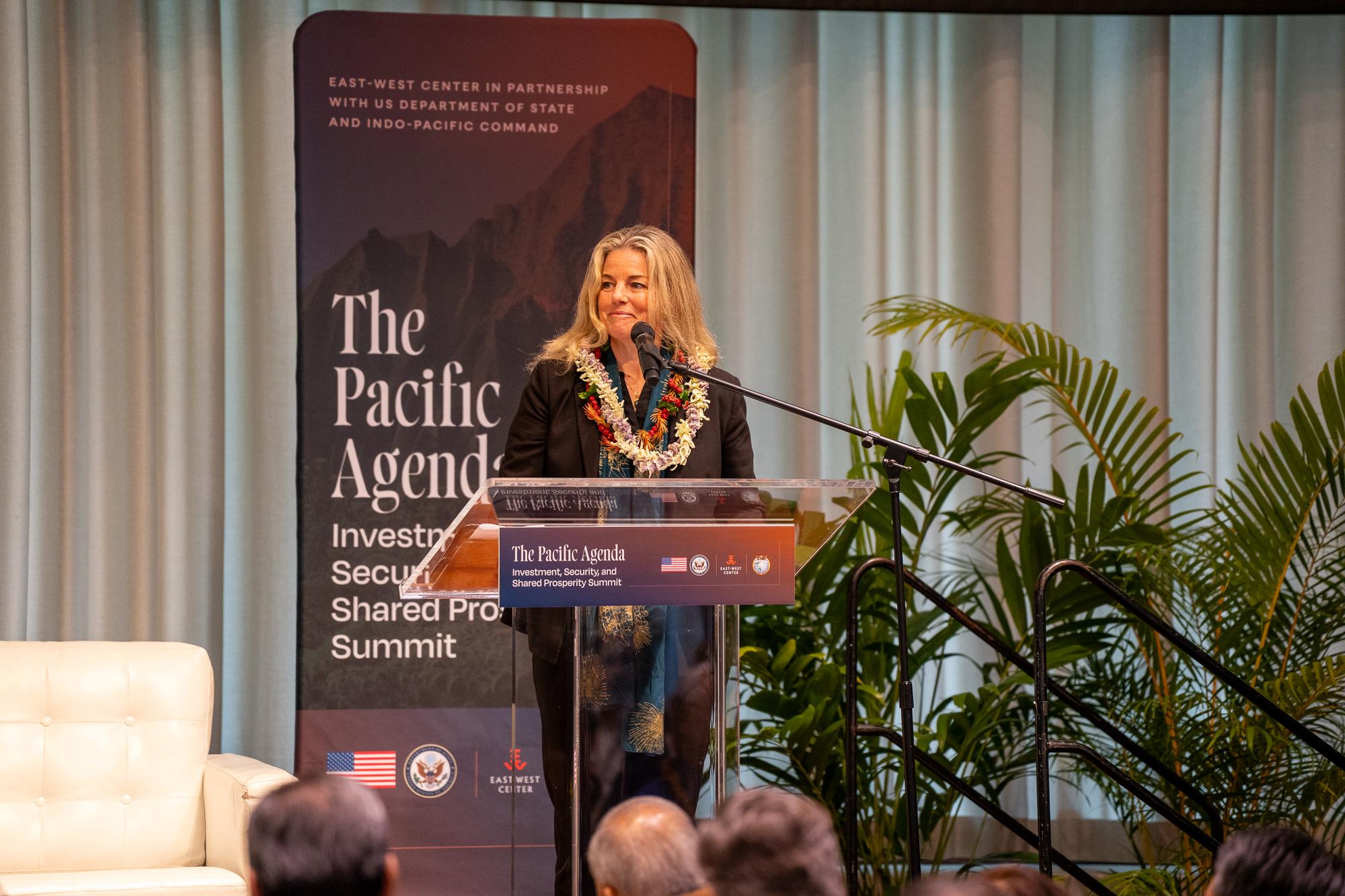
President of the East-West Center Celeste A. Connors told reporters that projects in the islands are often considered too small for investors and factors like the remoteness of the islands, national regulations, and long return-on-investment timelines further discourage the private sector. However, she said the Pacific islands are challenging that narrative and the private sector attendees are showing interest.
“I’ve seen the private sector partners really show up. Really curious, asking the right questions, and figuring out the problem,” she said.
Celeste Connors spoke to attendees during the summit’s opening remarks. Photo by Skyler Obispo
Landau told the Journal the U.S. government has recognized that American businesses may overestimate the risks of doing business abroad and it is the role of the federal government to encourage businesses to invest overseas.
“That is our role as the government, kind of, to be the connective tissue between bringing not only the private sector together with other countries but also making it possible for our private sector to invest successfully in other countries,” he said. “A lot of that is addressing some of the risk that can be a disincentive to investing in other countries.”
One of the ways the federal government does so is through the U.S. International Development Finance Corp., which provides financing for projects and in many cases risk insurance for investors, he said.
The DFC provides political risk insurance which covers losses due to currency inconvertibility, government interference, and political violence. It also issues guarantees for bids, performance, and advance payments.
Landau spoke to reporters on Feb. 24. Photo by Skyler Obispo
In terms of opportunities for Guam, Gov. Lourdes A. Leon Guerrero told the Journal she and her delegation were looking for financing options and partnerships for the island’s healthcare sector and infrastructure resilience.
The Guam Economic Development Authority shared with the Journal prior to the summit that GovGuam’s objectives include elevating Guam’s strategic role in the Indo-Pacific region, aligning federal partnerships with civilian needs, and continuing regional collaboration with other Pacific islands that have shared priorities.
Leon Guerrero told the paper she primarily was interested in discussions surrounding deep-sea mining. While actual mining activity may be years away according to the Office of the Governor following a Feb. 26 meeting with representatives with the Bureau of Ocean Energy Management, the administration’s most recent stance on the issue is against “proposals to streamline the permitting process.”
The Cook Islands is one Pacific island nation which is far along in the deep-sea mining process, having issued exploratory licenses for companies to identify minerals and study the feasibility of possibly having those minerals harvested in their exclusive economic zone.
The governor added that her delegation looked at opportunities for telemedicine, something the administration had engaged with prior to the summit.
Christina D. Garcia, CEO and administrator of GEDA, told the Journal an opportunity GEDA is exploring is the use of artificial intelligence in healthcare, and also in correctional facilities and mental health.
Garcia added the Pacific Agenda was an opportunity to market Guam to more private sector partnerships.
“I know [the private sector is] here for the islands, but Guam is also open for investment,” she said. “We also took the opportunity to speak to our federal partners on ways to help support investment, be it deregulation, changing the policy, discussions — in general, that was what we’re getting out of the conference.”
The Office of the Governor told the Journal on March 3 that it does not have any news of discussions or deals arising out of the summit.
Beyond GovGuam’s presence at the summit, several businesses that operate out of Guam attended the Pacific Agenda.
Randolph Salas, president of Proferre Inc., told the Journal the company is primarily looking to see what investment and networking opportunities are available.
“Guam is in a very unique situation, both geographically, but also socioeconomically, [so] we’re trying to find ways to increase resiliency on Guam, increase connectivity on Guam, and there’s multiple methods of doing that,” he said.
Salas listed the federal and local government as avenues but said there may be opportunities that the company has not explored yet that other islands are doing.
As to whether Proferre is looking to expand to the other islands in the region, Salas said the company is keeping an eye open to see if an opportunity arises that meets the company’s mission and vision.
Other companies that do business in Guam and the Micronesia region which attended included the Applied Science & Technology Research Organization of America, CoreTech International Corp., Matson Navigation Co, Pacific Federal Management Inc. and Raymond James & Associates Inc. mbj
If there was an overarching message from David Kinzelman, chief customer officer and senior vice president for airport operations, during his visit, it was that the region is not only important to the airline, but that its customers receive the same attention as anywhere else in the United network.
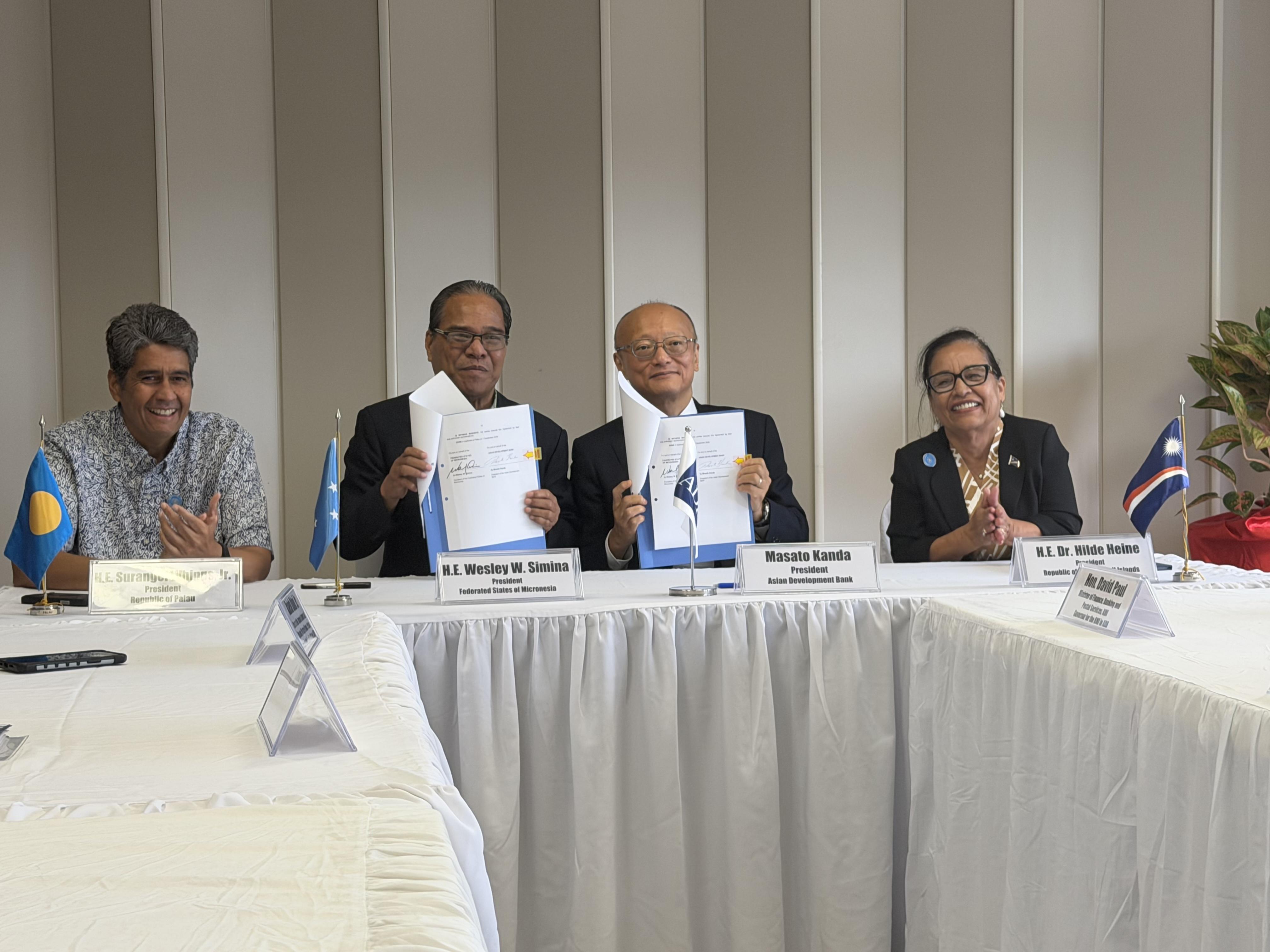
Leaders and officials converged here this week on the margins of the 55th Pacific Islands Forum Leaders Meeting, announcing a series of financial commitments aimed at bolstering the region’s fiscal stability, energy security and border security.