












BY DANIEL M. PEREZ
Journal Staff
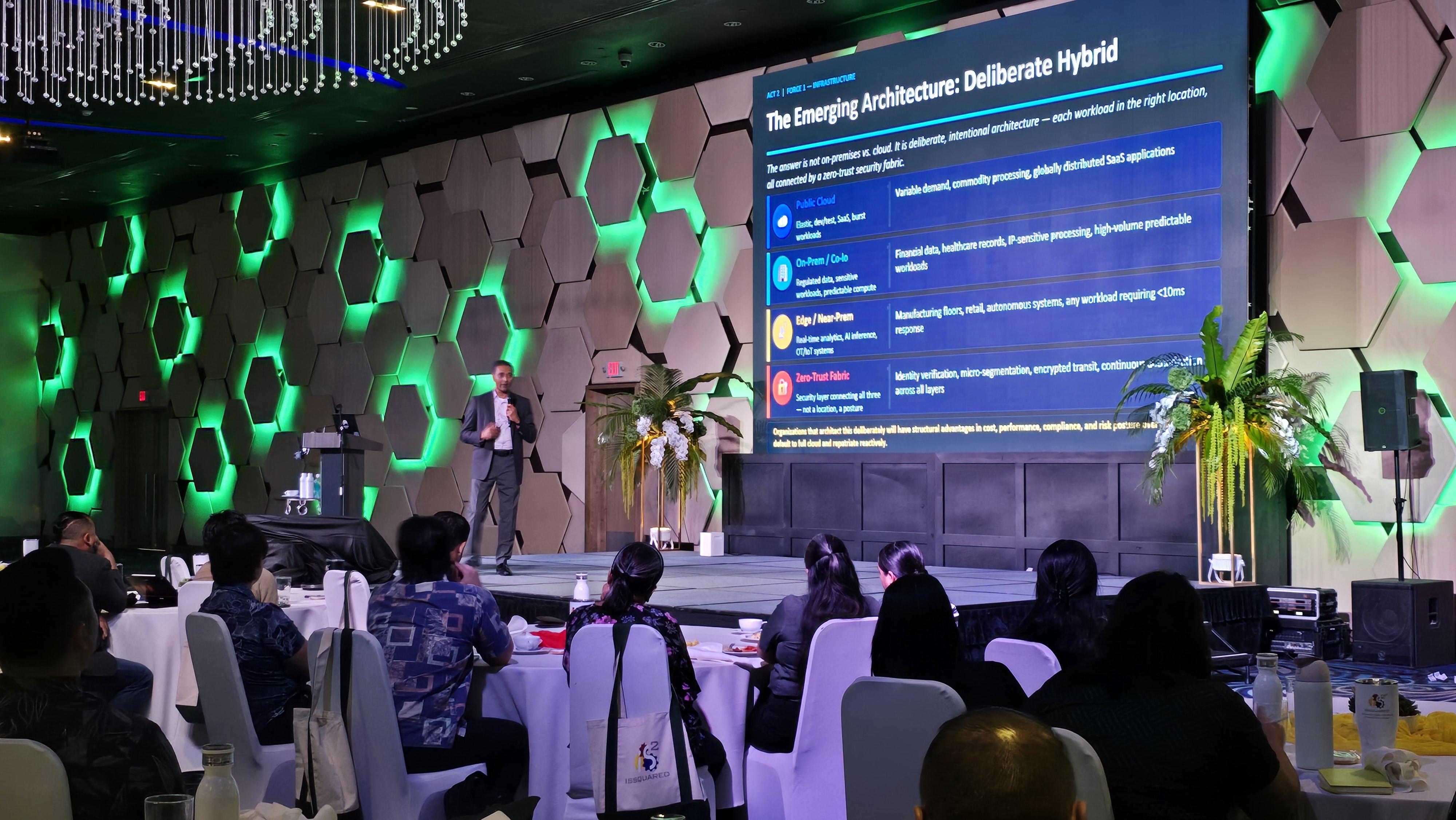
TUMON, Guam — Rapid advancements in artificial intelligence, escalating cybersecurity threats, and mounting physical power grid constraints are forcing regional business leaders to fundamentally overhaul their technology strategies, shared to industry experts during a technology conference held on July 23 at the Dusit Thani Guam Resort.
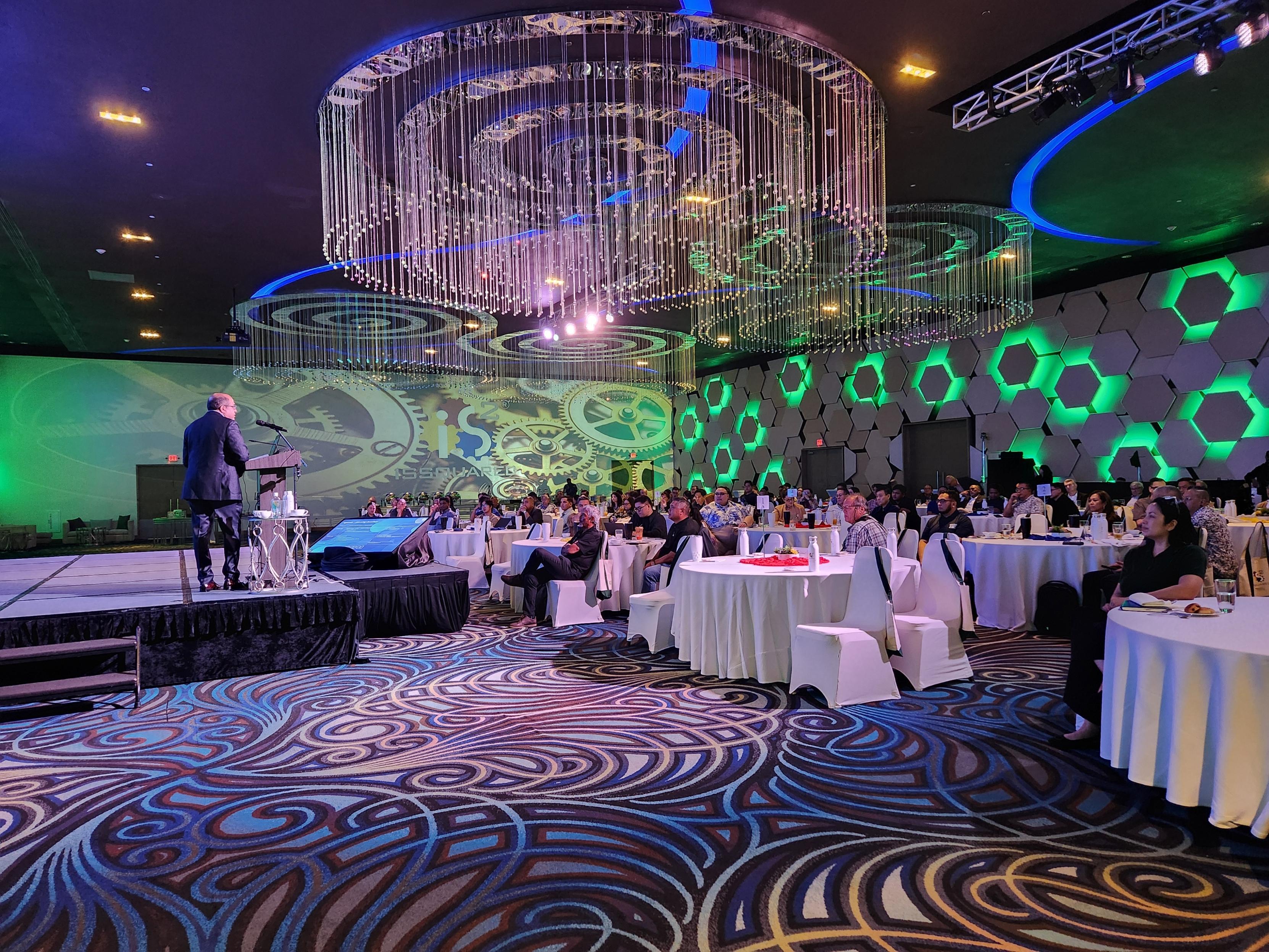
The Cyber, AI & Infrastructure Technology Conference, hosted by ISSQUARED Inc. in partnership with Bank of Guam, brought together regional executives and technology professionals to address the interconnected challenges facing modern enterprise operations.
Delivering the keynote address, Bala Ramaiah, CEO of ISSQUARED Inc., emphasized that organizations can no longer treat cybersecurity, artificial intelligence, and infrastructure as isolated operational areas.
Ramaiah shared that the period between 2020 and 2026 has accelerated an unprecedented convergence among all three pillars, where a failure in one area inevitably undermines the others. Addressing the evolving threat landscape, Ramaiah highlighted that traditional perimeter security, such as standard firewalls and basic antivirus software, has become largely obsolete. Modern digital threats now target hardware and software supply chains well before products reach end users.
Furthermore, threat actors are leveraging advanced artificial intelligence to identify system vulnerabilities at unprecedented speeds.
These emerging risks have elevated the role of chief information security officers to corporate boardrooms, where security executives now face direct legal and personal liability for organizational data breaches. On the subject of artificial intelligence, Ramaiah warned enterprise leaders against rushing into costly implementations without clear strategic objectives.
While major tech conglomerates spend hundreds of billions of dollars securing specialized graphics processing units and data center capacity, smaller enterprises face high capital entry barriers and rapid hardware obsolescence. Pointing to past industry cycles where early technological leaders were eventually surpassed, Ramaiah urged businesses to carefully evaluate their risk tolerance and expected return on investment before committing capital to major artificial intelligence initiatives.
The conference also focused heavily on physical infrastructure requirements, particularly the surging energy demands of high-performance computing. Ramaiah pointed out that municipal power grids across several U.S. jurisdictions are already struggling to keep pace with data center expansion, prompting temporary construction moratoriums in states such as Ohio and driving major tech companies toward alternative power solutions, including small modular nuclear reactors.
Additionally, shifting geopolitical dynamics and stringent international data sovereignty regulations are forcing organizations to rethink centralized cloud architecture. As governments increasingly mandate that citizen data remain within national borders, enterprises are migrating toward localized, distributed edge computing networks to maintain compliance across regional jurisdictions, including Guam and the Northern Mariana Islands.
As data protection mandates grow stricter throughout the NMI and the broader Pacific region, edge infrastructure will be essential to ensure operational continuity. mbj
Journal Staff
TUMON, Guam — Rapid advancements in artificial intelligence, escalating cybersecurity threats, and mounting physical power grid constraints are forcing regional business leaders to fundamentally overhaul their technology strategies, shared to industry experts during a technology conference held on July 23 at the Dusit Thani Guam Resort.
The Cyber, AI & Infrastructure Technology Conference, hosted by ISSQUARED Inc. in partnership with Bank of Guam, brought together regional executives and technology professionals to address the interconnected challenges facing modern enterprise operations.
Delivering the keynote address, Bala Ramaiah, CEO of ISSQUARED Inc., emphasized that organizations can no longer treat cybersecurity, artificial intelligence, and infrastructure as isolated operational areas.
Ramaiah shared that the period between 2020 and 2026 has accelerated an unprecedented convergence among all three pillars, where a failure in one area inevitably undermines the others. Addressing the evolving threat landscape, Ramaiah highlighted that traditional perimeter security, such as standard firewalls and basic antivirus software, has become largely obsolete. Modern digital threats now target hardware and software supply chains well before products reach end users.
Furthermore, threat actors are leveraging advanced artificial intelligence to identify system vulnerabilities at unprecedented speeds.
These emerging risks have elevated the role of chief information security officers to corporate boardrooms, where security executives now face direct legal and personal liability for organizational data breaches. On the subject of artificial intelligence, Ramaiah warned enterprise leaders against rushing into costly implementations without clear strategic objectives.
While major tech conglomerates spend hundreds of billions of dollars securing specialized graphics processing units and data center capacity, smaller enterprises face high capital entry barriers and rapid hardware obsolescence. Pointing to past industry cycles where early technological leaders were eventually surpassed, Ramaiah urged businesses to carefully evaluate their risk tolerance and expected return on investment before committing capital to major artificial intelligence initiatives.
The conference also focused heavily on physical infrastructure requirements, particularly the surging energy demands of high-performance computing. Ramaiah pointed out that municipal power grids across several U.S. jurisdictions are already struggling to keep pace with data center expansion, prompting temporary construction moratoriums in states such as Ohio and driving major tech companies toward alternative power solutions, including small modular nuclear reactors.
Additionally, shifting geopolitical dynamics and stringent international data sovereignty regulations are forcing organizations to rethink centralized cloud architecture. As governments increasingly mandate that citizen data remain within national borders, enterprises are migrating toward localized, distributed edge computing networks to maintain compliance across regional jurisdictions, including Guam and the Northern Mariana Islands.
As data protection mandates grow stricter throughout the NMI and the broader Pacific region, edge infrastructure will be essential to ensure operational continuity. mbj