












BY DANIEL M. PEREZ
Journal Staff
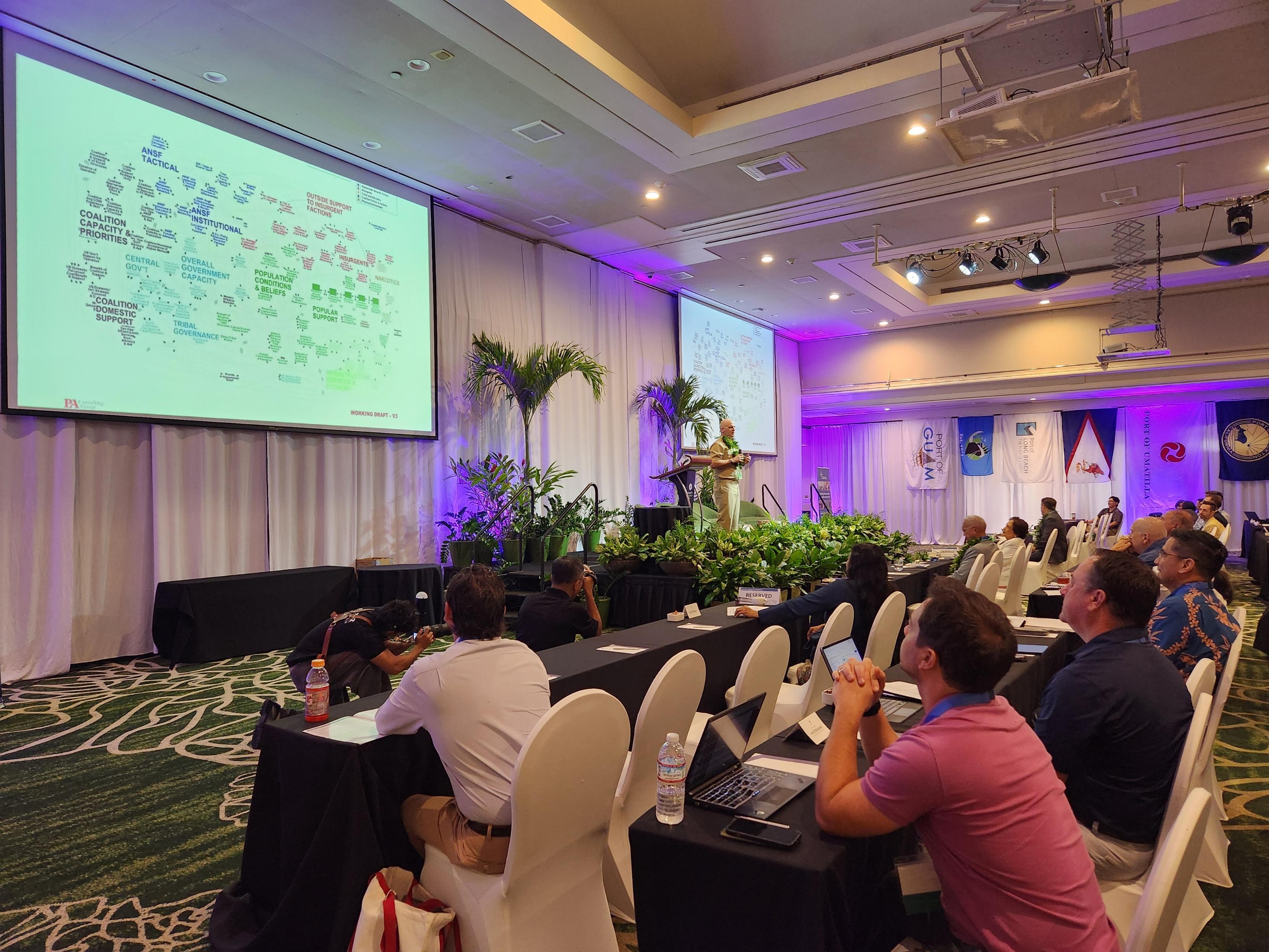
Maritime leaders, military officials, and port executives from across the region gathered at the Hyatt Regency Guam for the Association of Pacific Ports 112th Annual Conference from August 3rd to August 6th to address regional supply chain resilience, trade policy, and port infrastructure modernization.
The four-day conference focused on strategic cooperation across Micronesia and the Pacific, highlighting the critical role commercial ports play in driving economic development and supporting national security requirements. Rory J. Respicio, general manager of the Port Authority of Guam, emphasized the cultural and operational significance of hosting the annual gathering, frame-working the event around the Chamorro concept of Inafa'maolek.
"It means you lift each other up and work together no matter what the conditions are for a common goal," Respicio said. "The common goal, in our case, is the ports."
Respicio highlighted that commercial port readiness directly impacts regional military posture and local economic stability. "If the port is not ready, the military won't be ready, and the community won't be ready," Respicio said.
Keynote speaker Rear Adm. Brett W. Mietus, commander of Joint Region Marianas, detailed the operational demands facing island ports within an increasingly complex maritime environment. "Micronesian ports face a distinct set of operational demands in an increasingly complex maritime environment," Mietus said.
Mietus said that long-term resilience requires sustainable infrastructure upgrades and enhanced coordination between civilian port authorities and defense partners. "Adapting our infrastructure to meet future demands requires practical, innovative approaches to strengthening regional supply chains," Mietus said.
Federal policy updates were presented by William Paape, deputy associate administrator for industry support at the Maritime Administration. Paape briefed delegates on federal initiatives, including the Trump Administration's Maritime Action Plan released in February 2026, the Executive Order on Restoring America's Maritime Dominance, Section 301 port fees, and the proposed Maritime Security Trust Fund.
"Restoring America's maritime strength depends heavily on targeted investments in critical island infrastructure," Paape said. Paape outlined how proposed federal funding mechanisms aim to alleviate logistics challenges and trade burdens unique to Pacific island ports. "The proposed Maritime Security Trust Fund offers a key mechanism to help address long-term operational challenges for Pacific territories," Paape said.
The conference brought together representatives from various jurisdictions, including Taiwan, Long Beach, and island nations throughout Micronesia. Respicio shared that sister-port relationships, such as Guam's partnership with the Port of Long Beach, remain instrumental in sharing industry best practices and securing grant opportunities. mbj
Journal Staff
Maritime leaders, military officials, and port executives from across the region gathered at the Hyatt Regency Guam for the Association of Pacific Ports 112th Annual Conference from August 3rd to August 6th to address regional supply chain resilience, trade policy, and port infrastructure modernization.
The four-day conference focused on strategic cooperation across Micronesia and the Pacific, highlighting the critical role commercial ports play in driving economic development and supporting national security requirements. Rory J. Respicio, general manager of the Port Authority of Guam, emphasized the cultural and operational significance of hosting the annual gathering, frame-working the event around the Chamorro concept of Inafa'maolek.
"It means you lift each other up and work together no matter what the conditions are for a common goal," Respicio said. "The common goal, in our case, is the ports."
Respicio highlighted that commercial port readiness directly impacts regional military posture and local economic stability. "If the port is not ready, the military won't be ready, and the community won't be ready," Respicio said.
Keynote speaker Rear Adm. Brett W. Mietus, commander of Joint Region Marianas, detailed the operational demands facing island ports within an increasingly complex maritime environment. "Micronesian ports face a distinct set of operational demands in an increasingly complex maritime environment," Mietus said.
Mietus said that long-term resilience requires sustainable infrastructure upgrades and enhanced coordination between civilian port authorities and defense partners. "Adapting our infrastructure to meet future demands requires practical, innovative approaches to strengthening regional supply chains," Mietus said.
Federal policy updates were presented by William Paape, deputy associate administrator for industry support at the Maritime Administration. Paape briefed delegates on federal initiatives, including the Trump Administration's Maritime Action Plan released in February 2026, the Executive Order on Restoring America's Maritime Dominance, Section 301 port fees, and the proposed Maritime Security Trust Fund.
"Restoring America's maritime strength depends heavily on targeted investments in critical island infrastructure," Paape said. Paape outlined how proposed federal funding mechanisms aim to alleviate logistics challenges and trade burdens unique to Pacific island ports. "The proposed Maritime Security Trust Fund offers a key mechanism to help address long-term operational challenges for Pacific territories," Paape said.
The conference brought together representatives from various jurisdictions, including Taiwan, Long Beach, and island nations throughout Micronesia. Respicio shared that sister-port relationships, such as Guam's partnership with the Port of Long Beach, remain instrumental in sharing industry best practices and securing grant opportunities. mbj