










BY KATIE AIZON
Journal Staff
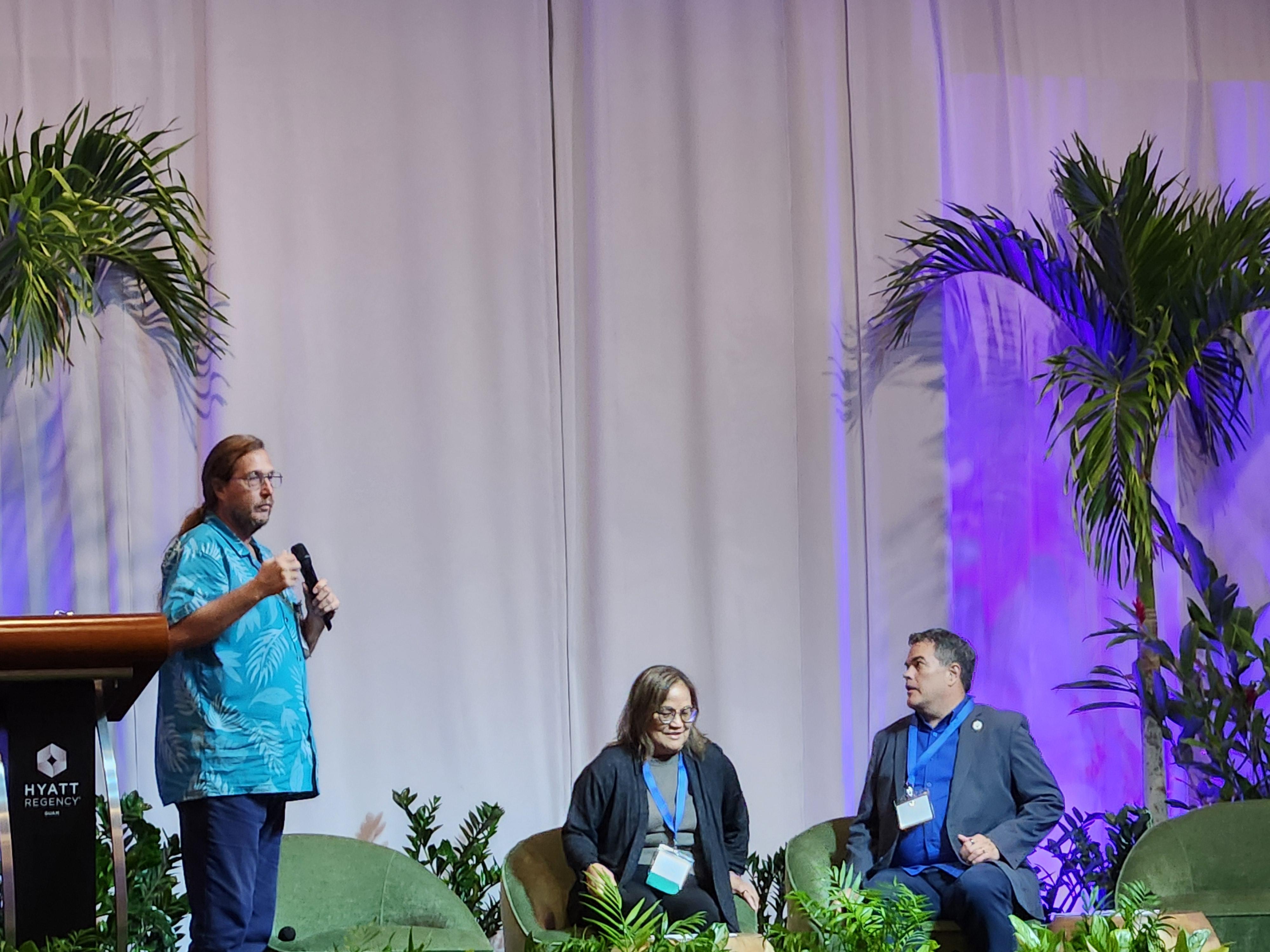
As the Association of Pacific Ports 112th Annual Conference continues, local port officials sat down with the Federal Emergency Management Agency to reflect on shared resiliency after natural disasters.
Rory J. Respicio, general manager of the Port Authority of Guam, Estrellita “Esther” S. Ada, executive director of the Commonwealth Ports Authority, and Michael Legler, transportation program planning analyst for FEMA, sat down to discuss typhoon preparation and post typhoon challenges.
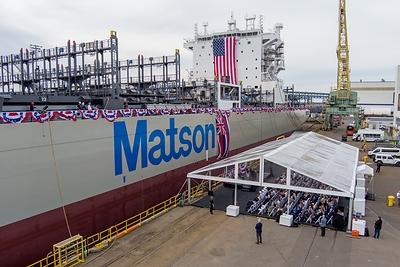
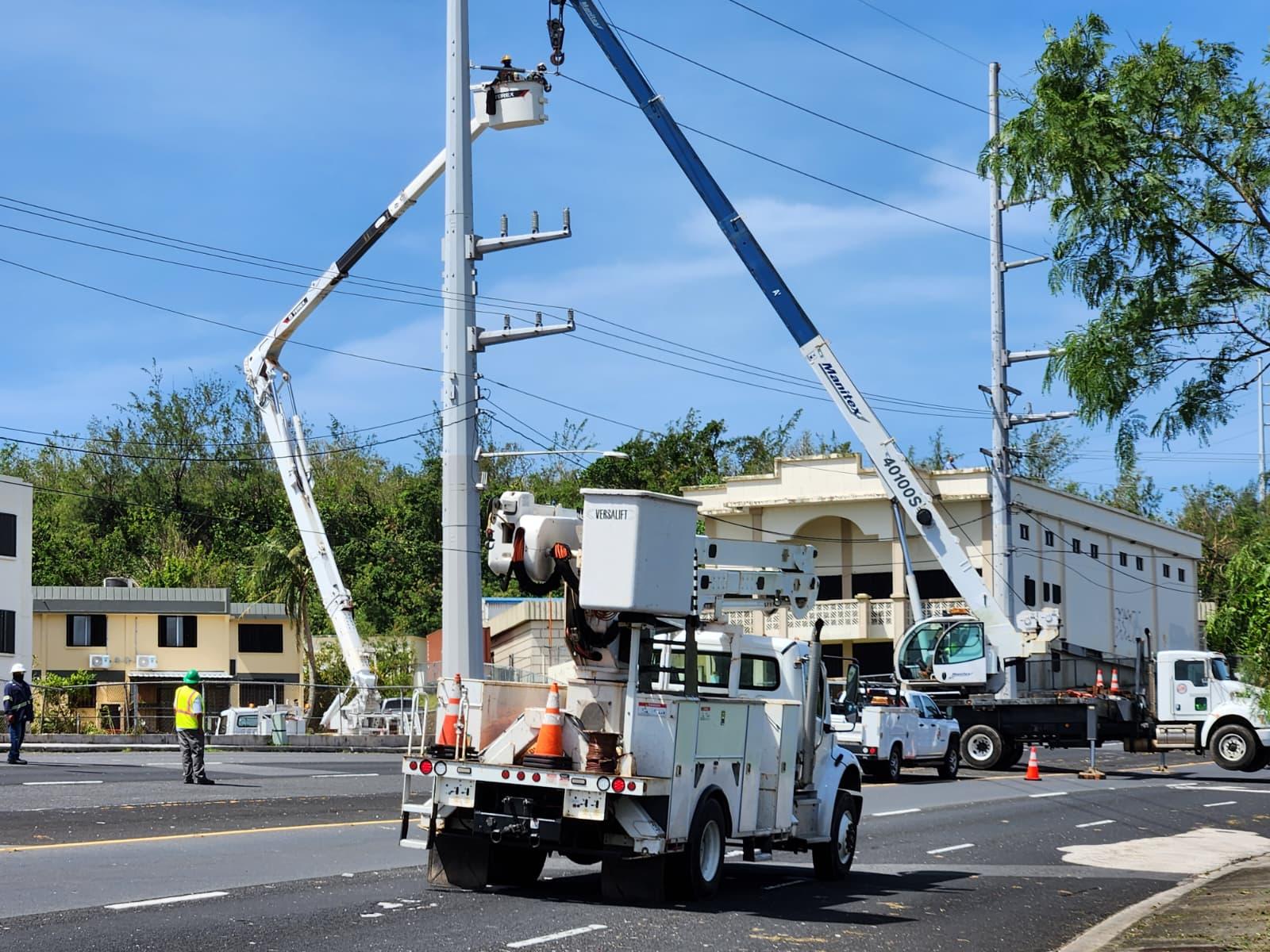
Respicio said “every storm presents different challenges at the port,” sharing how Super Typhoon Bavi caused difficulties in bringing back Guam Power Authority bucket trucks from Saipan due to offline gantry cranes and congestion in the main wharf. A coordination effort between Matson, Black Construction Corp., U.S. Coast Guard, Guam Customs and Quarantine Agency, and other government agencies allowed the port to utilize H-Wharf, which is currently leased to Black Construction for the Glass Breakwater Project. “All the stars aligned and we were able to have [Gallaide] berth at H-Wharf and have those bucket trucks offloaded there so they could load back 11 reefer containers and fuel for Tinian,” he said.
Mobil was also able to transport fuel to Rota after Super Typhoon Bavi through H-Wharf because of the port’s partnerships. “We loaded two 20-foot ISO tanks on [MV San Jose] and that was a sight to be seen,” he said. “That was much needed fuel for Rota, unleaded and diesel, to supply the FEMA generators that were there.” Respicio said the operations were a lesson in shared resiliency. For CPA, Ada shared similar sentiments.
CPA, handling both airport and seaport, was able to open both ports right after Super Typhoon Sinlaku for daytime operations, ensuring FEMA and resources could come to the islands. “With the seaport we also collaborated with the assistance of the U.S. Coast Guard, and we had to wait until they cleared the waterways,” she said, saying partnerships are also crucial to port operations in the Northern Mariana Islands.
Ada said recovery efforts continue across NMI ports. Legler emphasized how “Partnerships create solutions” stating how several ports worked together to bring FEMA resources to the NMI after Super Typhoon Bavi. “It’s a story of a network of ports. [Power poles] were trucked from Mississippi to Long Beach, got on a ship in Long Beach, went to Hawaii, came to Guam, went to Saipan, and from Saipan delivered to Rota,” he said.
Jane McIvor, executive director of APP, told the Journal how this year’s theme ‘Inafa’maolek: Strengthening our Shared Pacific’ centers around resiliency and infrastructure, explaining how conference themes consider regional relevancy. “Resiliency is always a part of our conversation, so we geared it towards that because it was such a good example and everyone knew about it,” she said, sharing how panels centered around storm preparation and recovery were encouraged. mbj
Journal Staff
As the Association of Pacific Ports 112th Annual Conference continues, local port officials sat down with the Federal Emergency Management Agency to reflect on shared resiliency after natural disasters.
Rory J. Respicio, general manager of the Port Authority of Guam, Estrellita “Esther” S. Ada, executive director of the Commonwealth Ports Authority, and Michael Legler, transportation program planning analyst for FEMA, sat down to discuss typhoon preparation and post typhoon challenges.
Respicio said “every storm presents different challenges at the port,” sharing how Super Typhoon Bavi caused difficulties in bringing back Guam Power Authority bucket trucks from Saipan due to offline gantry cranes and congestion in the main wharf. A coordination effort between Matson, Black Construction Corp., U.S. Coast Guard, Guam Customs and Quarantine Agency, and other government agencies allowed the port to utilize H-Wharf, which is currently leased to Black Construction for the Glass Breakwater Project. “All the stars aligned and we were able to have [Gallaide] berth at H-Wharf and have those bucket trucks offloaded there so they could load back 11 reefer containers and fuel for Tinian,” he said.
Mobil was also able to transport fuel to Rota after Super Typhoon Bavi through H-Wharf because of the port’s partnerships. “We loaded two 20-foot ISO tanks on [MV San Jose] and that was a sight to be seen,” he said. “That was much needed fuel for Rota, unleaded and diesel, to supply the FEMA generators that were there.” Respicio said the operations were a lesson in shared resiliency. For CPA, Ada shared similar sentiments.
CPA, handling both airport and seaport, was able to open both ports right after Super Typhoon Sinlaku for daytime operations, ensuring FEMA and resources could come to the islands. “With the seaport we also collaborated with the assistance of the U.S. Coast Guard, and we had to wait until they cleared the waterways,” she said, saying partnerships are also crucial to port operations in the Northern Mariana Islands.
Ada said recovery efforts continue across NMI ports. Legler emphasized how “Partnerships create solutions” stating how several ports worked together to bring FEMA resources to the NMI after Super Typhoon Bavi. “It’s a story of a network of ports. [Power poles] were trucked from Mississippi to Long Beach, got on a ship in Long Beach, went to Hawaii, came to Guam, went to Saipan, and from Saipan delivered to Rota,” he said.
Jane McIvor, executive director of APP, told the Journal how this year’s theme ‘Inafa’maolek: Strengthening our Shared Pacific’ centers around resiliency and infrastructure, explaining how conference themes consider regional relevancy. “Resiliency is always a part of our conversation, so we geared it towards that because it was such a good example and everyone knew about it,” she said, sharing how panels centered around storm preparation and recovery were encouraged. mbj