Original ideas: Businesses bloom and knock your socks off
BY MAUREEN MARATITA AND
JACQUELINE GUZMAN
Journal Staff
Hyatt Regency Guam’s HYmarket on Dec. 2 featured vendors with ideas that turned into small businesses. Two of the featured owners in the packed ballroom and its foyer developed unique products that have resonated with a growing client base.
In an industry often defined by imports and immediacy, Tropical Flowers by Beth stands apart — rooted quite literally in Guam’s soil.
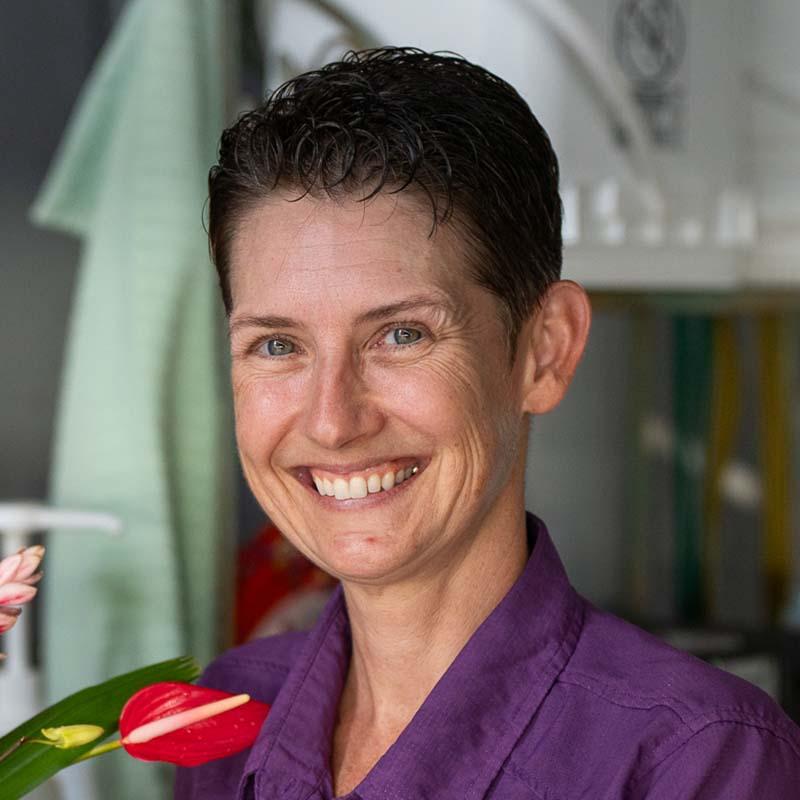
DoddBeth A. Dodd, the owner and creative force behind the home-based floral business, grows everything she uses herself, cultivating an ever-expanding collection of tropical blooms that are arranged fresh for each client. “I’m not a typical florist,” Dodd said. “I grow all the flowers and foliage that I use. Everything is harvested per order.”
Rather than focusing on one-off arrangements for birthdays or anniversaries, Tropical Flowers by Beth operates primarily on a floral subscription model — a rarity on Guam. Clients can choose weekly, biweekly, or monthly arrangements, creating a predictable rhythm for both customer and grower. “It allows me to plan my harvests and my schedule,” Dodd said. “Wednesdays are delivery days. Everyone knows when their flowers are coming.”
This model appeals to corporate clients, such as offices and lobbies, where fresh arrangements are needed regularly but without the need for upkeep. Dodd delivers, swaps arrangements weekly, and handles everything — from design to vase reuse — offering a seamless service that prioritizes both beauty and longevity.
Dodd specializes in tropical flowers that thrive in Guam’s climate, including an extensive variety of gingers and heliconias — many of which are unfamiliar even to longtime island residents.
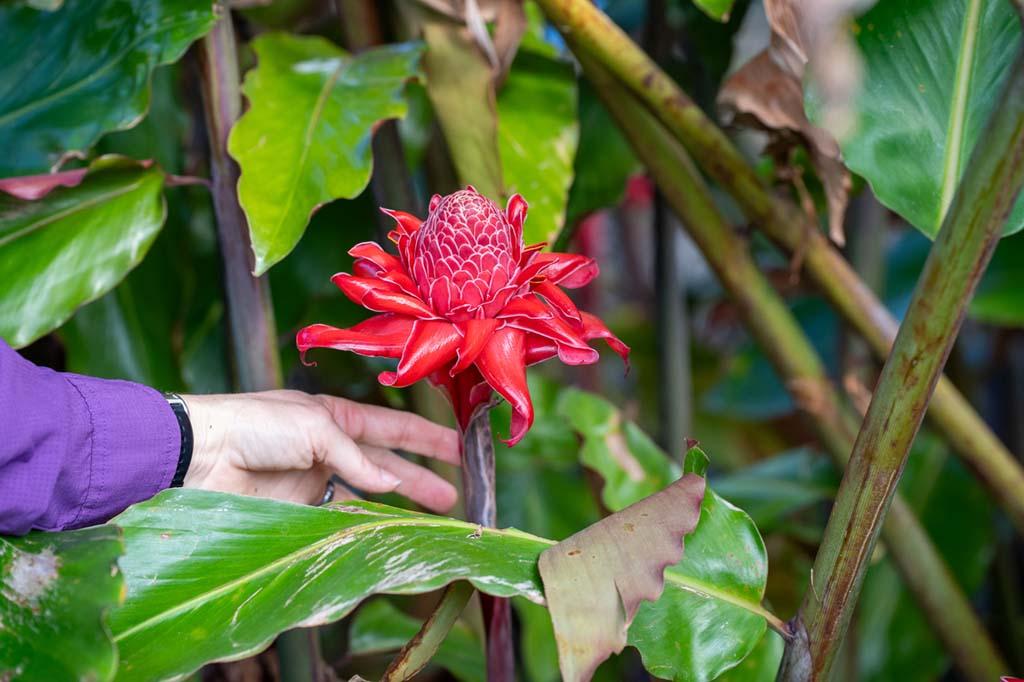
One standout is the torch ginger, a dramatic bloom that comes in shades of pink, red, white, and pale blush. Dodd said, “They’re the ones people look at and say, ‘What is that?’”
After three rainy seasons of planting and careful cultivation, Dodd said she believes her one-acre farm in Southern Guam now holds one of the largest collections of ginger varieties in the Mariana Islands. She’s also expanding into ornamental bananas and other tropical plants that add color and texture to her arrangements.
Dodd’s path to floristry was anything but conventional. For 25 years, she worked as a nurse in women’s health and labor and delivery, including long stints at Naval Hospital Guam and Guam Memorial Hospital.
“When I was ready to leave nursing, I didn’t know what was next,” she said. “Then I remembered how peaceful I felt working in a greenhouse when I was younger — just me and the plants.”
In 2022, after returning from a vacation and casually arranging flowers from her property, something clicked. With encouragement from her husband — who she calls her “human backhoe” for digging countless planting holes — the couple decided to take the leap.Three years later, Tropical Flowers by Beth is flourishing.
Sustainability is not an afterthought for Dodd — it’s a guiding principle. She avoids floral foam, which breaks down into microplastics, using reusable materials like chicken wire instead. Vases are collected, washed, and reused weekly. On the farm, Dodd and her husband, who is the manager at Joy FM, share their care and responsibility by using mulch of shredded cardboard and paper, environmentally friendly fertilizers, and limit chemical inputs.
Torch ginger at the Tropical Flowers by Beth farm. Photo by Skyler Obispo
“We fell in love with Guam’s beauty,” Dodd said. “We want to help preserve it for generations to come.” Even the decision to grow locally rather than import flowers plays a role in reducing environmental impact while ensuring arrangements last longer.
Running the business is largely a one-woman operation, with Dodd managing design, scheduling, and client relationships, while her husband helps maintain the farm. By capping the number of clients she serves, Beth maintains balance — something she values deeply after years in a demanding healthcare career. “I wanted a business that brought joy, but also allowed me control over my time,” she said.
And joy is exactly what she hopes her flowers bring. “The flowers bring me so much joy,” Dodd said. “Being able to share that — to surprise people with something unexpected and beautiful — that’s what makes it all worth it.”
For more information, follow Tropical Flowers by Beth on Instagram.
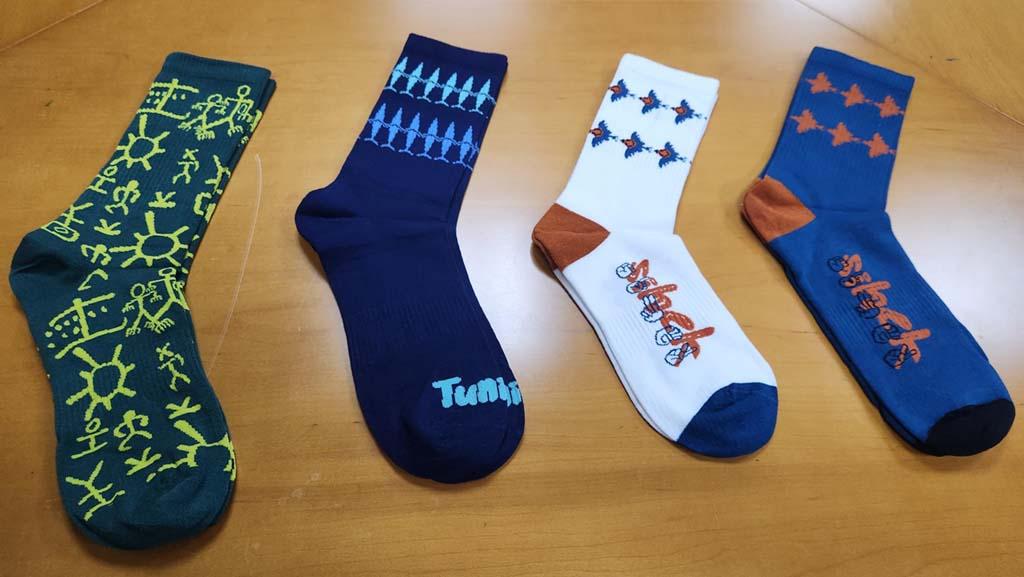
Jonah T.C. Babauta is a partner in Modern CHamoru LLC, together with Nolan Muna, which was launched in June last year. “Before that it was planning of what I would do — it was a passion project, that I wanted to sell CHamoru playing cards — I Taotao CHamoru,” Babauta said. That was the first product. The small business also offers socks, which feature local designs such as gadao or chief, tuninos or dolphins, and the guali’ek or gecko. A donne (chili) pepper design is being reordered. “The gadao and tuninos are the most popular,” he said. The sihek or kingfisher sock in the range is the first to offer two versions.
The socks are sold at the Sagan Kotturan Chamoru Cultural weekend shop at Ypao Point. Babauta sells at several events, including the Sunday night market in Tumon and
island festivals.
Modern CHamoru retails a variety of bamboo cotton socks. Photo by Maureen N. Maratita
“I try to do the major ones,” he said. “We do have an online presence on Instagram and WhatsApp, as well as a website. The website is also in Korean and Japanese.”
Modern CHamoru’s products currently bring in about $1,500 to $2,500 a month depending on its presence at events.
The gender-neutral socks are sourced in China and are 85% bamboo cotton and 15% elastic fibers for stretch. “That’s the appeal of bamboo cotton. It’s soft,” he said. Plus, he said, bamboo cotton is more breathable than organic cotton. Besides that, Babauta said there is little to no pesticide or chemicals used in growth and less water used in the manufacture.
The socks are ordered in bulk, but costs include shipping and some tariffs. The socks retail for $10 or $15. Playing cards retail at $20 a pack.
“We’re also making shorts,” Babauta said, which are currently in research and development, with samples from Pakistan and China. The material is “lyocell for shorts — a wood fiber usually derived from Eucalyptus,” he said.
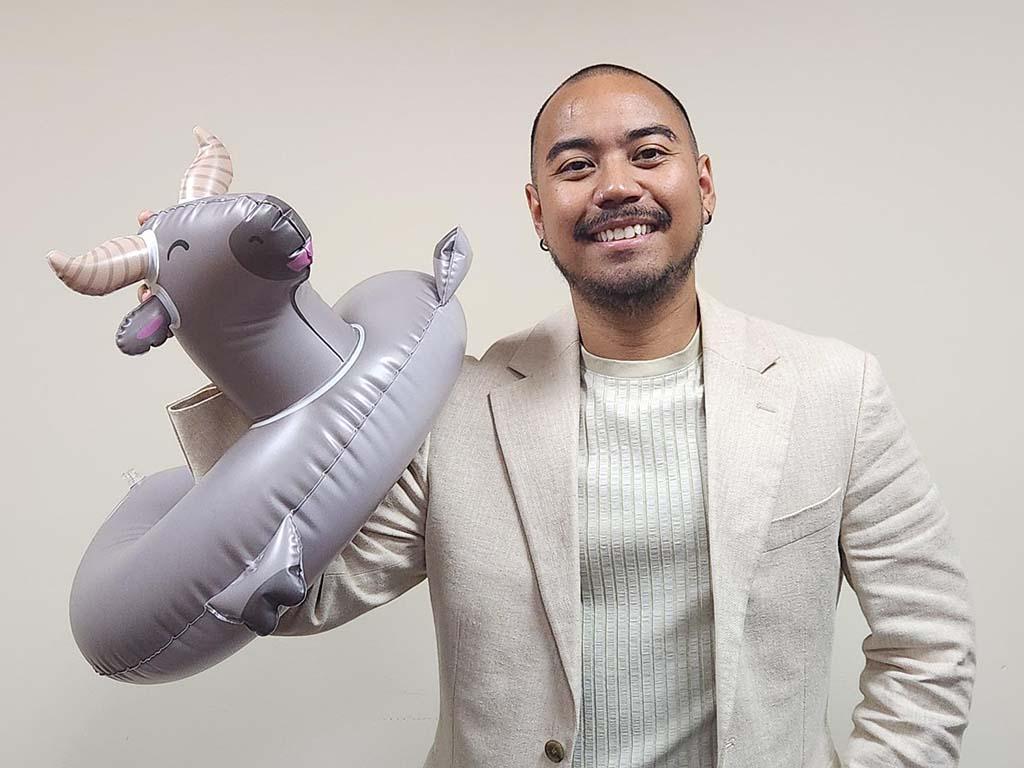
Jonah Babauta, with a Karabo floatie for children being developed. Photo by Maureen N. Maratita
Modern CHamoru’s latest products in development are the Karabao pool floaters and floatie rings. The range stretches from a child’s floatie to an adult size and is also aimed at being sustainable. Of the prototype and the potential manufacturer, Babauta said, “This one is PVC.” He’s currently researching other manufacturers for bio-friendly PVC, as well as eco-friendly processing. The small Karabao is called Baobao and the large one Big Bao.
With upcoming products, Babauta is looking at growing the brand. “I’m hoping. It’s a matter of what do I have to offer that’s different and is it affordable and is it attractive. I know that price point is important to customers,” he said. But they’re CHamoru inspired products and I try to be eco-friendly.” Labels and instructions are in English and CHamoru.
Future aims include increasing the range of products, being a Guam Seal recognized business, and a store, he said. “I would love to have a physical presence.” For a store he’d like to have bilingual signage, use solar energy and “a water catchment system for filtration, whether it’s for operations or human consumption.”
A range of local playing cards incorporates local images and numbers. Photo courtesy of Modern CHamoruEither way, Babauta said, “We do have a five-year plan, thanks to GUMA (Guam Unique Merchandize & Art) and my business advisor — Brian San Nicholas at SBDC (Guam’s Small Business Development Center at the University of Guam).”
Modern CHamoru offers a variety of discounts for military personnel, students, educators and CHamoru language learners. “They have to translate a sentence for us,” he said. Purchases of $20 or more come with a gift.
Babauta has been a reservist with the Guam Air National Guard for 17 years. “I also have active-duty service time,” he said, which in ten and a half years took him to New Mexico, Afghanistan, Korea, the Portuguese Azores and Washington, D.C. In addition, he is a deaf sign language interpreter, which also gave him the opportunity to travel last year. “I got to go to Tokyo for the Deaf Olympics.”
He considers such activities as not only helping to build a community. “It’s giving back. Giving back is very important.”
His busy life has made him visible in Guam to different groups, Babauta said. “People know who I am. They don’t know what I do.”
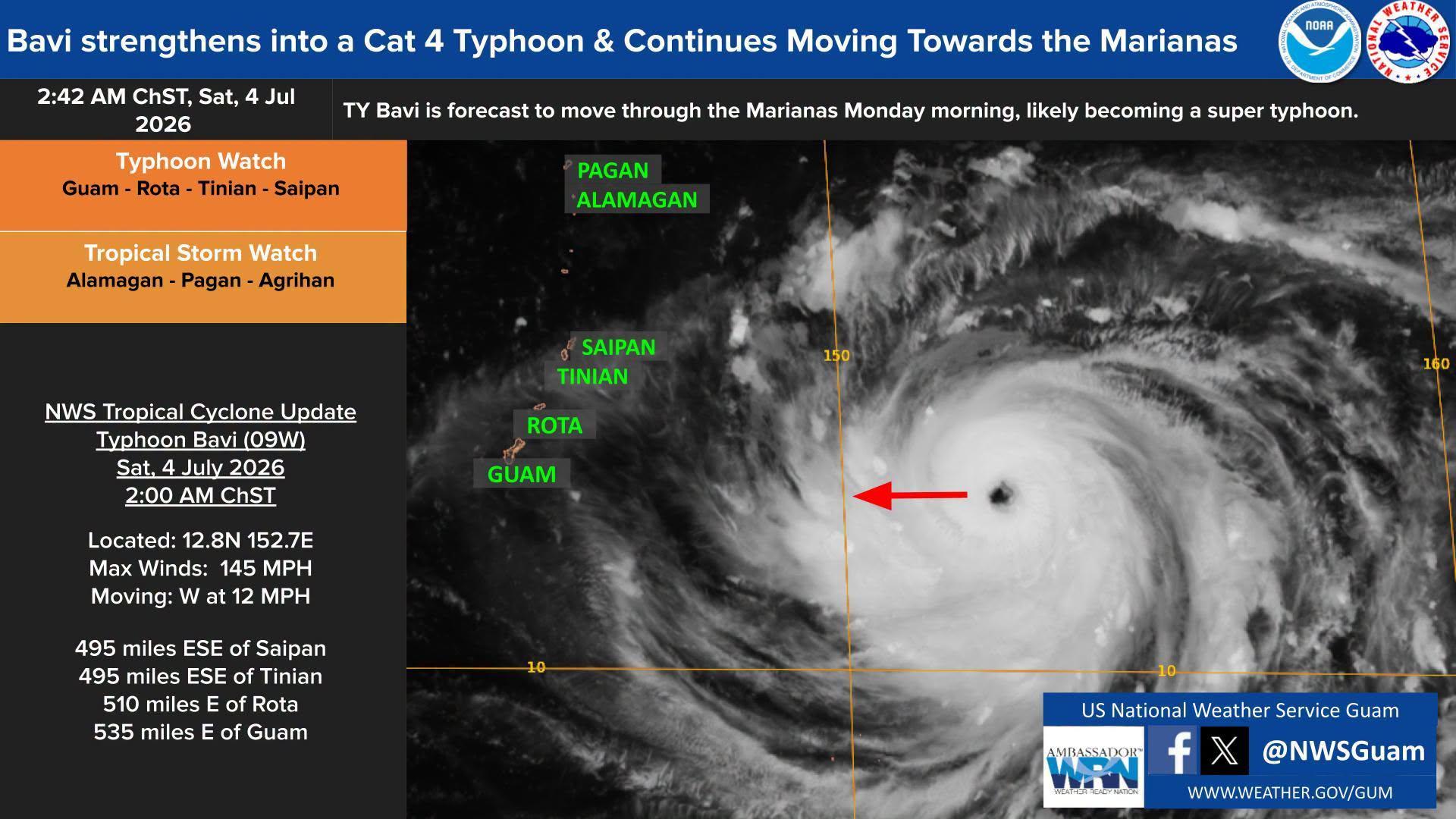
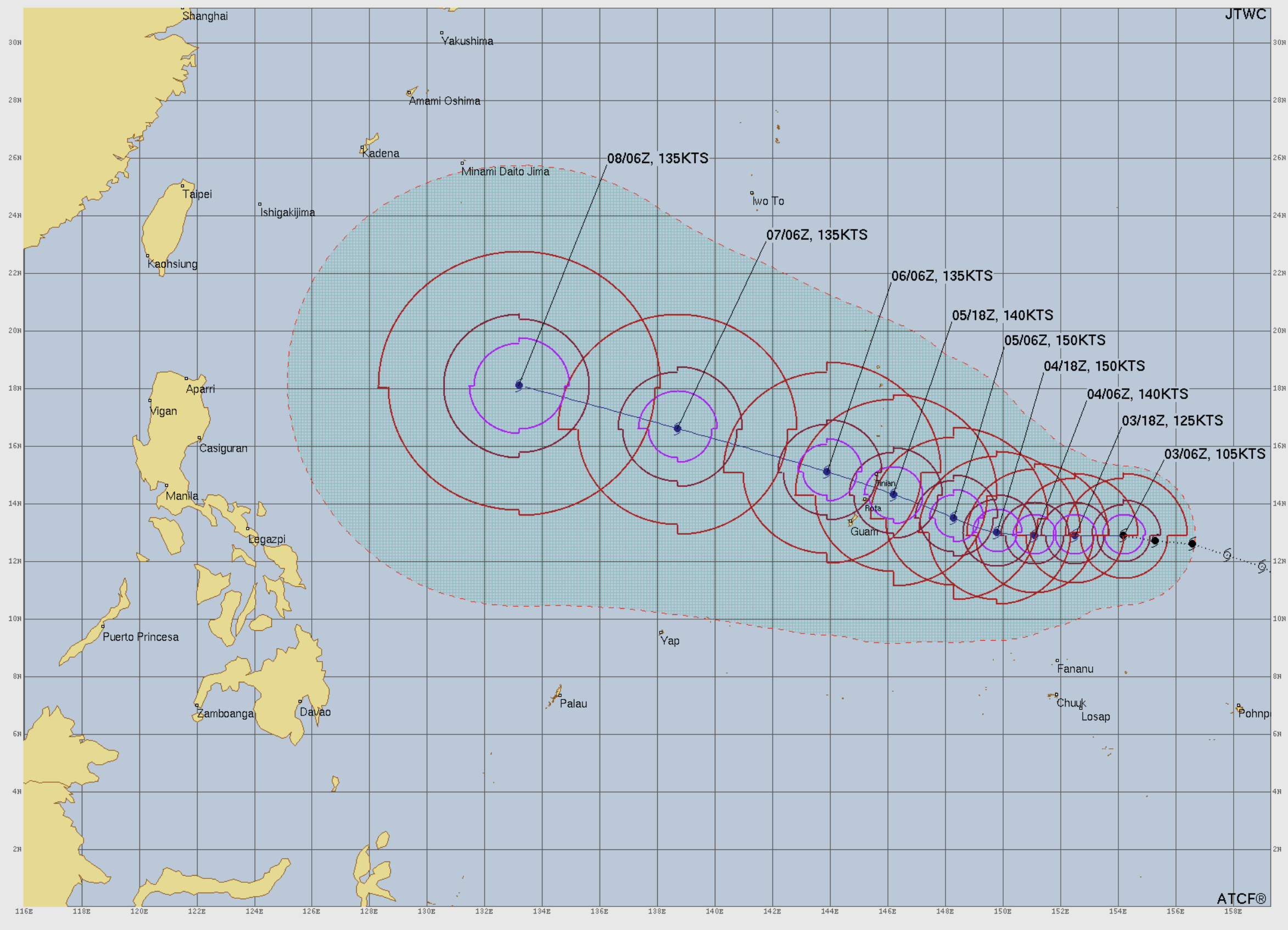
With Super Typhoon Bavi now packing maximum sustained winds of 160 mph and forecast to strengthen further as it moves toward the Marianas, emergency officials are urging businesses and residents to treat this weekend as their critical window to prepare for potentially damaging winds.
Guam and the Northern Mariana Islands are now in Condition of Readiness 3 as Typhoon Bavi approaches, with both governors urging residents and businesses to use the remaining hours of fair weather to prepare.
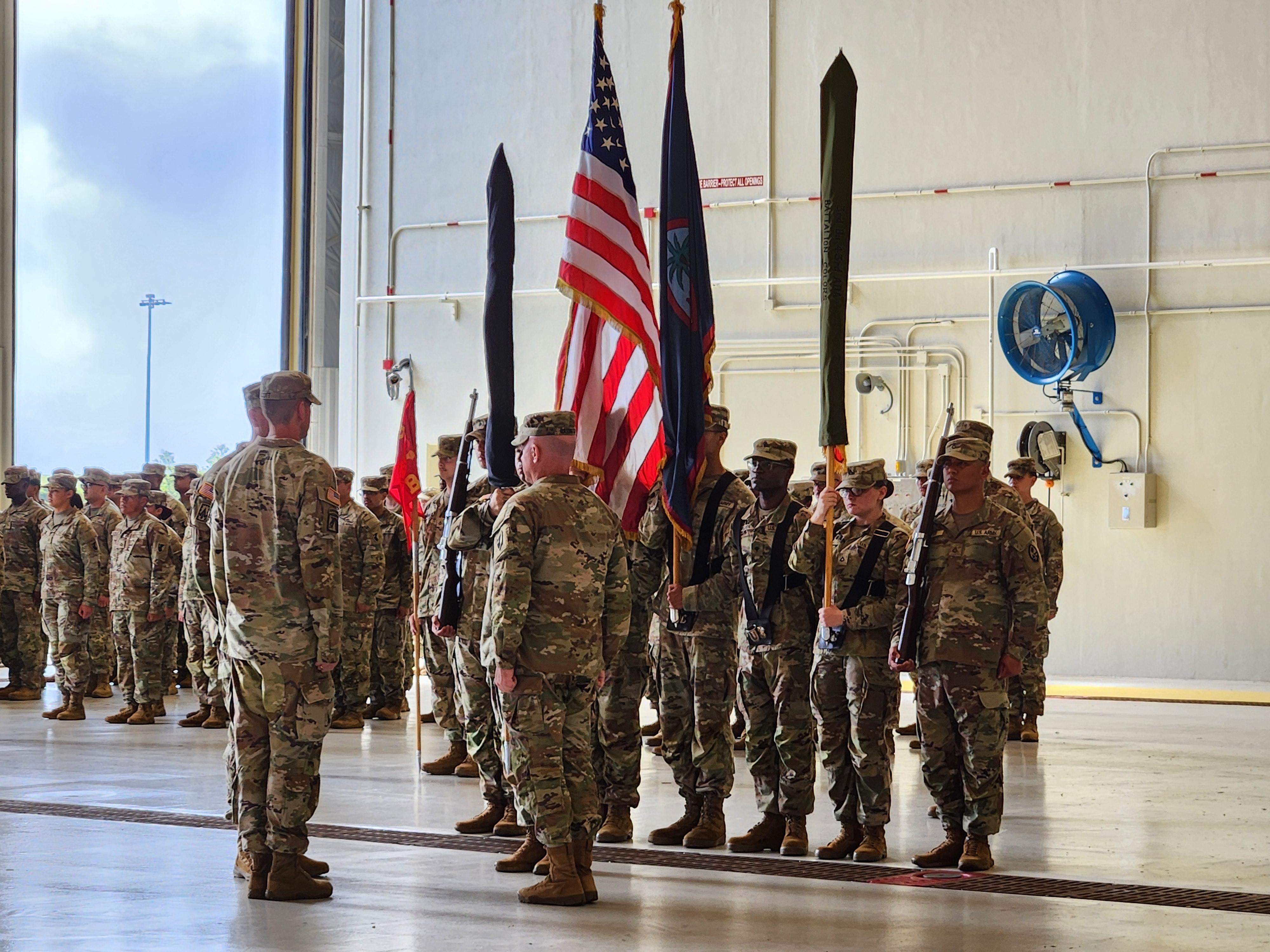
Task Force Talon relinquished command to the 3rd Battalion, 43rd Air Defense Artillery Regiment (3-43 ADA), ushering in a new battalion to take over Guam’s air missile defense systems.
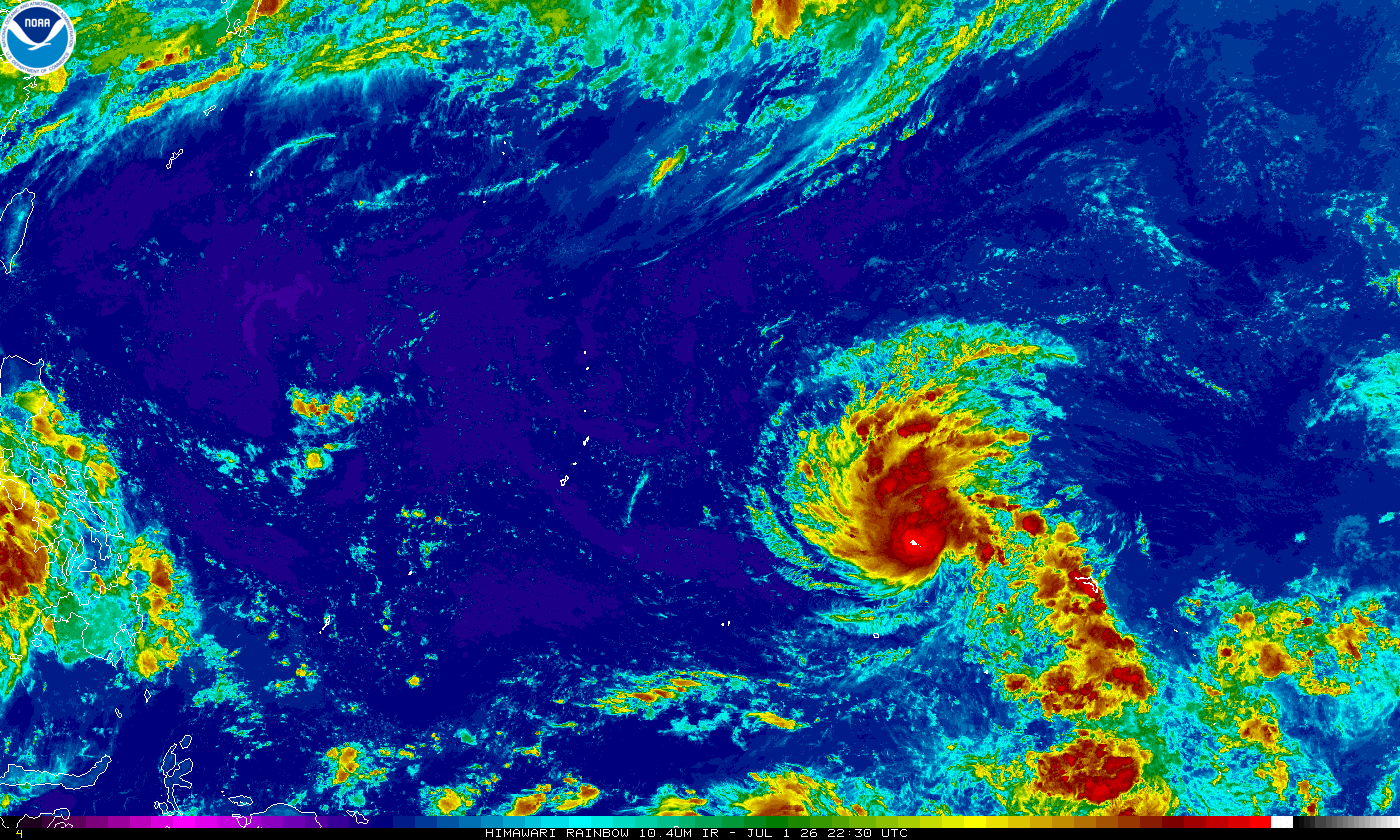
Emergency management agencies across the region are urging residents and businesses to execute disaster preparedness plans as Tropical Storm 09W is forecast to rapidly intensify and potentially strike Guam and the Northern Mariana Islands as a Category four super typhoon.