From pop-up to storefront: NMI small businesses use events as launchpads
BY MARK RABAGO
Saipan Correspondent
SAIPAN, Northern Mariana Islands — For a growing number of Northern Mariana Islands entrepreneurs, a folding tent, a table, some inventory, and a few hours in front of a weekend crowd can be the first step toward something much bigger.
Pop-up events have become more than temporary marketplaces for local small businesses. They are increasingly being used as low-cost testing grounds where entrepreneurs can introduce products, gauge customer demand, adjust pricing, build brand recognition, collect feedback, and decide whether a business idea has enough staying power to move to the next level.
For some, that next level has already arrived.
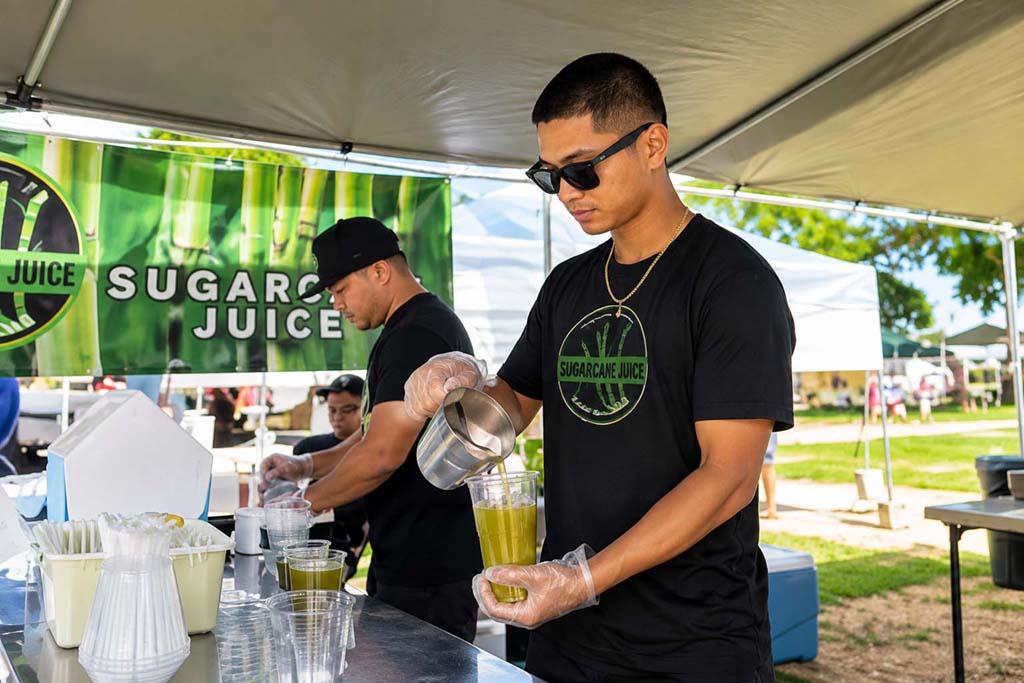
AtaligTupu Cane Juice owner David Atalig said the company’s beginnings were deliberately modest. “Our business started by getting a spot at the Sabalu Market when it was in Garapan and we were only going to do it for a couple of weeks to see if the market would embrace our business venture,” Atalig said.
The answer came quickly. Sales during the company’s first two weekends showed Atalig there was demand for the product and gave the business enough confidence to expand. “Pop-ups are the best way to get your product to the market at these events so that they can try what you have to offer.” Atalig said for a startup the value goes beyond simply making sales for a day. A pop-up lets an entrepreneur determine what consumers like, what they are willing to pay and whether the product is strong enough to bring customers back.
That trial period can be especially important in a small market like the NMI, where committing immediately to rent, utilities, equipment, employees and other fixed costs can represent a significant financial risk.
Instead, a temporary market space gives entrepreneurs an opportunity to learn before making a much larger investment.Tupu Cane Juice eventually moved well beyond its original short-term Sabalu Market experiment. The business now operates from its own location at the Marianas Business Plaza in Susupe.
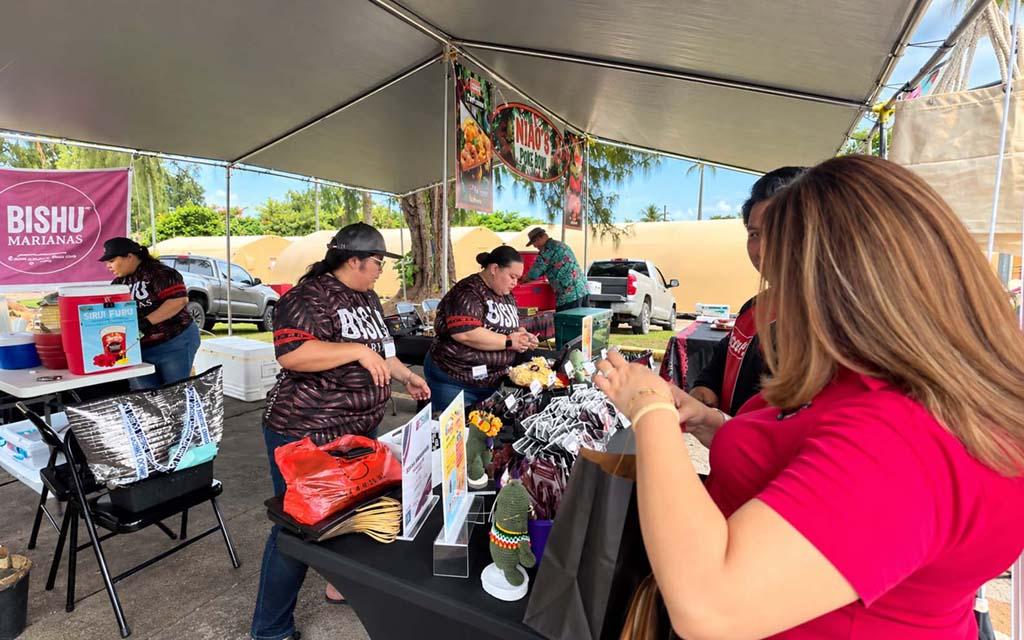
Bishu Marianas owner Daisy Demapan has similarly used pop-ups as a way to study customers rather than simply sell to them. “Community pop-up events always gave us the opportunity to test our products with different demographics,” Demapan said.
DemepanThe audience can change significantly depending on whether the business is participating in a school activity, fundraiser, holiday celebration, community festival, or other gathering. For Bishu Marianas, that variety has provided a real-world look at where products perform well and where adjustments may be necessary.
Demapan said events allow the business to see firsthand when a product is connecting with customers and when it may be necessary to do something differently or even change direction. That feedback has been particularly useful because Bishu Marianas originally began as an online candy business.
Operating online gave the business reach, but it did not always provide the personal interaction of a physical marketplace. Pop-ups changed that by allowing Demapan to meet customers directly and offer products that were difficult to ship during the company’s earlier years.
The result was not only sales. Demapan said the business also reached customers who do not necessarily discover products through social media. She said word of mouth remains powerful despite the growing role of online marketing, algorithms and artificial intelligence. For a small business, face-to-face contact can turn a customer into an informal marketer who later tells relatives, coworkers or friends about a product.
Demapan said events usually produce a temporary increase in sales as well as new customers and help create connections among small businesses themselves, particularly when multiple vendors repeatedly participate in the same community events.
Bishu Marianas has conducted pop-ups in Garapan, Susupe, Middle Road, Kagman, Fina Sisu, and Koblerville. Each location provided a slightly different lesson, Demapan said. The company has learned what particular neighborhoods prefer, what customers dislike and when an event may simply not be a good fit for the business.
“We've also learned to pivot and adapt when we find out a pop up event isn't well suited for us as a business,” she said. That ability to walk away with information, even when sales are not spectacular, is part of what makes the format useful.
Demapan said entrepreneurs sometimes need to adjust their definition of success. Rather than judging every pop-up solely on that day’s revenue, a business might decide its main objective is marketing, product testing, introducing a limited item, or making its brand more visible.
Preparation, however, is significant. “There is so much preparation that goes into displays and logistics,” Demapan said. Vendors have to estimate attendance, prepare enough inventory, design displays and consider whether an event might be saturated with businesses selling similar products. They also have to take into account the community’s buying power at the time and prepare for an event without knowing how many customers will arrive or how much they will spend.
Still, the contacts often continue after the tent comes down. Demapan said customers have reached out afterward regarding gifts or special celebrations, and Bishu Marianas has also received referrals to participate in other events.
The pop-up model has therefore become not only a place to sell but part of its customer acquisition strategy.
Products are now available through several retail outlets around Saipan, including Kosas in Garapan, Mobil Chalan Kiya, Mobil Kagman, and Joeten Susupe. Customers can also order through the Bishu Marianas Store or Bishu Marianas Catalog online.
“Overall, if you're looking to become more visible and build brand recognition, a pop up event is a great way to improve products and get direct feedback,” Demapan said.
SemanFor Krafting Littles owner Isa Seman, the appeal of the pop-up model is somewhat different.
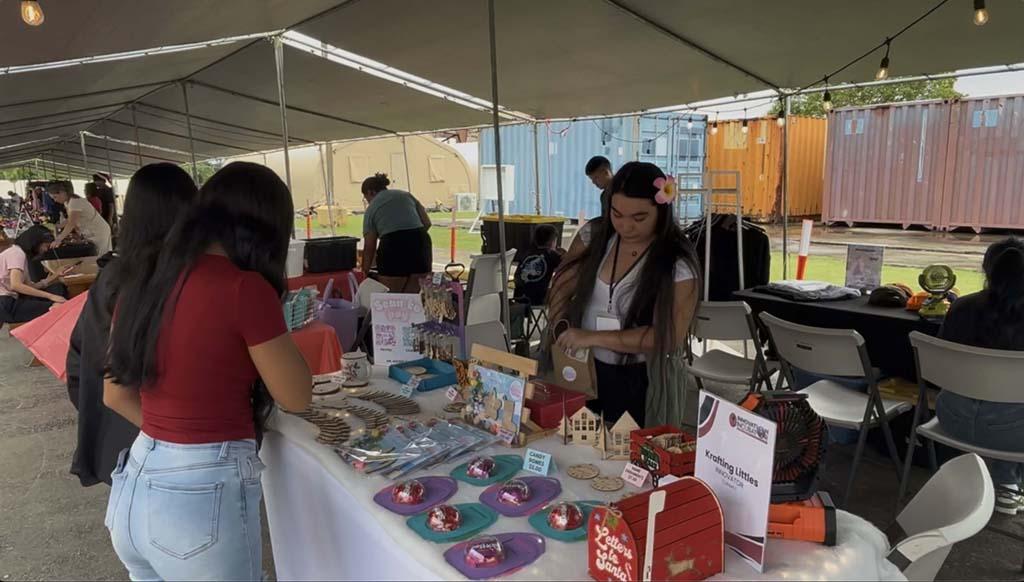
Her small home-based business primarily operates on an as-ordered basis, meaning customers do not ordinarily have a permanent retail location where they can browse through her crafts. A seasonal pop-up changes that. “Participating in seasonal pop-up events has been such a gamechanger for Krafting Littles,” Seman said.
She said events give community members an opportunity to physically see and touch her crafts instead of encountering the products only through photographs online.
For a creative business in a close-knit island community, Seman said -to-face interaction also helps establish trust and gives customers a person they can associate with the brand.
Events have also produced a noticeable sales boost.
Online ordering allows the business to operate throughout the year without the overhead of a traditional store, but Seman said a pop-up can concentrate significantly more customer activity into one day.
Shoppers who may never have encountered her social media page can discover the business at an event, and displaying the actual products can encourage impulse purchases that might not occur online.
The temporary nature of the venue, however, should not be confused with limited preparation. For Seman, preparing for a single pop-up can involve weeks of work behind the scenes. Products have to be printed, cut, assembled and packaged, with enough variety prepared to fill an attractive display and serve customers throughout the event.
Organizations hosting the events Seman has participated in have provided tents, tables and chairs, she said, while allowing vendors to bring additional tables or chairs if necessary.
That reduces some of the logistical burden, leaving the entrepreneur to determine how products will be displayed.
Seman said she concentrates on keeping the booth clean and visually appealing so customers can easily see what is available. The payoff can extend well beyond sales that day.
Customers who first encounter Krafting Littles at a pop-up have later become repeat buyers, she said. Some return to see what new items she brings to subsequent events, while others contact her directly afterward to order customized pieces. For Seman, one of the biggest advantages is that entrepreneurs can test demand without committing to the expense of maintaining a permanent store.
“I feel like pop-up events are such a viable, low-risk way for local startups in the CNMI to grow because they give us a chance to test out our products in the community, see what people love, and share our creative work without the massive overhead of a permanent physical storefront,” she said.
Pop-ups allow entrepreneurs to connect directly with people who intentionally want to support local businesses while gradually building momentum without taking on rent and other costs associated with a bricks and mortar business, she said.
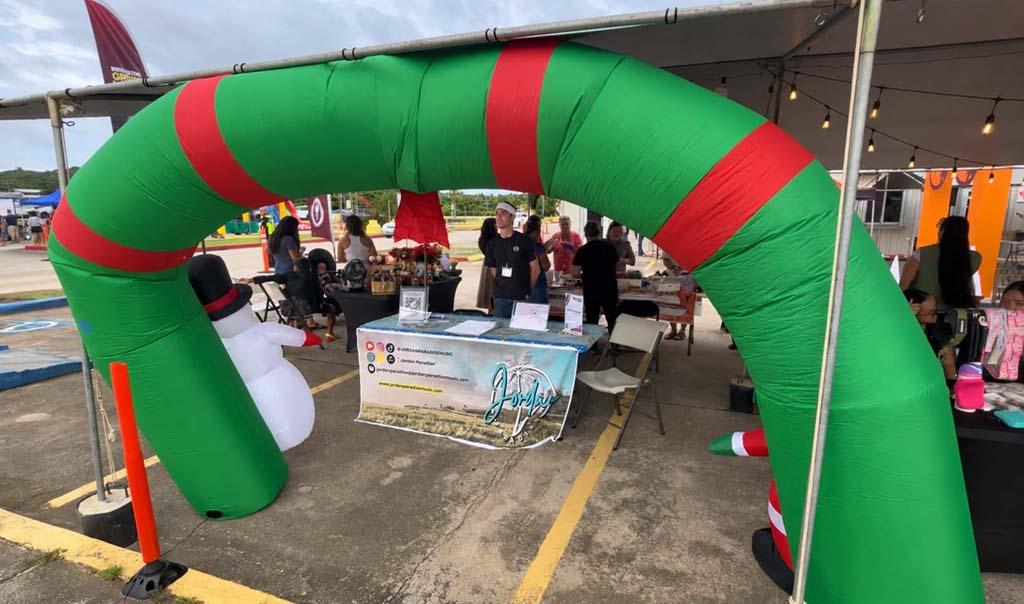
RuizFor Jordan Ruiz, also known as Jordan Paradise, pop-up events helped make something largely creative and digital more tangible.
Ruiz operates Paradise Lyric House LLC and had already performed throughout the NMI before joining pop-up events as a business. But there was a difference between appearing somewhere as an artist and setting up a booth representing an enterprise.
“Taking part in pop-up events gave people more visibility into the business side of what I do,” Ruiz said.
Events allowed customers to see Ruiz not only as a performer but also the services, products, and broader vision behind Paradise Lyric House. The biggest benefit, he said, was not necessarily immediate sales, increased traffic and greater awareness of his work, and the business behind performances. Events also generated new connections and introduced the brand to people who might not have interacted with it.
Ruiz has tried to make sure those connections do not disappear once an event ends. His booth uses a QR code that directs visitors to his digital platforms, including music, social media, services and other information. He also brings something he can promote or sell directly while also preparing for performances during the event, allowing the business and entertainment sides to operate together.
After an event, Ruiz said customers frequently continue following him through social media, and he also collects email addresses through a QR code, allowing him to further remain in contact with people he meets. Those contacts can promote releases, services, products and upcoming appearances, and the pop-up delivers a longer customer relationship.
“Pop-up events are a great way for local startups to raise awareness through public visibility and connect directly with the community,” Ruiz said. They also allow startups to test services and see what people respond to before committing additional resources.
For a creative business like Paradise Lyric House, that visibility can be particularly important because the product may not be as obvious as food, clothing or crafts displayed on a table. A physical booth gives potential customers the chance to ask questions and better understand what the company does.
While pop-ups can appear casual from the customer side, business owners say considerable planning takes place before an event opens.
Atalig said vendors have to make sure they arrive with everything they need because there may be little room to correct a mistake once the event begins. Some businesses begin setting up several hours ahead of opening. Staff have to be available for preparation, during the event and breakdown afterward.
For food and beverage vendors ingredients, refrigeration, food preparation, sanitation and serving equipment all have to be considered.
Marketing also needs to be part of the setup. Atalig recommends businesses prominently display their social media pages or websites, making it easy for customers to find them again. He said contact information can be printed on flyers, bags or the product itself so customers do not leave the event without knowing where to make a future purchase.
That follow-up can determine whether a temporary sale becomes a repeat customer. Tupu Cane Juice encourages customers to follow its social media accounts so they know where the company will appear next. Atalig said people who try a product and like it will often look for the business again later.
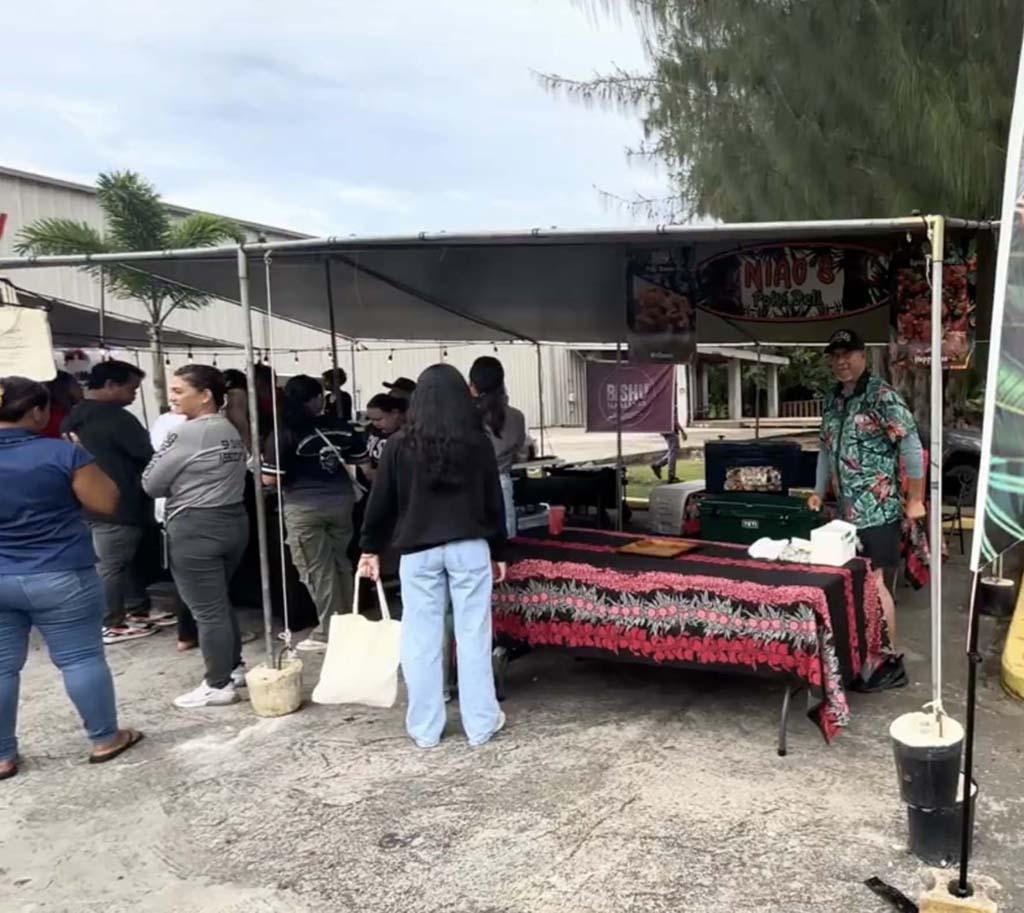
DancoeNiao’s Poke Deli owner Curtis Dancoe is also a local business that has combined a permanent location with continued participation in community events.
Niao’s has appeared at a Northern Marianas College Charter Day, a Marianas High School senior event, and the Saipan Fishermen’s International Derby.
The company now operates its deli in San Jose next to Marianas Insurance.
Dancoe opened Niao’s Poke Deli on May 1, 2025, at a difficult time for the NMI economy.
The timing was far from ideal for opening a restaurant-style business but he was drawn by what he described as the entrepreneurial spirit. Support from the Northern Marianas College Small Business Development Center and Bank of Hawaii also helped make the venture possible.
The idea itself came from something much more personal.
Dancoe has said poke was a comfort food from his childhood in Hawaii. After preparing it for his children and extended family, he was encouraged to turn the food into a business.
“It’s a childhood dream when I was a beach bum in Waikiki. Actually, it was something I grew up on. It was a comfort food in our house in Hawaii,” he said during the NMI Small Business Development Center’s 2025 Christmas in July event.
Niao’s sells poke featuring ahi tuna, salmon and octopus, poke platters and specialty items. The business has continued operating through a difficult economy and the disruption of Super Typhoon Sinlaku. Niao’s celebrated its first anniversary on May 1, about three weeks after the typhoon.
Dancoe said its power bill and ingredient costs have doubled, illustrating the pressure facing food establishments in the NMI. Still, he said the business has survived because customers continue to support it and because of the commitment of employees.
“To be a survivor in this business, you have to ask yourself, ‘Why?’ My answer was simple, because the people in our community asked for it,” Dancoe said.
When Niao’s participated in Christmas in July in 2025, Dancoe said opening the business initially raised eyebrows. “People thought I was nuts to do something like this with the way the economy and everything are going,” he said.
Community response, however, convinced him there was a place for the concept.
Niao’s experience differs somewhat from businesses that began directly from a market stall, but its continued participation in pop-ups shows how established businesses can reach customers away from their permanent locations. The NMI’s Small Business Development Center has been among the organizations creating opportunities for businesses to do just that.
Its Christmas in July event on Aug. 22, 2025 at the NMC’s As Terlaje campus brought together 27 small businesses.
Participants included Sweet7Oh!, Bishu Marianas, Dae Jam Kum Catering, Rice2MeatU, Niao’s Poke Deli, Chance Boy’s, Tyler’s Gelatte Stone, Tropic Treats670, Tupu Cane Juice, Divine’s Essentials Food Truck, Ben Ki, The Kuxsins, Dube’s Smokehouse Tacos, Chiku Chiku, Krafting Littles, Mind2Muscle, NMC Club of Artists, Papercraft with Jill, Robertoy, Alyssa’s Yam’s, Marianas Deals, Bobole’s Novelties, MCCREATIVENET, Paradise Lyric House LLC, HIGHLANDS Crafts, Patriots Bloom Nursery, and Cokonut Express Trading.
The event was scheduled for July 25 but was postponed because of weather advisories from Tropical Storm Kosra. Nadine Deleon Guerrero, network director for SBDC, said at the time that the delay ultimately allowed the organization to include some of the businesses admitted to the CNMI Innovation Incubator Program.
“I'm glad they get to participate, I'm glad they get to showcase their products, and people get to know more about them as a small business,” she said.
Deleon Guerrero also noted a broader economic context.
“Small businesses are the backbone of every economy, which is really true,” she said. mbj
Just hours after Super Typhoon Champi passed south of Guam, President Donald Trump approved Gov. Lourdes A. Leon Guerrero's request for an emergency declaration, which authorizes the Department of Homeland Security's Federal Emergency Management Agency to coordinate emergency assistance.
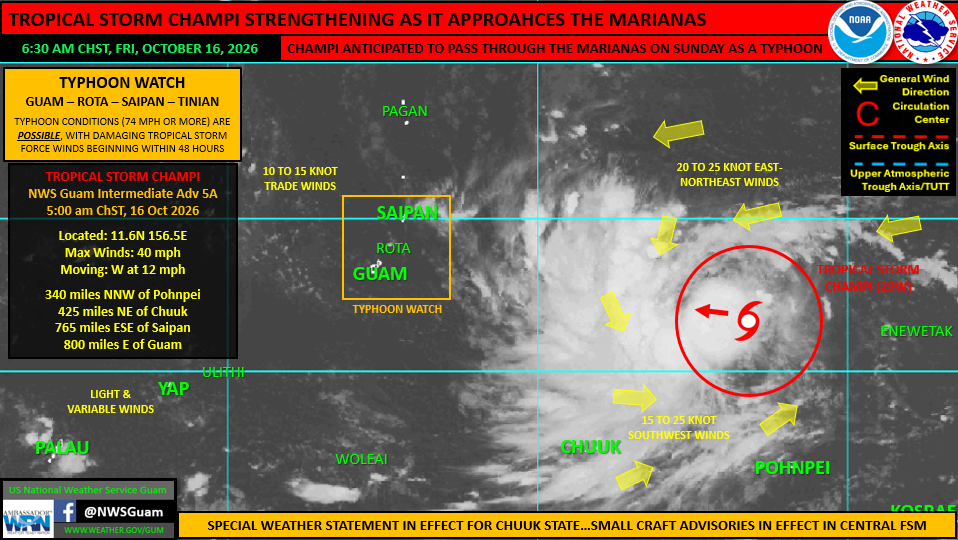
The Marianas are bracing for severe weather as Tropical Storm Champi steadily strengthens east of the region, prompting weather authorities to issue typhoon watches and forcing local tourism officials to postpone major regional events.
In the Northern Mariana Islands, the American Red Cross is deploying personnel from Guam, Hawaii, and the U.S. mainland in preparation for Tropical Depression 29W. It comes as the islands of the Marianas are still recovering from Typhoons Sinlaku and Bavi earlier this year.