Steps towards parity: Moylan announces loan cap and in-state tuition measures, paints picture on wage disparity
BY SKYLER OBISPO
Journal Staff
Measures to make secondary education more affordable for students in the territories and to cap the federal student loan interest rates are being discussed on Capitol Hill.
Guam’s delegate to Congress James C. Moylan announced H.R. 6472, the Territorial Student Access to Higher Education Act, was passed in the House of Representatives on March 3.
The bill received mostly bi-partisan support and passed with a 351-72 vote.
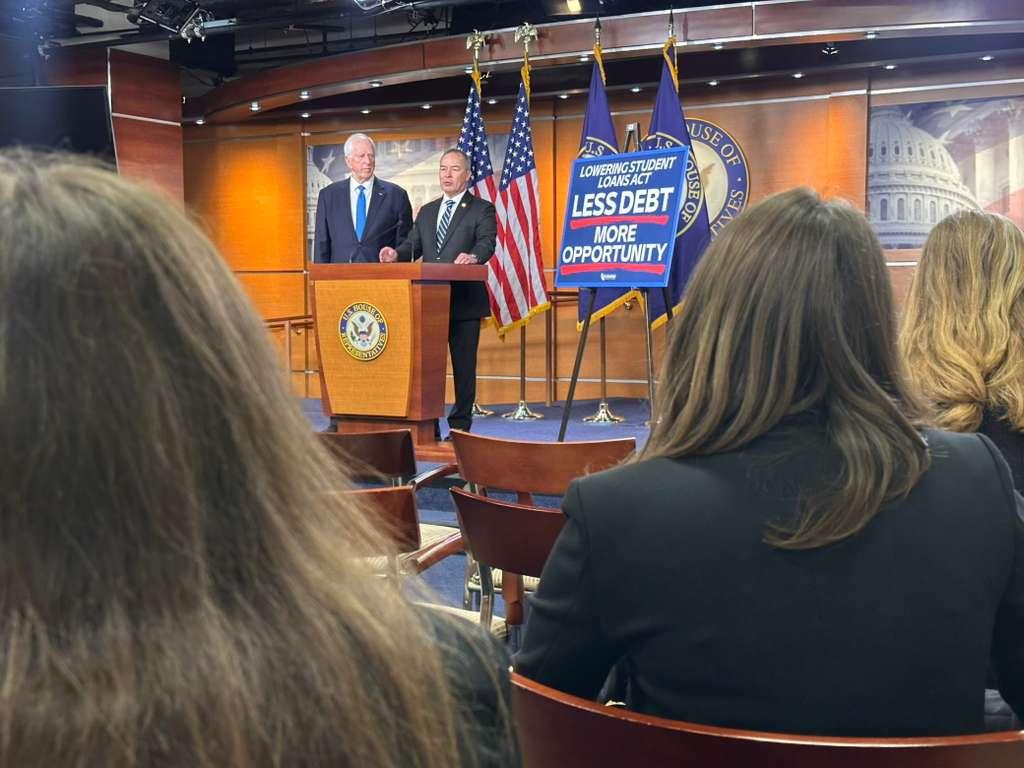
Moylan speaks with California Congressman Mike Thompson and a press conference for the Lowering Student Loans Act. Photo courtesy Office of Congressman James Moylan
Moylan authored the measure and is cosponsored by Kimberlyn Hing-Hinds, the Northern Mariana Islands delegate to Congress, Congresswoman Aumua Amata Coleman Radewagen of American Samoa, Congresswoman Stacey Plaskett of the U.S. Virgin Islands, and Resident Commissioner Pablo José Hernández of Puerto Rico and joined by Representative Salud Carbajal of California.
H.R. 6472 seeks to amend the Higher Education Act of 1965 to provide in-state tuition rates for certain residents of Guam, the NMI, American Samoa, and the U.S. Virgin Islands.
Moylan said in a March 5 statement the passage of the bill marks, “a significant step toward ensuring true parity for American students living in the territories,” further stating that Guam’s students often leave the island to pursue opportunities not offered locally, and in the process incur heavy financial burdens through inflated out-of-state tuition rates.
According to the 2024 American Community Survey 36.8% of Americans aged 25 and older hold a bachelor’s degree or higher. On Guam, that percentage is 25.3% and in the NMI it is 21%.
Moylan said lowering tuition rates for students in the territories makes it more likely for those students to return to strengthen the island’s workforce.
Though the measure does not include provisions for return-service commitments or incentives, Moylan’s office told the Journal, workforce retention initiatives and return-service programs are often developed at the local government level.
“Measures like H.R. 6472 are intended to complement those efforts by making higher education more financially accessible from the start,” his office said.
The University of Guam launched a program in 2023 in an effort to attract college students earning degrees abroad in STEM to come back to Guam for work, though the effectiveness of the program is not known.
UOG reported that for every three students who leave Guam to pursue a college degree, only one returns.
According to Journal files, the Navigating Home program would offer new returning graduates a $45,000 a year job along with airfare at UOG or at a host government agency. The program was a part of a National Science Foundation funded initiative, in which UOG received $2.17 million.
But wages on Guam have not kept up with the United States, making it a harder decision for degree holders to come back to the island.
Data from the U.S. Bureau of Labor Statistics show that in 2024, the total mean hourly wage across all occupations for Guam is roughly 65.5% lower compared to the U.S. The data reports the mean hourly wage for Guam is $21.39 compared to $32.66 in the U.S.
For jobs that typically require some kind of secondary education, the wage disparity is even more apparent: business and financial operations occupations earn a mean hourly wage of $30.98 on Guam, approximately 68% lower than the national mean of $45.04 much like the comparison between legal occupations.
Moreover, educational instructors and librarians on Guam earn 77.6% less than their national counterparts.
H.R. 6472 does not address the wage disparity either. Moylan’s office told the Journal the primary objective of the measure again is to make higher education opportunities more accessible to students in the territories.
“The hope is that by reducing the financial burden of obtaining a degree, more students will have the opportunity to pursue the fields they are passionate about and ultimately bring those skills back to strengthen Guam’s workforce and economy,” his office said.
Moylan also announced he is co-leading a measure with Californian Congressman Mike Thompson to cap federal student loan interest rates at 2%.
Thompson at a press conference in Washington D.C. said in the past 30 years, the average tuition of four-year public and private colleges have doubled and said 80% of people who drop out or choose not to pursue higher education did so primarily due to costs.
“That’s just wrong,” he said.
He added the high cost of higher education is exacerbating the national workforce shortage for skilled occupations like doctors, nurses, teachers, and those working in the trades.
Thompson’s Lowering Student Loans Act would also reduce the loan rates for borrowers with existing federal loans to 2%.
Moylan said Thompson’s measure ties in to H.R. 6472, highlighting again the importance of making higher education affordable to a young population in the U.S.
The measure is intended to simplify repayment, reduce the risk of loan default, and help students and their families plan for the long-term costs of higher education, according to a March 5 statement from Moylan’s office. mbj
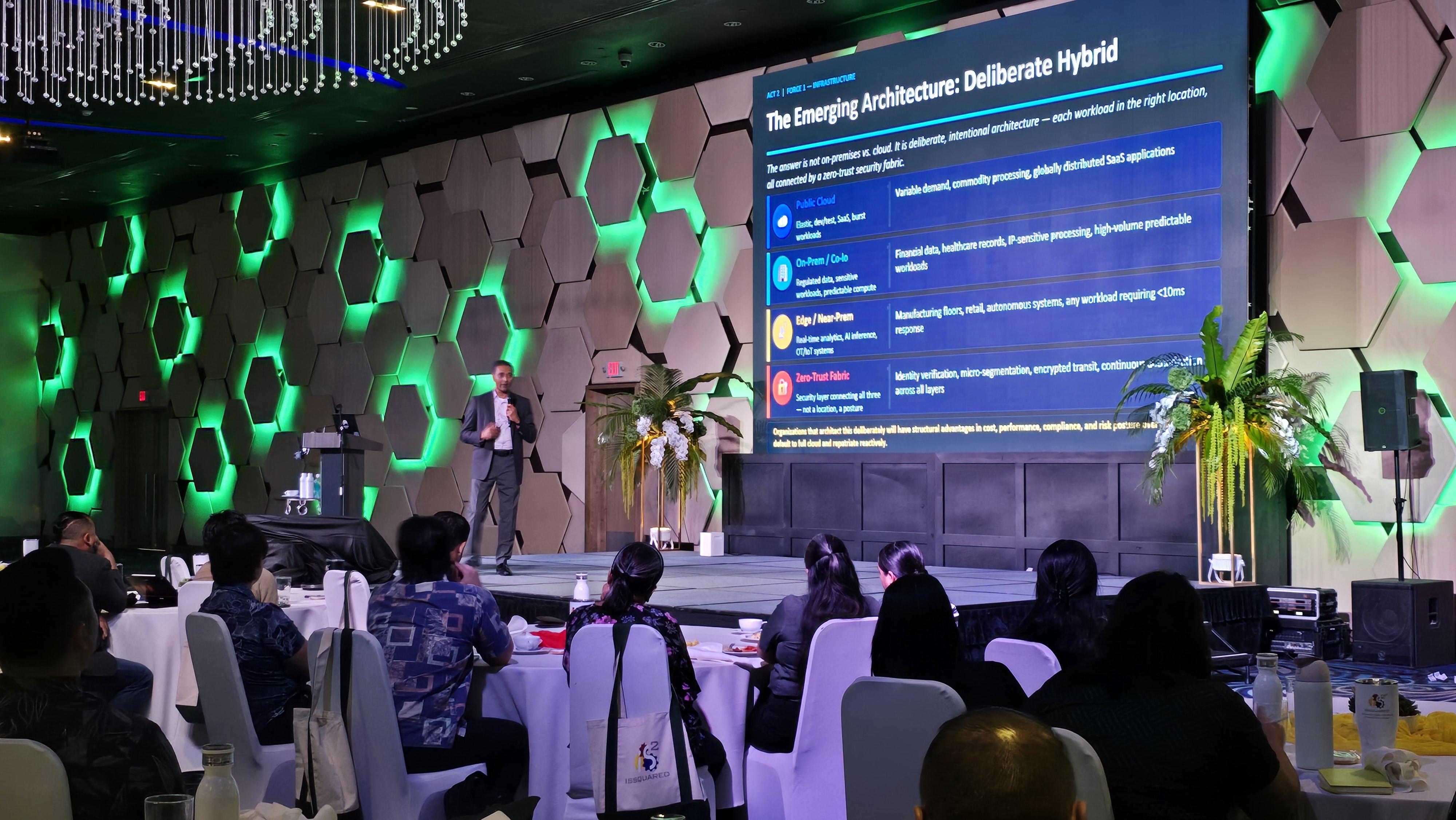
Rapid advancements in artificial intelligence, escalating cybersecurity threats, and mounting physical power grid constraints are forcing regional business leaders to fundamentally overhaul their technology strategies, shared to industry experts during a technology conference held on July 23 at the Dusit Thani Guam Resort.
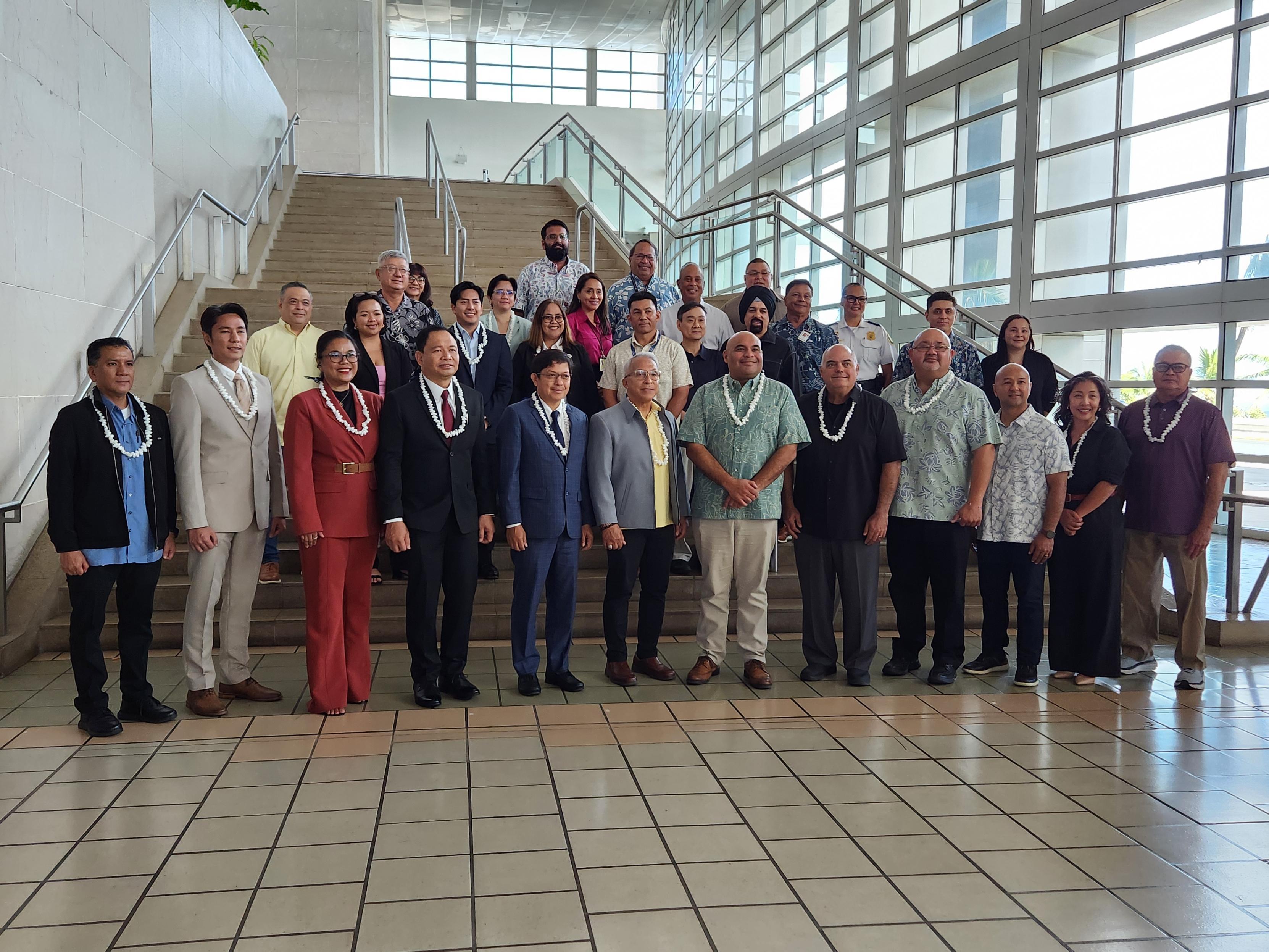
Regional leaders, government officials, and industry executives gathered at the Guam International Airport Authority on Wednesday, July 22 for the inaugural session of the Guam-CNMI Visa Waiver Working Group, driving a unified regional effort to expand the Guam-CNMI Visa Waiver Program to include the Philippines.
The commercial adult-use cannabis industry on Guam has officially launched following the issuance of the island's first recreational cannabis cultivation license to local grower Stephen Roberto, operator for Deep Green Guam of Guam Real Deal, LLC.