Amateur radio in Saipan and Guam still has fans using the radio waves
BY MARK RABAGO AND
MAUREEN N. MARATITA
Saipan Correspondent, Journal Staff
GARAPAN, Saipan and YIGO, Guam — Romeo “Bong” Malasarte and Eddie Williams are among the few remaining enthusiasts of the once-popular hobby of amateur radio on Saipan.
Also known as ham radio, amateur radio has long had a place in pop culture—from The Andromeda Strain to Apollo 13 and Frequency — but it has seen better days with the rise of the internet, mobile phones, and other modern communication technologies.
Nevertheless, there’s a place where amateur radio serves its fans.
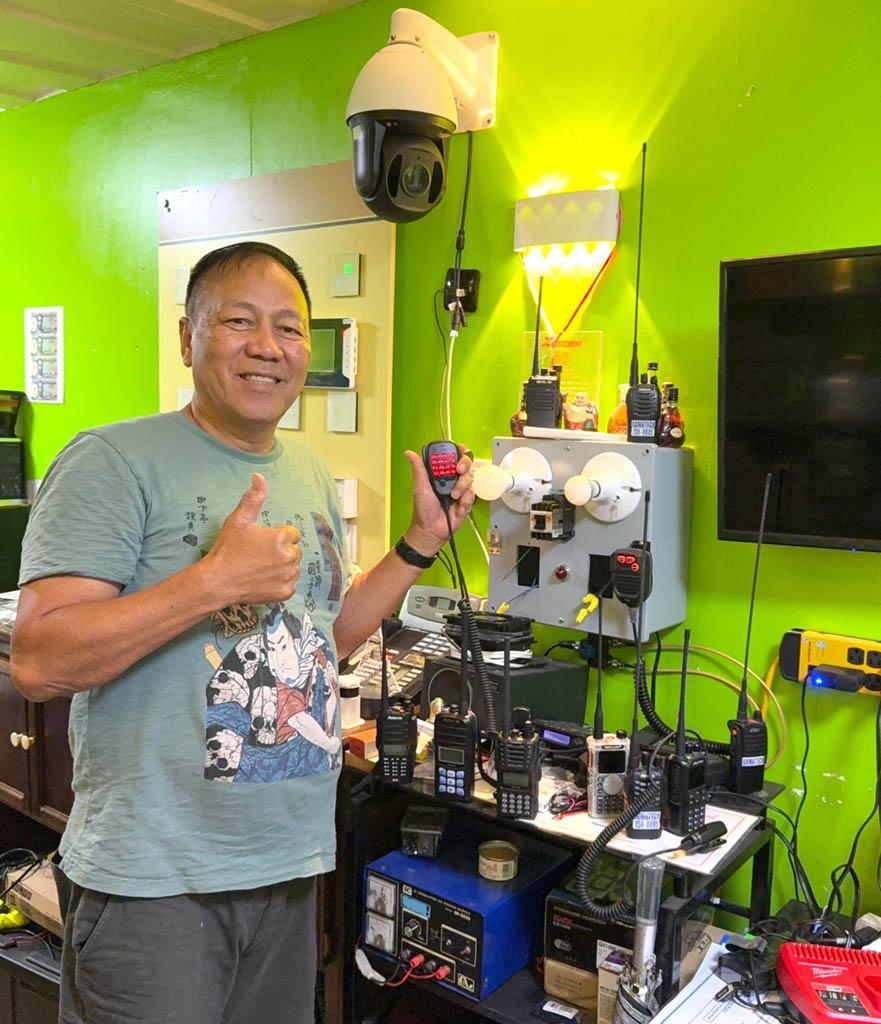
Malasarte, who owns electrical and technological services company Armatech Corp. and Pepoy’s Restaurant and Café, considers ham radio a niche hobby now — far from its heyday in the 1990s and 2000s on Saipan, when the group he belonged to, the MDX Radio Group, had nearly 50 members.
Maslarte“The amateur (ham) radio hobby on Saipan is small and relatively quiet but still active at a modest level. We now have only 20 members, but some former MDX members may still have radios even if they are not active operators. MDX amateur radio still exists with a few members.”
Malasarte said he started in amateur radio because he was curious about long-distance communication.
“Making my first contact overseas using nothing but radio waves gave me a real sense of accomplishment. Today, ham radio brings me enjoyment, technical learning, and the ability to help in emergencies when other systems fail. It reminds me that even in a digital age, there are ways to stay connected without depending on infrastructure.”
For him, communication via amateur radio is summed up in one acronym: WWEEF —Works When Everything Else Fails.
And nowhere was this more evident than during disasters.
“On Saipan during Typhoon Chaba and super typhoons Soudelor and Yutu, amateur radio was our only means of reliable communication. In previous Tagaman triathlons, ham operators helped relay real-time updates between race marshals and medical teams. This ensured fast response to emergencies and smooth race coordination, especially in remote checkpoint areas on Saipan”
Malasarte said amateur radio’s peak years were marked by more operators, more events, and more active emergency communications on the island.
“That was the time it was most popular and widely used. I hope the community recognizes the practical value of ham radio in disasters, sports events, and public service, so that operators are not only hobbyists but trusted volunteers. It keeps Saipan connected when it matters most.”
He added that even with fewer operators today, each one can still make a significant difference — particularly in emergency communications, sports events like triathlons, Red Cross activities, and public service coordination.
“On Saipan, two to four dedicated operators can effectively cover much of the island’s emergency communication needs. Ham radio is really a hobby with a purpose,” he said.
Another amateur radio enthusiast, Eddie Williams, got his novice ham license when he was just 14 years old in 1964.
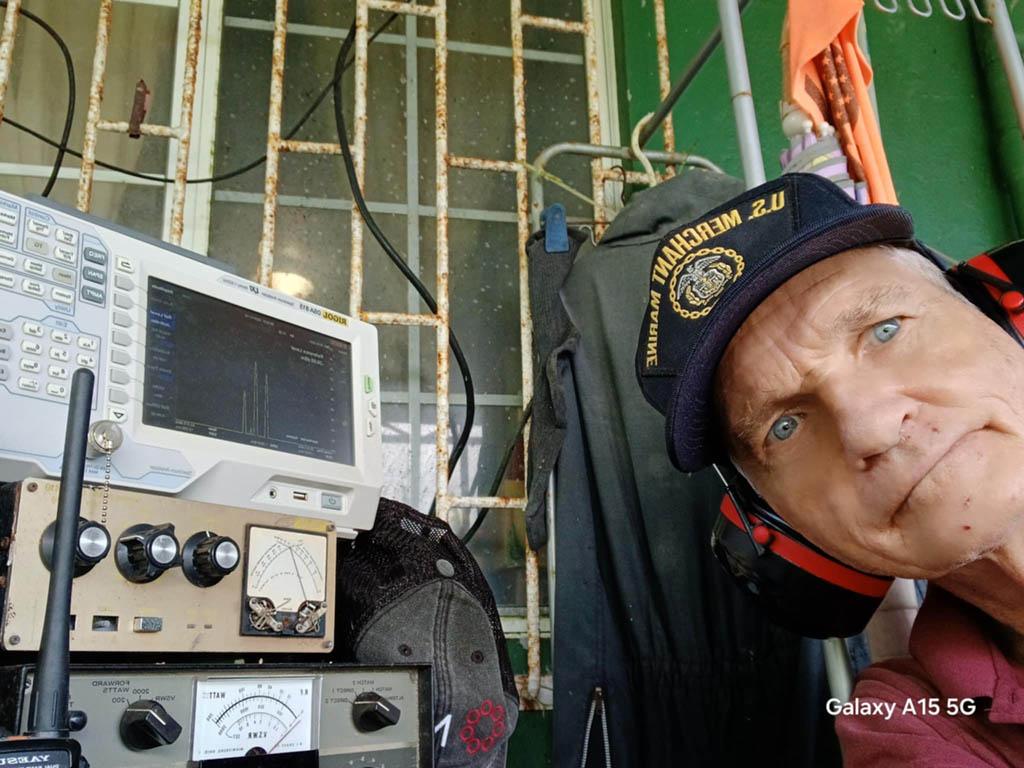
Eddie Williams
Like Malasarte, he acknowledged the decline of amateur radio but insists it still has a place in the ever-evolving digital world.
“I’m one of the old-timers. It’s still mostly an older group. I was pretty proficient in Morse Code and still use some today. The internet has gone down during power or link outages. Most hams still have HF/VHF radios with backup power. Pilots and seagoing officers still have to know how to use amateur radio.”
Before retiring in 2009, Williams worked for the VOA/RFA Shortwave transmitter relay on Saipan and Tinian. In the 1970s and 1980s, he worked in Australia on Joint Defense communications. He was with Barricade Radio in 1990 and volunteered for Operation Desert Storm in 1991.
Williams said whenever modern systems go down, hobbyists will continue to keep communication alive.
“The internet has gone down during power or link outages. Most hams still have HF/VHF radios with backup power. Hams have their own VHF/UHF radio repeaters and emergency power. In its heyday, there were thousands in the USA and millions around the world. There are lots of hams involved in radio electronics, government, and industrial research.”
According to online sources, amateur radio — commonly known as ham radio — is a popular hobby and volunteer service where individuals use radio frequencies for non-commercial communication, experimentation, self-training, and emergency response. It allows people to communicate across town, around the world, or even into space without relying on traditional infrastructure like the internet or cellular networks.
Jay Felicitas is one of the owners of Unicorn Freight Inc. in Guam, which deals predominantly with military customers, and has been using radio as a communication device since 1998.
He told the Journal, “Here in Guam there are both ham and GMRS.”
GMRS or General Mobile Radio Service is a licensed, two-way radio service for short-to-medium distance voice and data communication, primarily using channels in the 462 and 467 MHz bands. It requires a U.S. Federal Communications Commission license to operate, which is valid for 10 years and covers an entire immediate family.
Felicitas said an FCC GMRS license costs $35 and GMRS is becoming popular in Guam. There are between 150 and 200 licensees, with about 30 active users, but that the number of users is increasing.
“Every day, it’s growing.” He said FRS or Family Radio Services has 22 channels that can be operated on and both FRS and GRMS use the same shared frequencies.
“You can purchase an FRS [or two-way radio) at Home Depot. It’s a small radio for short distances. When it comes to GRMS, it’s a little updated.”
FelicitasAlthough FRS and GRMS use the same frequencies, there are differences, Felicitas said, as FRS and GMRS use different channels — Channels 15 through 22 — rather than ham radio channels. GMRS is designed for short-distance, line-of-sight communication of between 1 and 25 miles.
Felicitas said although Guam is relatively small, no business in the telecom industry can cover blind spots that exist. “When you’re in our Piti site, a repeater from there can reach Ritidian Point.”
He said amateur radio still has its uses as a communication device. “It’s good to use radio for chatting.” He also said that amateur radio is “a backup communication.”
Additionally, Felicitas said the system has other advantages. “Technically this is a system where you talk in a group. When I talk on a repeater, they can hear me instantly — on a GRMS radio, when you’re keyed in V they can hear you instantly.”
In an emergency, he said, “At the same time we can call the police, or whoever is available.”
Felicitas said for those interested he can be contacted on Facebook at Islander GMRS network. mbj
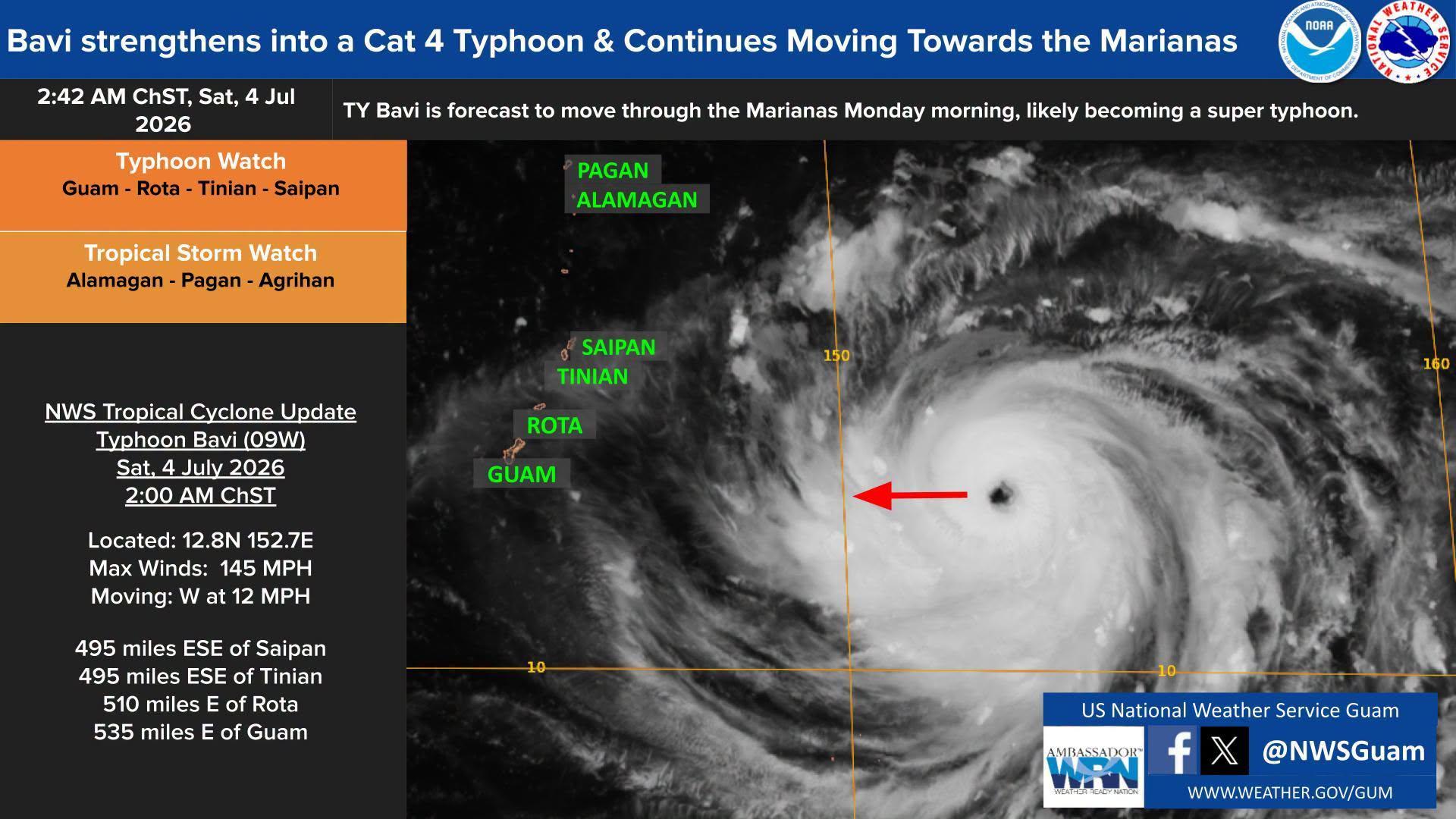
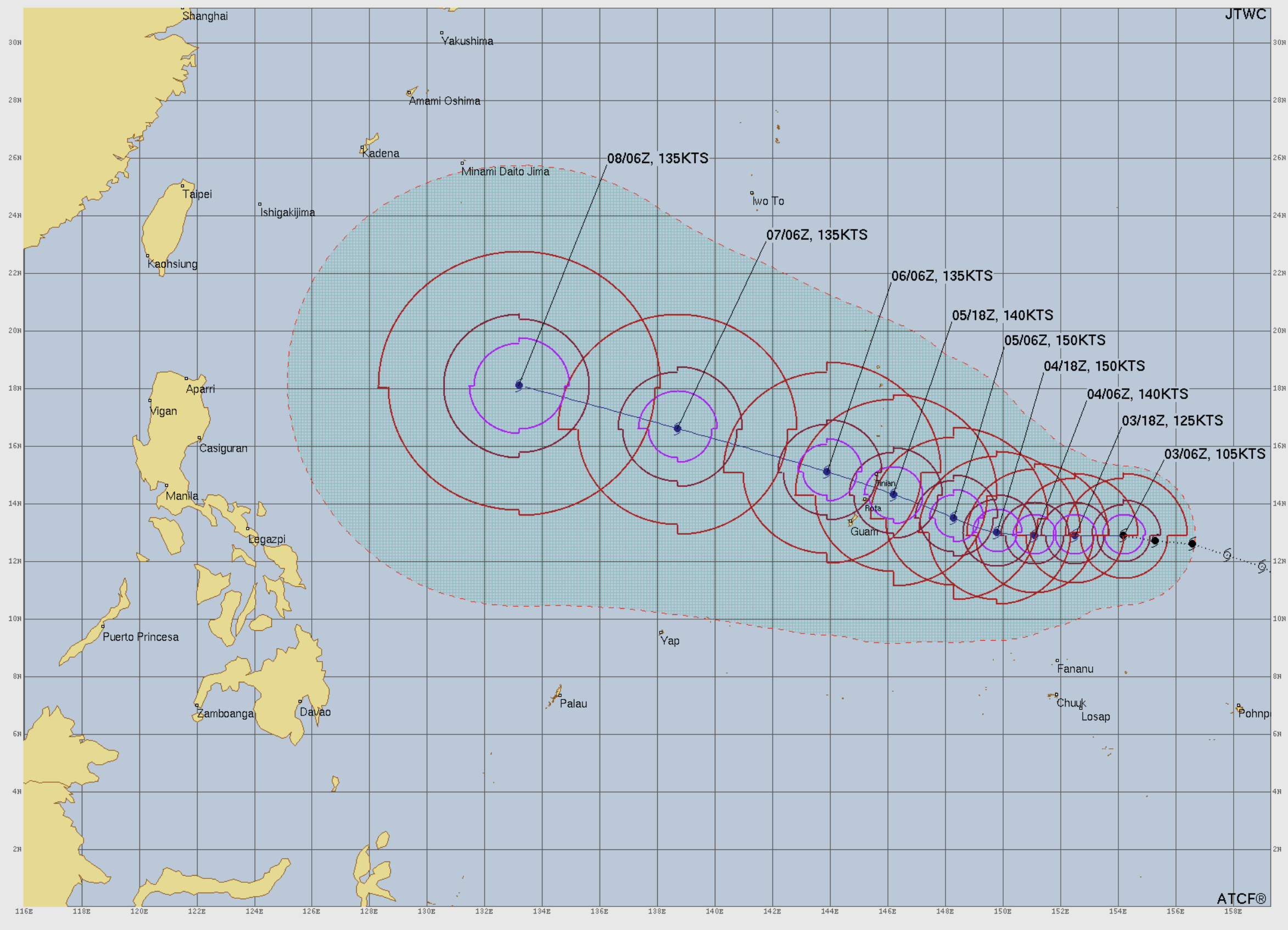
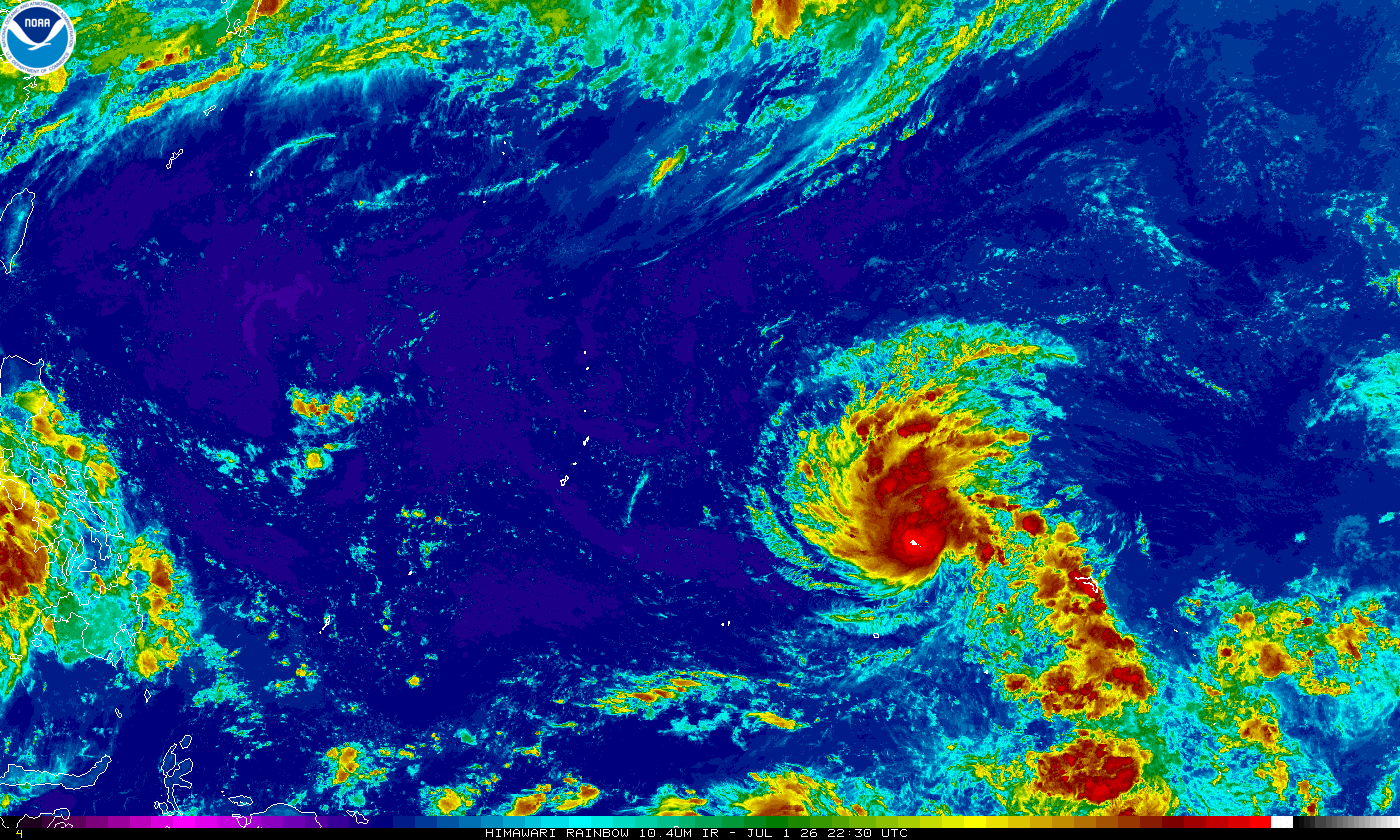
With Super Typhoon Bavi now packing maximum sustained winds of 160 mph and forecast to strengthen further as it moves toward the Marianas, emergency officials are urging businesses and residents to treat this weekend as their critical window to prepare for potentially damaging winds.
Guam and the Northern Mariana Islands are now in Condition of Readiness 3 as Typhoon Bavi approaches, with both governors urging residents and businesses to use the remaining hours of fair weather to prepare.
Task Force Talon relinquished command to the 3rd Battalion, 43rd Air Defense Artillery Regiment (3-43 ADA), ushering in a new battalion to take over Guam’s air missile defense systems.
Emergency management agencies across the region are urging residents and businesses to execute disaster preparedness plans as Tropical Storm 09W is forecast to rapidly intensify and potentially strike Guam and the Northern Mariana Islands as a Category four super typhoon.