Big developments in Majuro as power plant, fuel farm and solar get underway
MAJURO, Marshall Islands — Major energy developments for the Marshall Islands capital will become visible from mid-2026 and beyond.
The Marshalls Energy Co., the government’s state-owned enterprise that operates power services for Majuro, as well as supporting power operations on multiple remote outer islands, is mid-way through a revamp of its operations.
The revamp includes five new generators to be installed in a now-under-construction power plant building, rebuilding and repairs to most of its eight-tank fuel farm which has been out of service due to corrosion and rust, the first use of a four megawatt array of solar panels to reduce spending on diesel fuel, and the latest initiative to begin sales of gasoline for the first time.
The backdrop to this story is that the Marshalls Energy Co., once a leading power company in the region, has been operating from crisis to crisis due to aging generators, a collapsing power distribution system, and an unusable tank farm. Currently and for nearly the past two years, virtually all power for the capital is supplied by rental generator units in containers leased from the South Pacific-based Aggreko Co.
The power situation isn’t going to see a quick fix, but by 2027, a new power plant with new generators is expected to go into service.
Among these developments:
Gas sales are to start in March: MEC signed a deal in December with its diesel fuel supplier that's expected to result in less expensive gasoline prices than are currently paid by customers. This is going to “especially (help) our outer island communities who have been paying (up) to $18 per gallon,” MEC said in a statement.
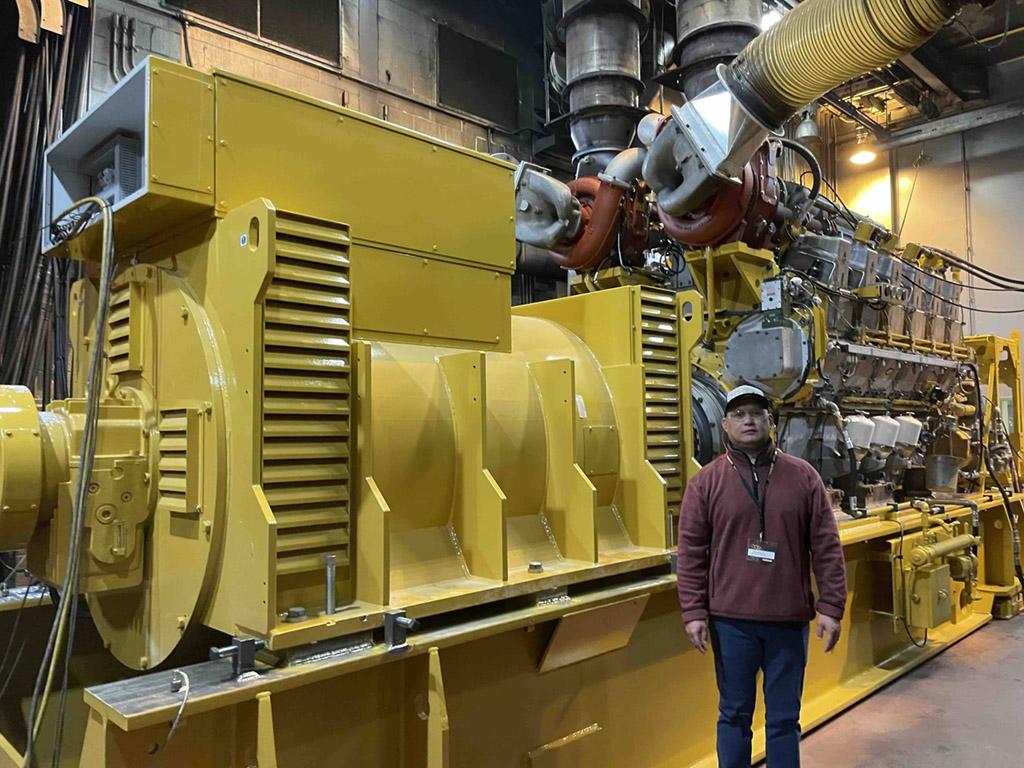
Jack Chong-Gum, CEO, Marshalls Energy Co., with one of two new generators. Photo by Giff Johnson
From March, MEC said it will be purchasing gasoline in large volumes, which means it can bring gas to the Marshalls for lower prices than Majuro, Ebeye and outer islands see at the retail level. “This is a game-changer for our fishermen, our families, and our communities,” MEC said. “Less money on fuel means more money for everything else you need.” Jack Chong-Gum, CEO of MEC, said, “MEC's gasoline will be available to all customers throughout the Marshall Islands who want to take advantage of our more affordable prices — not just the outer islands. Our goal is to be the primary wholesale supplier of gasoline for the RMI. While we're focusing on making gasoline more affordable especially for outer island communities who've been hit hardest by high prices, anyone in Majuro, Ebeye, or anywhere else in the RMI will be able to purchase gas from MEC.”
Currently gas prices in Majuro range from $6.60 per gallon to $6.80. In contrast, the similarly isolated small market of Pohnpei is paying $5.35 per gallon for gas.
New power plant and new generators: Construction work on the Marshalls Energy Co.’s new “Power Station 1” building started late last year with a late 2026 completion date targeted. The building will house five new engines that will give MEC an unprecedented level of power generation capacity to power Majuro Atoll from the single new power plant building. Still, given the work needed to construct the building and then all the installation work, the new “PS1” is not expected to begin service until 2027.
“The physical structure of the new PS1 power plant building is on track for completion in the latter part of 2026,” Chong-Gum said. But, he added, “Full commissioning will take additional time beyond that.”
The five new generators are funded by donors. Two have been manufactured with World Bank funding as part of a project to greatly expand MEC’s reliance on solar energy. Three other engines are being purchased with U.S. Compact funding.
All told, the five new generators, once operational, will give MEC a combined power generating capacity of nearly 16 megawatts. “We'll begin installing the World Bank-funded generators once the PS1 building structure is erected with walls in place,” Chong-Gum said. “The actual installation work can start before all the interior finishing is complete.”
All five generators will be Caterpillars. “Standardizing on Caterpillar equipment across all five new generators is important because it means our technicians only need to be trained on one type of equipment; we only need to stock one set of spare parts, and maintenance procedures are the same across all units,” Chong-Gum said. While the World Bank-funded generators are already built, the three U.S.-funded generators have not been ordered yet, he said. “We're expecting to receive proposals from suppliers around mid-January 2026, and then we'll conduct our evaluation process. Our target is to confirm the order by March 2026. Generator purchases have a very long lead-time, ranging from 14 to18 months from placement of order.”
Solar to grid developments: MEC plans to operationalize the World Bank-funded solar photovoltaic systems no later than June. “These solar systems will be connected directly to MEC's grid, which means during daylight hours, we’ll be generating clean electricity from the sun instead of burning diesel fuel,” Chong-Gum said. He called this “another major development.”
In the past several years, construction crews have built roof structures over sports courts, topped with solar panels that will feed into the MEC power grid. The airport reservoir is now topped with solar panels, as are roofs of school buildings and other government facilities as part of the World Bank project. The launch of solar power to provide power to the Majuro government, business and private customers “translates to real benefits for our customers on Majuro,” Chong-Gum said. “For instance, lower fuel costs for MEC should result in lower electricity rates. Reduced diesel imports save the country money. And we’ll be cutting down on pollution and carbon emissions.” mbj
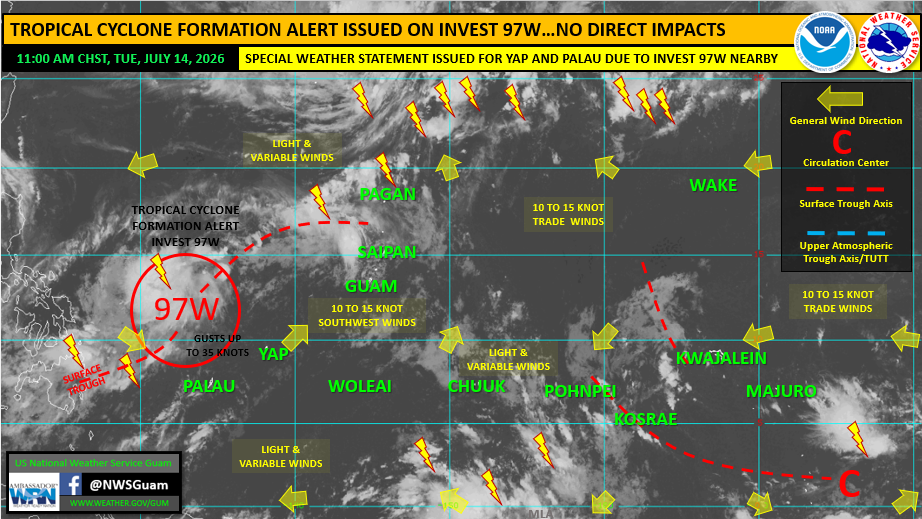
A regional tropical cyclone formation alert has been issued as a developing weather disturbance northwest of Yap threatens to strengthen the seasonal monsoon across western Micronesia and the Mariana Islands.
MAJURO, Marshall Islands — “They could have said you are ‘nowhere near being ready,’ but they didn’t,” Marshall Islands fisheries Director Glen Joseph said in an interview on June 19. “Instead, they gave us five items to respond to.”
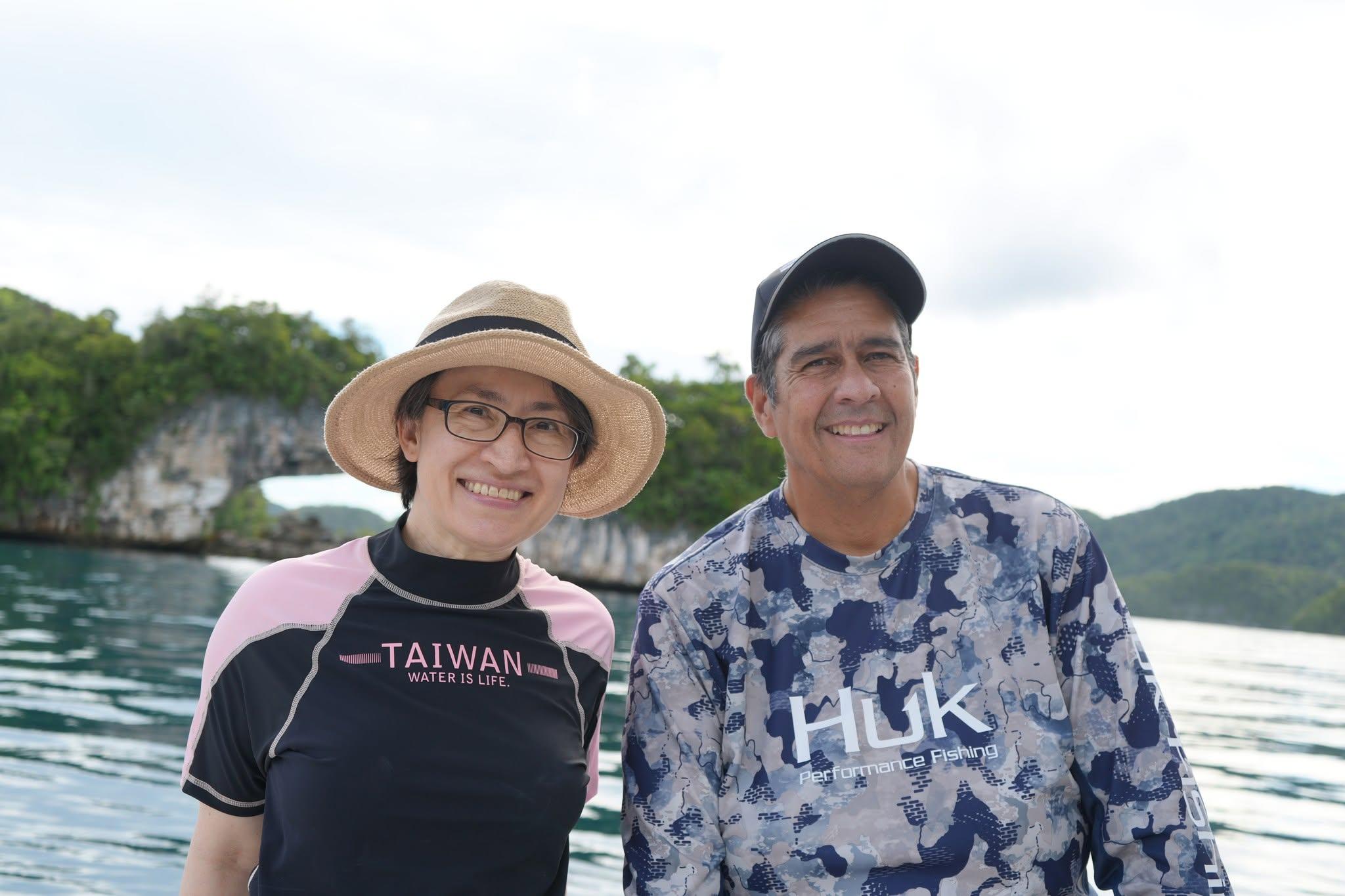
President Surangel S. Whipps Jr. escorted Vice President Hsiao Bi-khim of Taiwan to the Rock Islands, where she kayaked and swam on her first visit to Palau.
MAJURO, Marshall Islands — The third quarterly distribution of universal basic income to every citizen in the Marshall Islands happened May 28, as tens of thousands received a US $200 payment.