U.S. government consolidates deep sea mining permits and NOAA issues final rule
BY MAUREEN N. MARATITA
Journal Staff
The Jan. 21 ruling on the Federal Register (CHamoru Standard Time) on deep sea mining establishes a consolidated permit application for deep sea mining and commercial recovery.
See “Deep Seabed Mining: Revisions to regulations for exploration license and commercial recovery permit applications,” at Regulations.gov
The National Oceanic and Atmospheric Administration has issued a 113-page response to comments on deep sea mining, along with the above rule posted on the Federal Register.
In its comments, NOAA said, “The Deep Seabed Hard Mineral Resources Act … charges NOAA with the responsibility for issuing licenses for exploration and permits for commercial recovery of polymetallic nodules from the deep seabed in areas beyond national jurisdiction and promulgating regulations necessary to carry out the provisions of the Act.
“Some provisions of the regulations require updating to reflect significant technological and information changes since the initial regulations were promulgated in the 1980s. NOAA proposes to include a consolidated license and permit review process in a section of the regulations that was reserved for this purpose and make other changes.”
The regulations that go into effect tomorrow/Jan. 22 govern deep sea mining on the high seas, or in international waters, the U.S. Center for Biological Diversity confirmed to the Journal.
The Request for Information originally issued for the waters off the Northern Mariana Islands and American Samoa is covered by the Outer Continental Shelf Lands Act, the center also confirmed.
Emily Jeffers
Emily Jeffers, senior attorney with the Center for Biological Diversity said in a Jan. 21 release that the fast-tracking of mining in unexplored areas of the deep ocean, is “practically inviting an environmental disaster.
“It’s simply shocking that this rule actually reduces monitoring and oversight for an extractive process that’s hardly ever been done before. Deep-sea mining could change the ocean forever … , “ she said.
Changes to update protocols to monitor impacts of deep seabed mining, which NOAA agreed are critical, will be released later in draft form later this year.
President Trump signed an executive order in April 2025 to fast-track U.S.-affiliated companies mining the deep seabed in U.S. and international waters.
However, the latest ruling on consolidation demonstrates current U.S. policy. Whether any future applications for deep sea mining in international waters would affect Guam and the Northern Mariana Islands remains to be seen.
NOAA said, “This rule establishes a consolidated permit application process without changing the substantive standards to which applications will be held. Because this rulemaking includes only technical and/or procedural changes to the regulatory text, it falls within a category of actions that NOAA has determined normally does not significantly affect the quality of the human environment and therefore maybe (sic) excluded from the requirement to prepare an environmental assessment or an environmental impact statement, “ saying the rule is also consistent with the criteria of categorical exclusion.
NOAA also said the permitting process will be overseen “either collectively or on a case-by-case basis,” under the terms of to the National Environmental Policy Act.
“NOAA reviewed comments submitted in response to the notice of proposed rulemaking prior to concluding this NEPA process and finalizing this rule, and responses to those comments are included in the preamble of this final rule,” NOAA said. mbj
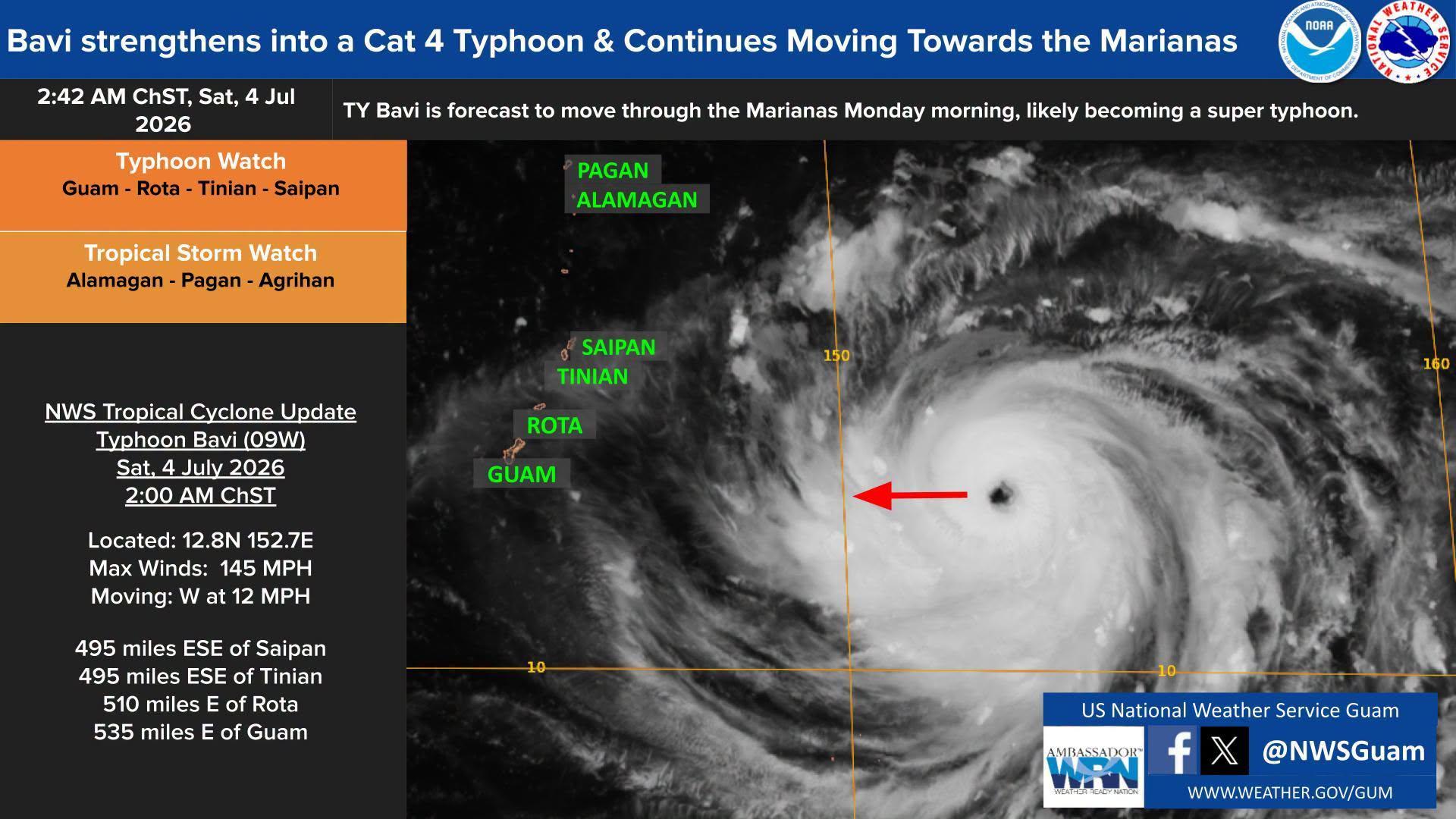
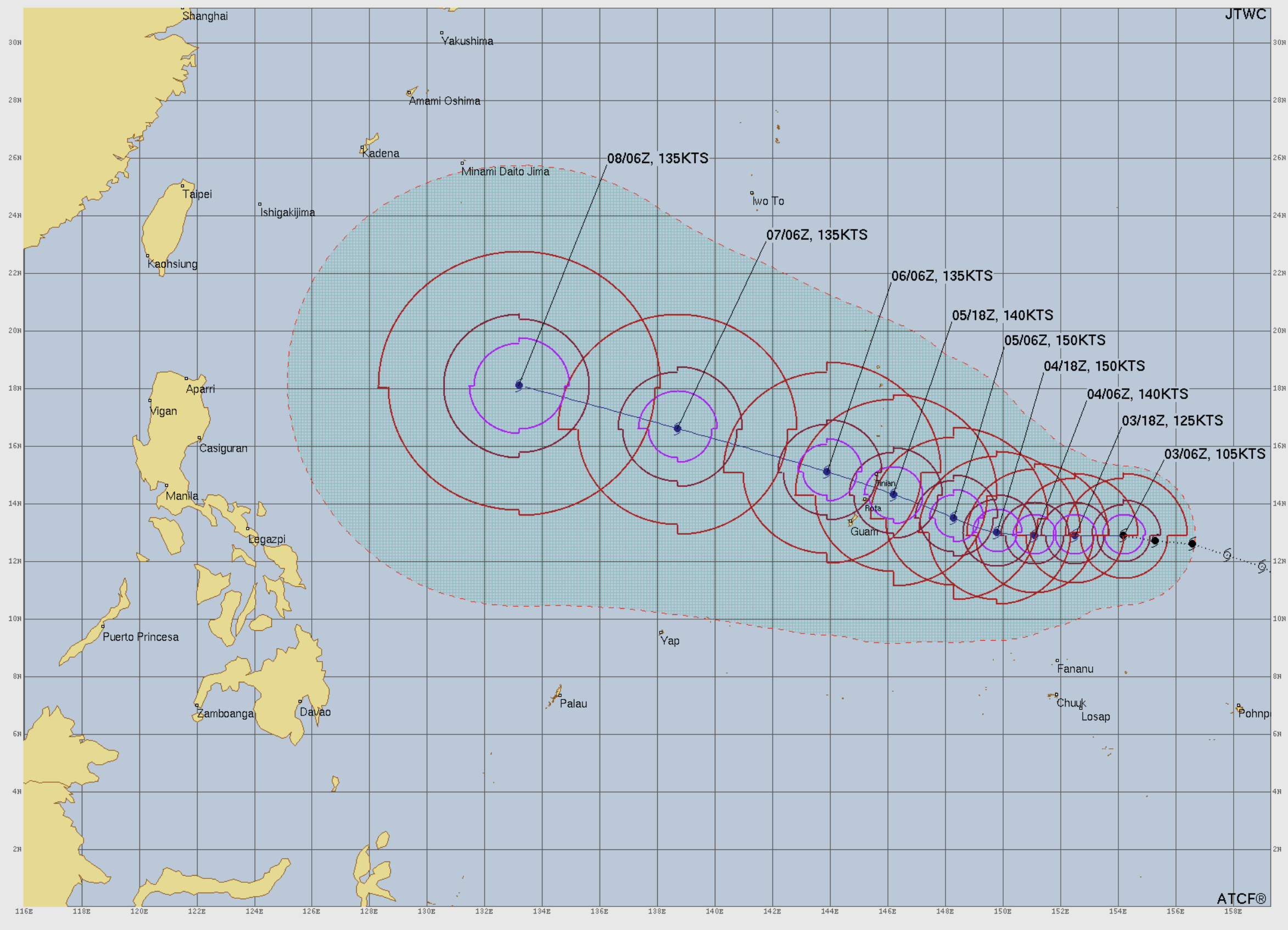
With Super Typhoon Bavi now packing maximum sustained winds of 160 mph and forecast to strengthen further as it moves toward the Marianas, emergency officials are urging businesses and residents to treat this weekend as their critical window to prepare for potentially damaging winds.
Guam and the Northern Mariana Islands are now in Condition of Readiness 3 as Typhoon Bavi approaches, with both governors urging residents and businesses to use the remaining hours of fair weather to prepare.
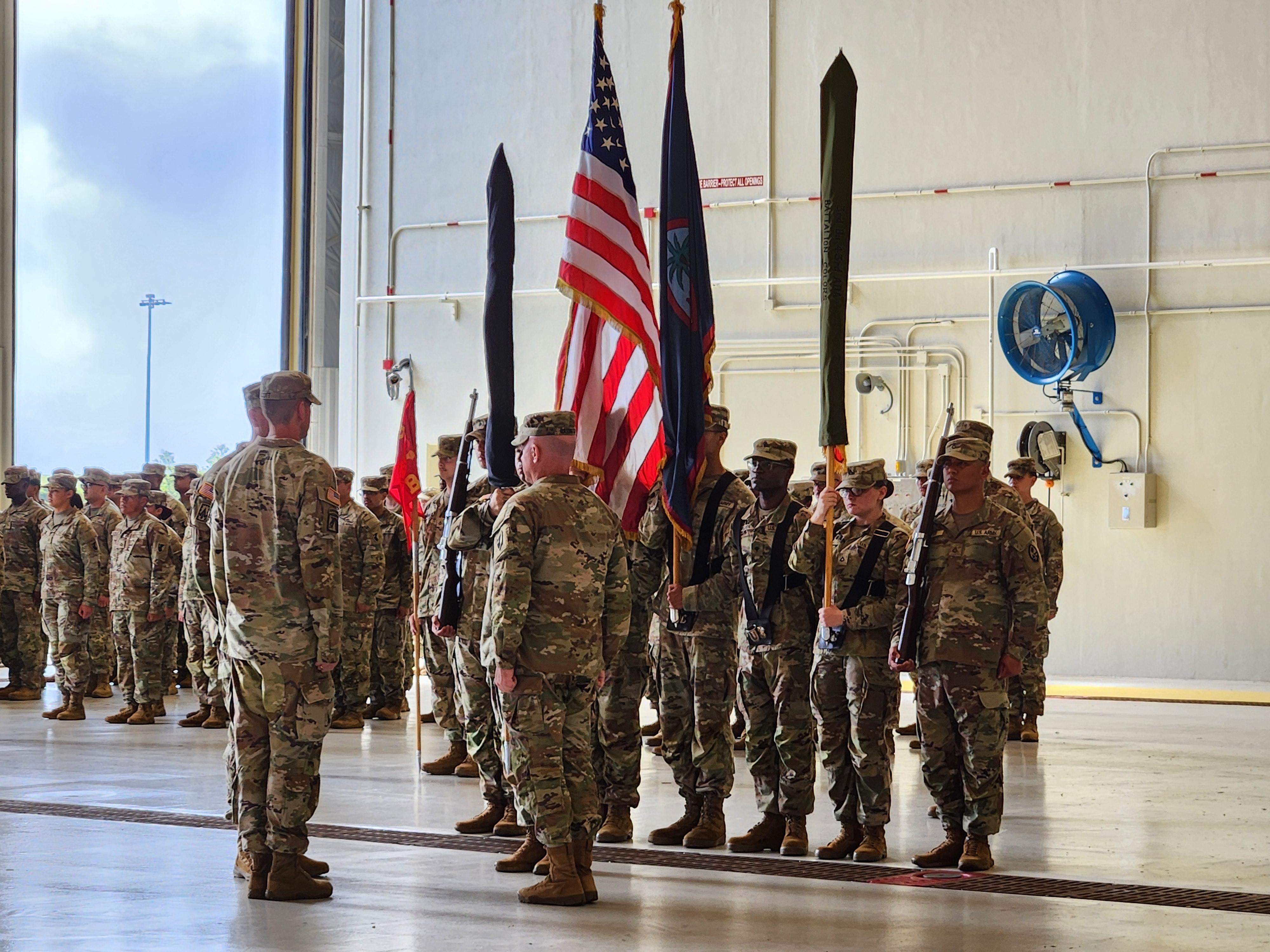
Task Force Talon relinquished command to the 3rd Battalion, 43rd Air Defense Artillery Regiment (3-43 ADA), ushering in a new battalion to take over Guam’s air missile defense systems.
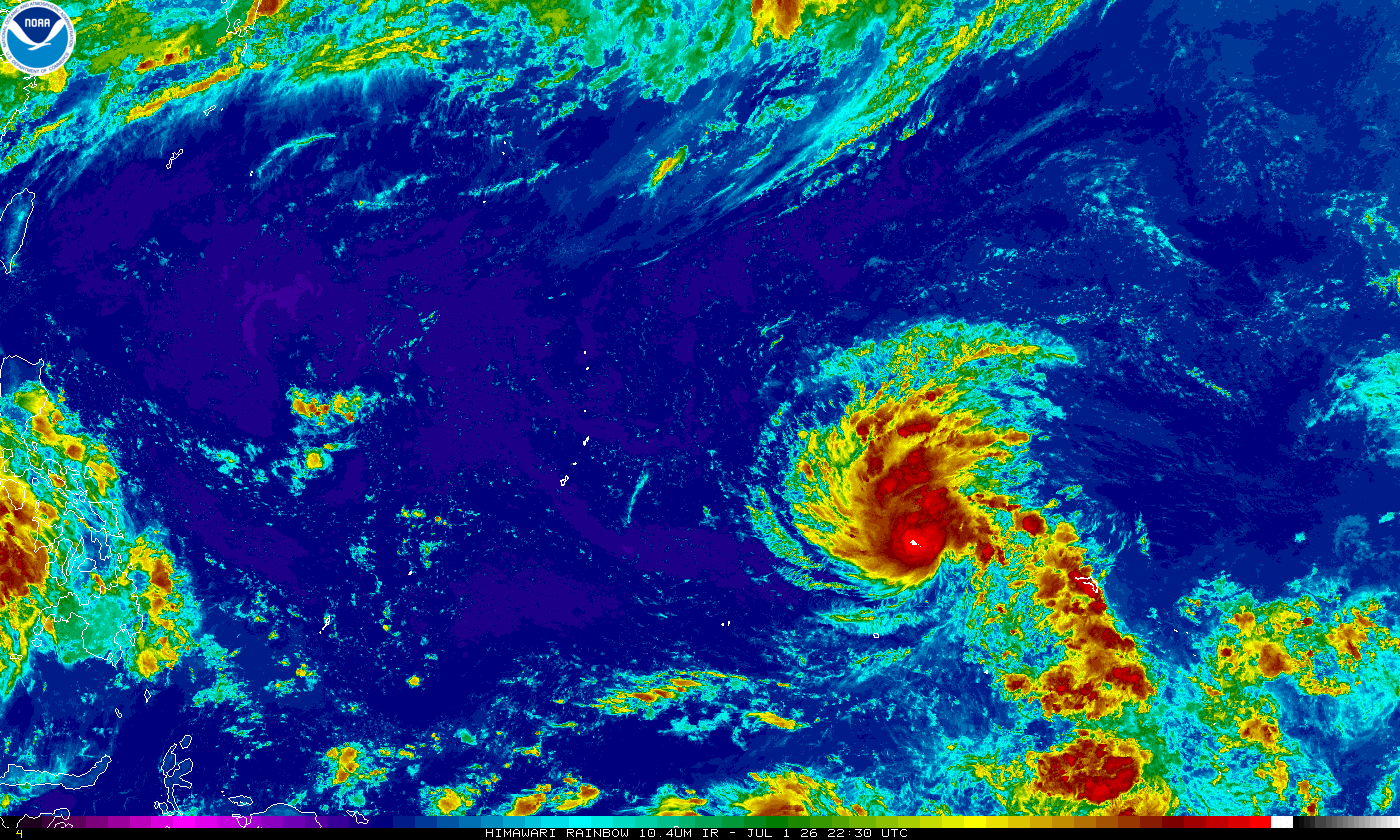
Emergency management agencies across the region are urging residents and businesses to execute disaster preparedness plans as Tropical Storm 09W is forecast to rapidly intensify and potentially strike Guam and the Northern Mariana Islands as a Category four super typhoon.