GSWA advances fleet upgrades as sustainability initiatives expand
BY JACQUELINE GUZMAN
Journal Staff
The Guam Solid Waste Authority is concentrating on fleet modernization and sustainability initiatives as part of an ongoing effort to strengthen the island’s waste management system.
Irvin Slike, general manager of the Guam Solid Waste Authority, said the authority has been working to improve operational efficiency while exploring technologies that reduce environmental impacts.
Beyond fleet modernization and sustainability initiatives, the Guam Solid Waste Authority manages the collection and disposal of a substantial portion of the island’s waste stream each year.
GSWA currently provides residential waste collection service to approximately 21,000 households, roughly half of the island’s estimated 40,000 to 42,000 potential residential customers.
Because participation in the system is voluntary, Slike said some households share service among extended family members.
“Guam is very family-oriented,” he said. “I think maybe one person in a family pays for the service, and because they live close or see each other on weekends, they end up sharing.”
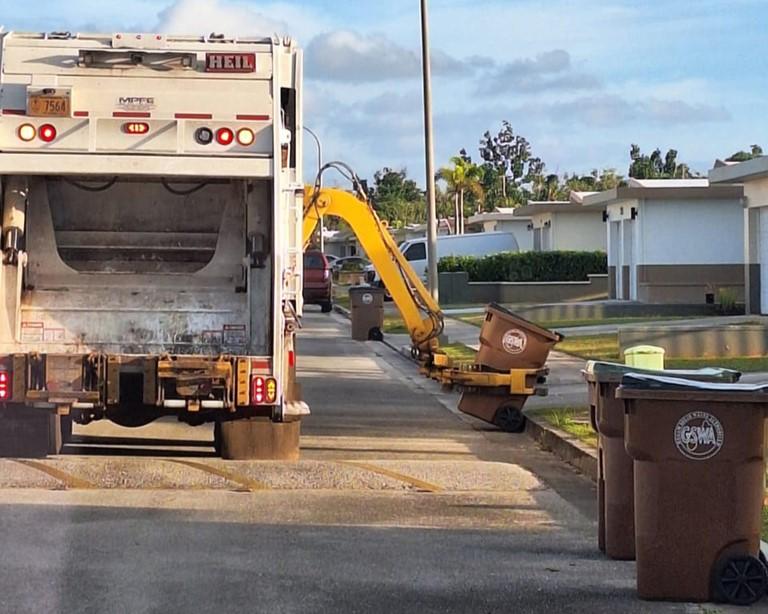
GSWA has introduced automated side-arm trucks. Photo courtesy of Guam Solid Waste Authority
The agency collects both residential and commercial waste totaling approximately 109,000 to 120,000 tons annually, depending on seasonal conditions such as rainfall.
Residential waste is collected once per week, with recycling service provided every other week.
GSWA also operates a bulky item collection program allowing residents to dispose of large household items that cannot be handled through regular trash service.
Households are entitled to two free bulky-item pickups per year, with each pickup allowing disposal of up to five large items, including appliances, mattresses and furniture. Additional collections are $25.
“It’s better than it ends up on the side of the road or in the jungle,” Slike said.
Residents can also bring bulky items directly to one of GSWA’s three transfer stations, a service that Slike said has become increasingly popular.
“We’re constantly looking for ways to improve how we operate while also being mindful of the environmental responsibilities we have as a public utility,” Slike said. “Investments in equipment, alternative fuels and technology help us deliver service more efficiently while supporting long-term sustainability goals.”
The authority also manages landfill operations. Maintaining reliable collection services while meeting environmental regulations requires ongoing investments in equipment, infrastructure and operational systems.
Recent fleet upgrades and sustainability programs are part of a broader strategy aimed at strengthening Guam’s waste management infrastructure while reducing environmental impacts.
One of the most visible changes in GSWA operations has been the introduction of automated side-arm trash collection trucks.
The trucks allow drivers to collect residential waste using mechanical arms that lift and empty bins into the truck without requiring the operator to exit the vehicle. The automated system improves both safety and efficiency during daily collection routes.
Traditional manual collection methods require drivers to repeatedly exit their vehicles while lifting trash bins by hand, a process that can slow routes and increase the risk of injuries. Automated collection technology reduces those risks while allowing drivers to maintain a more consistent pace during collections.
Side-arm trucks have become increasingly common in neighborhoods across Guam as GSWA continues incorporating the vehicles into its fleet.
The trucks also provide more consistent waste handling, reducing spillage and helping maintain cleaner residential collection areas.
For the authority, fleet modernization represents a long-term investment aimed at strengthening operational reliability while improving the efficiency of waste collection services.
Irvin Slike, general manager, in his Tamuning office. Photo by Jacqueline Guzman
In addition to upgrading its fleet, GSWA has pursued alternative fuel initiatives that support both sustainability goals and operational efficiency.
One example is the authority’s biodiesel program, which converts used cooking oil and other materials into biodiesel fuel.
At GSWA’s biodiesel reactors, waste oils are processed through a system that transforms the material into fuel that can be used in fleet vehicles. The process helps divert waste materials from disposal while creating an additional energy source for operations.
“We’re exploring multiple ways to reduce operational costs and environmental impacts at the same time,” Slike said. “Programs like biodiesel production allow us to take materials that might otherwise be discarded and turn them into something useful for our operations.”
Alternative fuel initiatives such as biodiesel production also reduce reliance on conventional fuels. For island communities like Guam, where most fuel must be imported, exploring alternative energy sources can contribute to long-term operational resilience.
Officials say programs like biodiesel production demonstrate how waste management operations can support broader sustainability initiatives.
The authority is also evaluating the potential role electric vehicles may play in its long-term fleet strategy.
Mini electric trucks and charging stations have been introduced as GSWA studies how alternative fuel vehicles might fit into certain operational tasks.
Electric vehicles offer the potential for reduced fuel costs and lower emissions, though their use in waste collection systems must be carefully evaluated due to the demanding nature of collection routes.
Officials say introducing electric vehicles now allows the authority to study performance, charging infrastructure and operational logistics before expanding the technology more broadly.
“Waste management is something most people only notice when something goes wrong,” Slike said. “Our goal is to continue improving the system so residents can rely on consistent service while we work toward more sustainable operations.” mbj
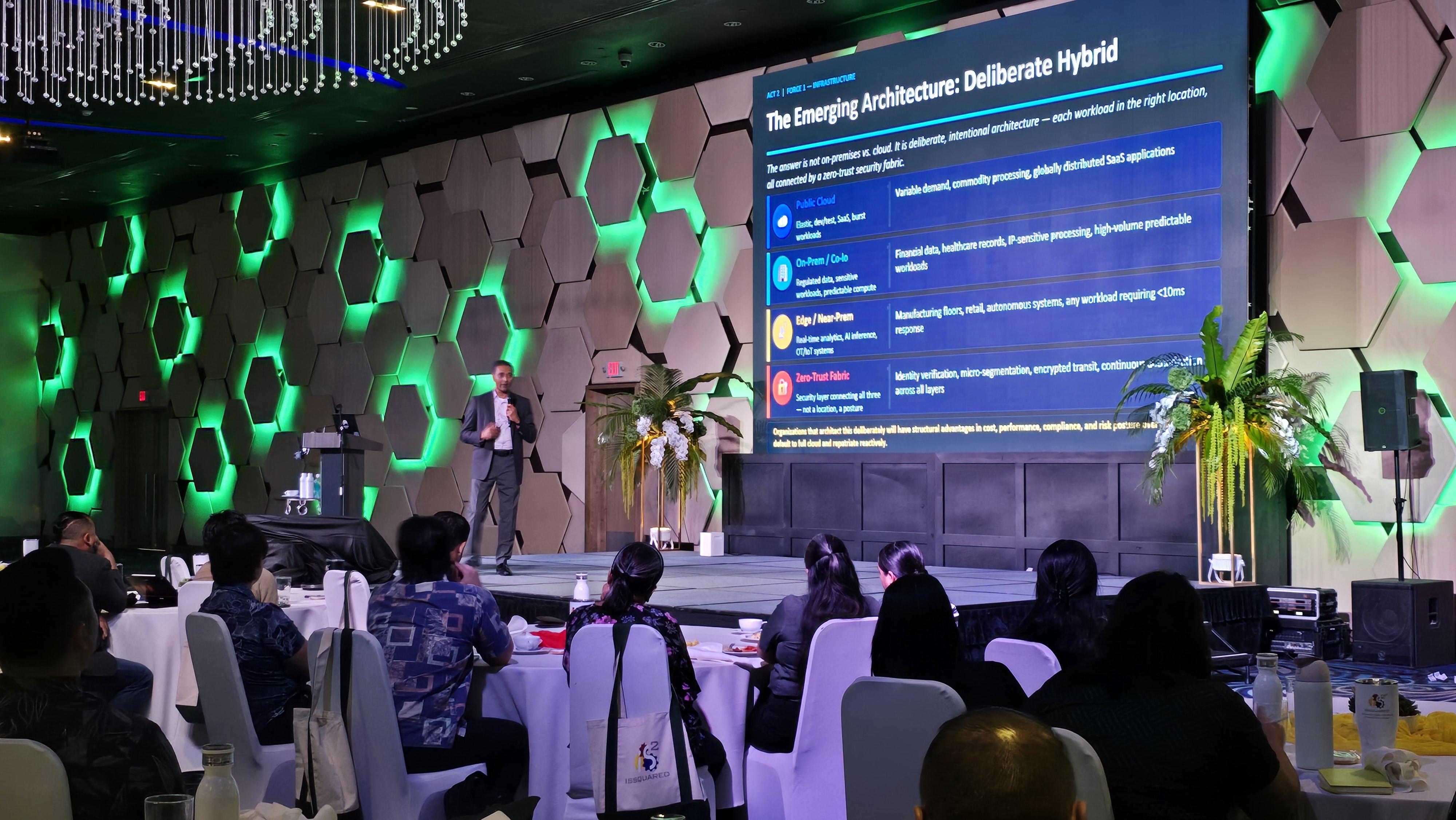
Rapid advancements in artificial intelligence, escalating cybersecurity threats, and mounting physical power grid constraints are forcing regional business leaders to fundamentally overhaul their technology strategies, shared to industry experts during a technology conference held on July 23 at the Dusit Thani Guam Resort.
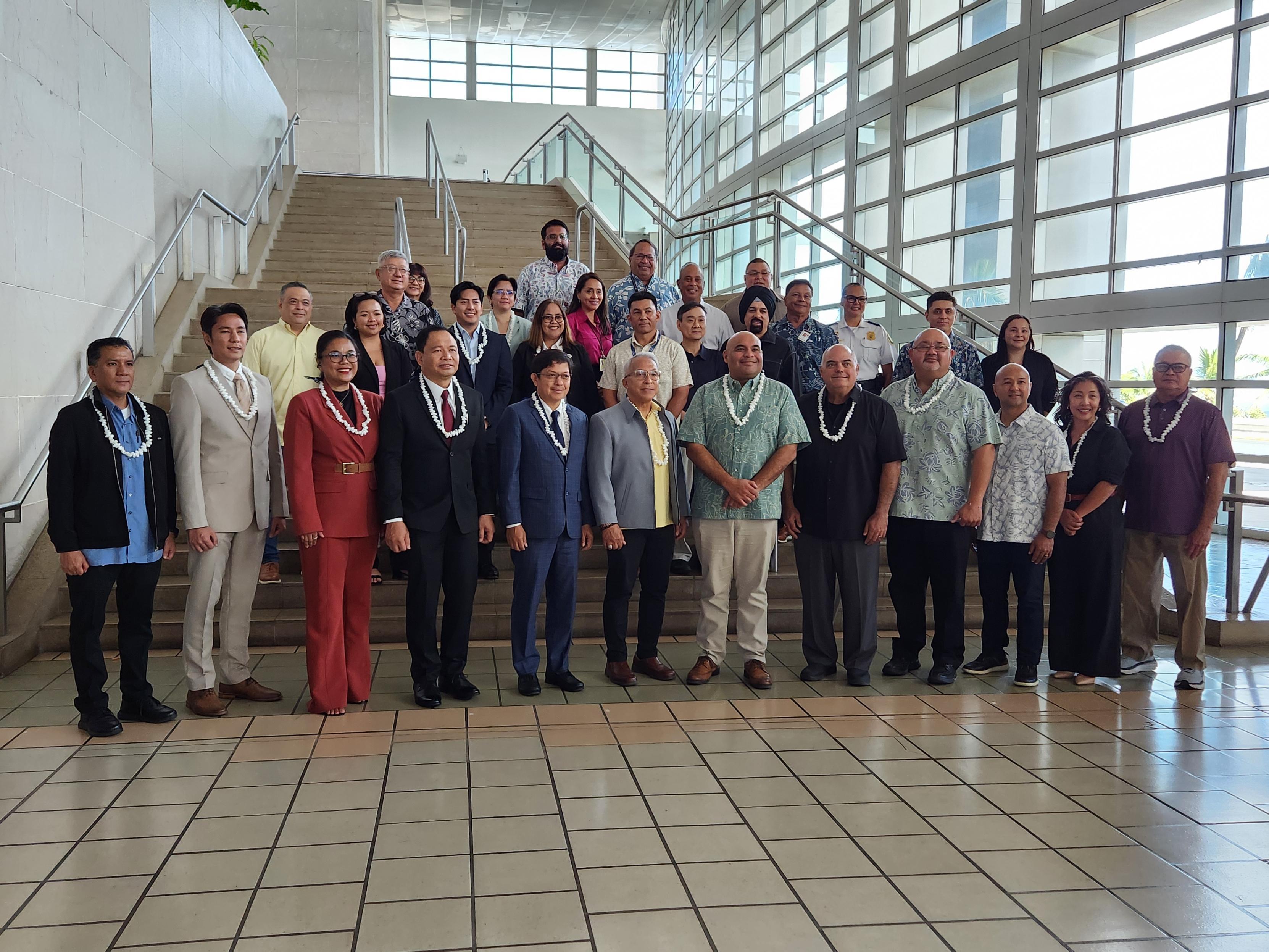
Regional leaders, government officials, and industry executives gathered at the Guam International Airport Authority on Wednesday, July 22 for the inaugural session of the Guam-CNMI Visa Waiver Working Group, driving a unified regional effort to expand the Guam-CNMI Visa Waiver Program to include the Philippines.
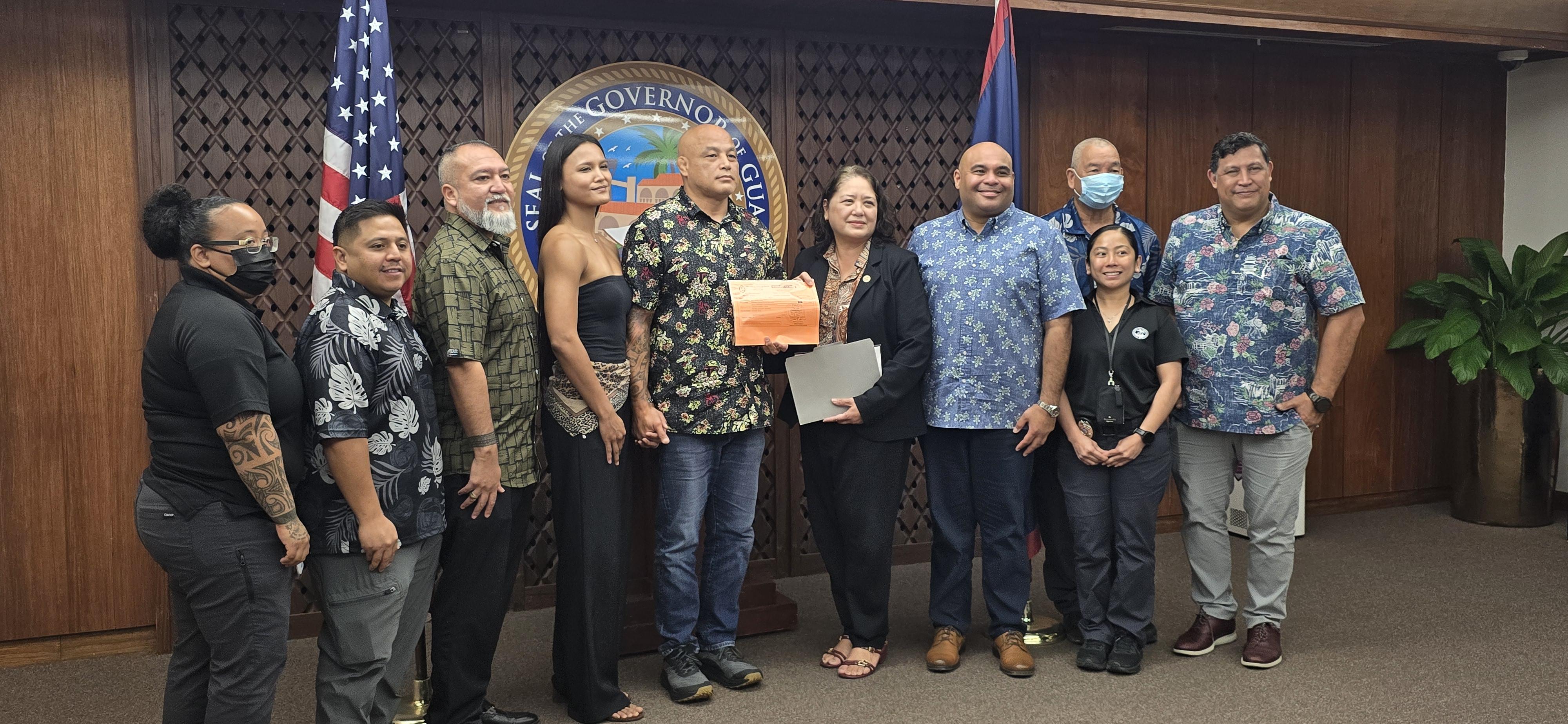
The commercial adult-use cannabis industry on Guam has officially launched following the issuance of the island's first recreational cannabis cultivation license to local grower Stephen Roberto, operator for Deep Green Guam of Guam Real Deal, LLC.