GVB: Airfare and costs of goods may be impacted by Iran conflict
The Guam Visitors Bureau announced March 11 the U.S. and Israel conflict with Iran could affect the island’s tourism industry.
“While Guam is considered safe and far from the conflict zone, global disruptions may still impact the island,” GVB said.
Currently, the conflict is impacting island residents at the pump with a surge in fuel prices since the start of March as costs for oil rise globally. That spike is also impacting airline operations, GVB said, mirroring global aviation and tourism industry warnings.
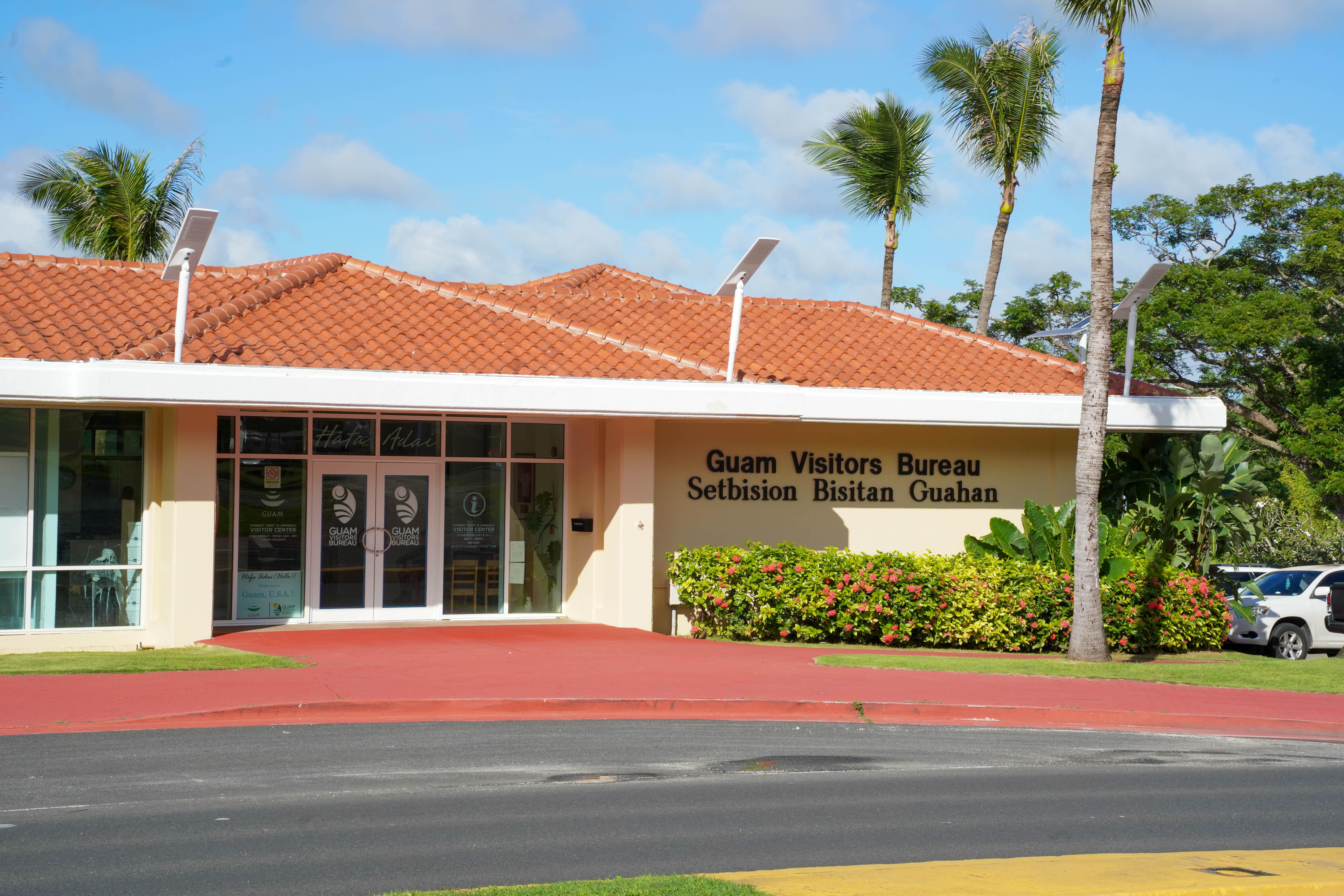
GVB announced on March 11 that the island's tourism industry could be impacted by the recent Iran conflict. Journal file photo
Airlines are shifting their global flight paths in order to avoid the Middle East airspace corridors meaning longer flights.
GVB said aviation fuel is the most costly expense for airlines and consumers should expect higher ticket prices, if the conflict continues.
Additionally, shipping routes through the Persian Gulf and the Red Sea are being disrupted, increasing freight costs and insurance leading to higher prices for imported goods for businesses and consumers alike.
GVB added that the conflict would not be an automatic travel boost for Guam, as travel demand still depends on how well the economies in key markets are doing.
“The duration and severity of the ongoing conflict in the Middle East remains as wild cards for all affected industries,” GVB said. “The best case scenario is de-escalation of the conflict within the next few weeks, the reopening of affected flight regions, and stabilization of oil prices, which will result in airfares normalizing and Guam contributing its growth along our existing trajectory.”
Local tourism businesses should plan for higher operational costs, GVB said, and consider value-added campaigns or offers to offset price hikes for visitors.
Historically, Guam’s tourism sector has been sensitive to certain global tensions.
According to Glimpses Media files, Guam experienced a tourism slump following 9/11 which ensued throughout fiscal 2002 and 2003.
Guam Legislature records indicated the island’s economy was severely impacted due to the decline in Japanese tourism arrivals following the attacks. Experts at the time estimated that visitor arrivals in 2002 will drop by nearly 20%.
This prompted the 26th Guam Legislature to introduce a measure to allow GVB to arrange a line of credit not exceeding $6 million to help stem the revenue hemorrhage.
A more recent example was in 2017.
In 2017, GVB reported a slight decline in visitor numbers at the height of North Korea’s ballistic missile threats to Guam.
GVB’s research department confirmed 7,426 cancellations for Guam-bound package tours, school groups, and Meeting, Incentives, Conventions, and Exhibition groups, totalling an estimated $9.5 million loss for Guam at the time.
The bottom line, according to GVB’s President and CEO Régine Biscoe Lee, is that Guam is a safe and peaceful destination for visitors.
“We continue to offer rich cultural experiences matched only by our magnificent beaches and unrivaled hospitality—all while being a vital part of U.S. security in the Pacific,” she said in the statement. mbj
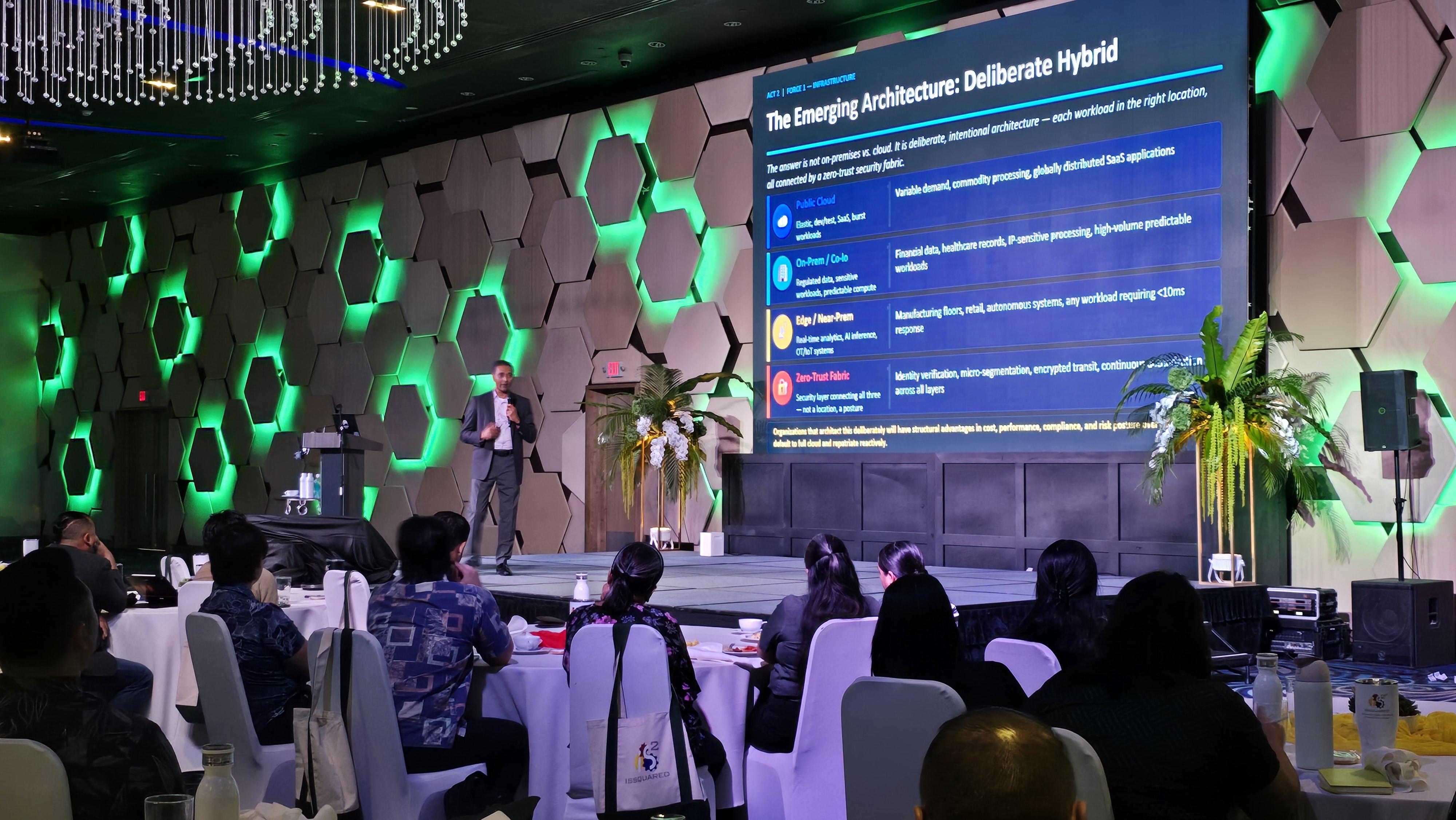
Rapid advancements in artificial intelligence, escalating cybersecurity threats, and mounting physical power grid constraints are forcing regional business leaders to fundamentally overhaul their technology strategies, shared to industry experts during a technology conference held on July 23 at the Dusit Thani Guam Resort.
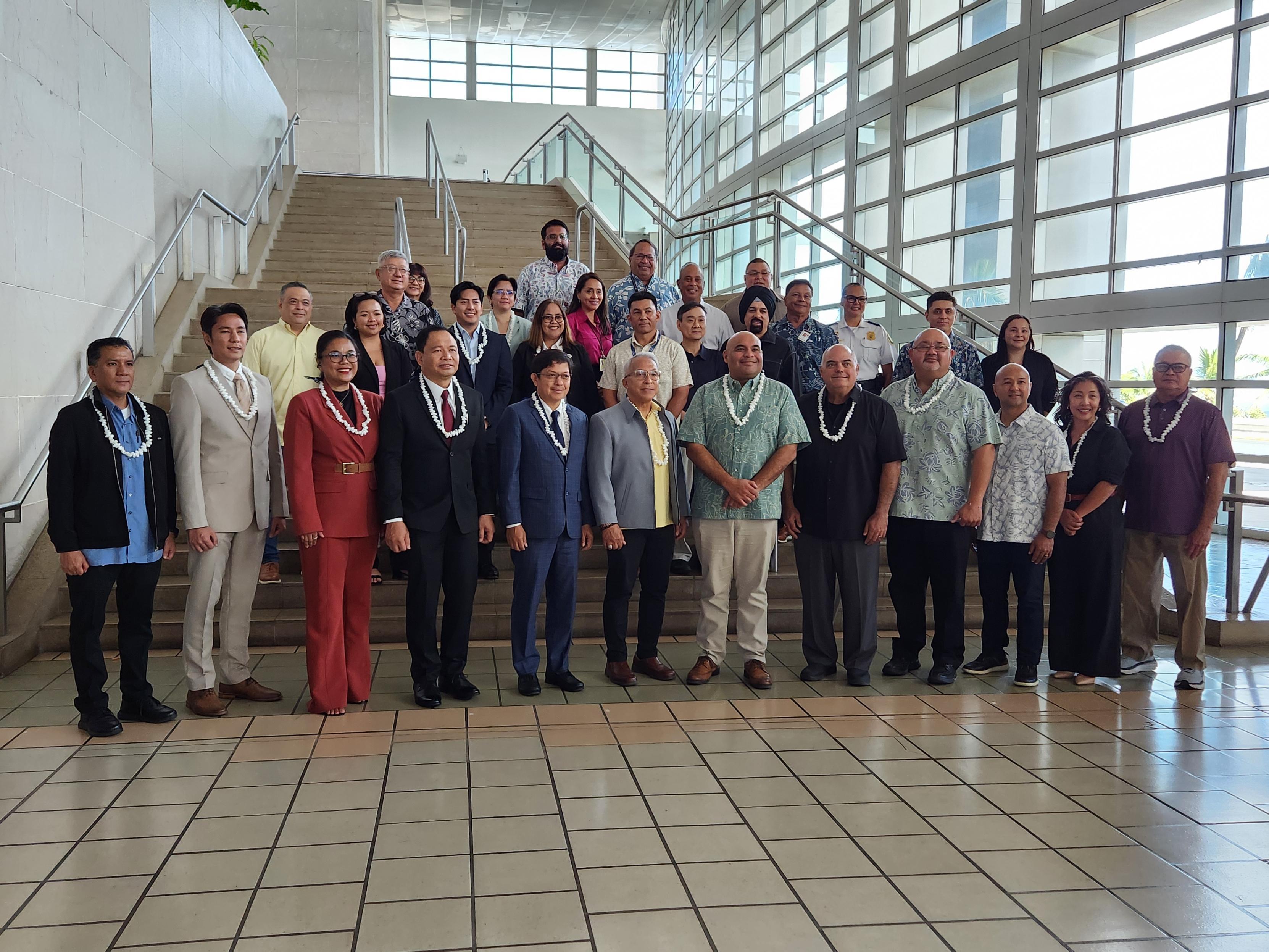
Regional leaders, government officials, and industry executives gathered at the Guam International Airport Authority on Wednesday, July 22 for the inaugural session of the Guam-CNMI Visa Waiver Working Group, driving a unified regional effort to expand the Guam-CNMI Visa Waiver Program to include the Philippines.
The commercial adult-use cannabis industry on Guam has officially launched following the issuance of the island's first recreational cannabis cultivation license to local grower Stephen Roberto, operator for Deep Green Guam of Guam Real Deal, LLC.