










BY DANIEL M. PEREZ
Journal Staff
The U.S. Coast Guard Captain of the Port for Guam and the Northern Mariana Islands has officially reopened the ports of Rota and Tinian to commercial maritime traffic and cargo operations after resetting Port Heavy Weather Condition (PHWC) WHISKEY.
The policy directive restores the flow of critical maritime commerce across the region following disruptions caused by Super Typhoon Bavi.
The partial lifting of restrictions allowed full commercial access to the Port of Rota effective at 8:00 p.m. on Saturday, July 11, while a modified directive reopened the Port of Tinian to daylight-only commercial traffic at noon on Friday, July 10.
Commercial vessel operators utilizing Tinian's facilities are required to coordinate all activities directly with the Commonwealth Port Authority. Despite the reopening of the waterways, maritime officials warned that commercially regulated facilities in Rota may experience facility-specific operational limitations, and potential shifting or shoaling within the Rota West Harbor channel requires increased navigational caution.
Comprehensive post-storm facility and port assessments have now concluded across Guam, Rota, Tinian, and Saipan, with initial verifications of aids to navigation finalized for all ports.
However, widespread system discrepancies persist, prompting the Coast Guard to issue broadcast notices to mariners detailing hazards across all four commercial harbors in the NMI and Guam. In Apra Harbor, crew members successfully returned the entrance lighted buoy two to its charted position, though its light remains extinguished pending further repairs, while localized restoration work on the Polaris Point and Inner Harbor ranges continues to be delayed by regional weather conditions.
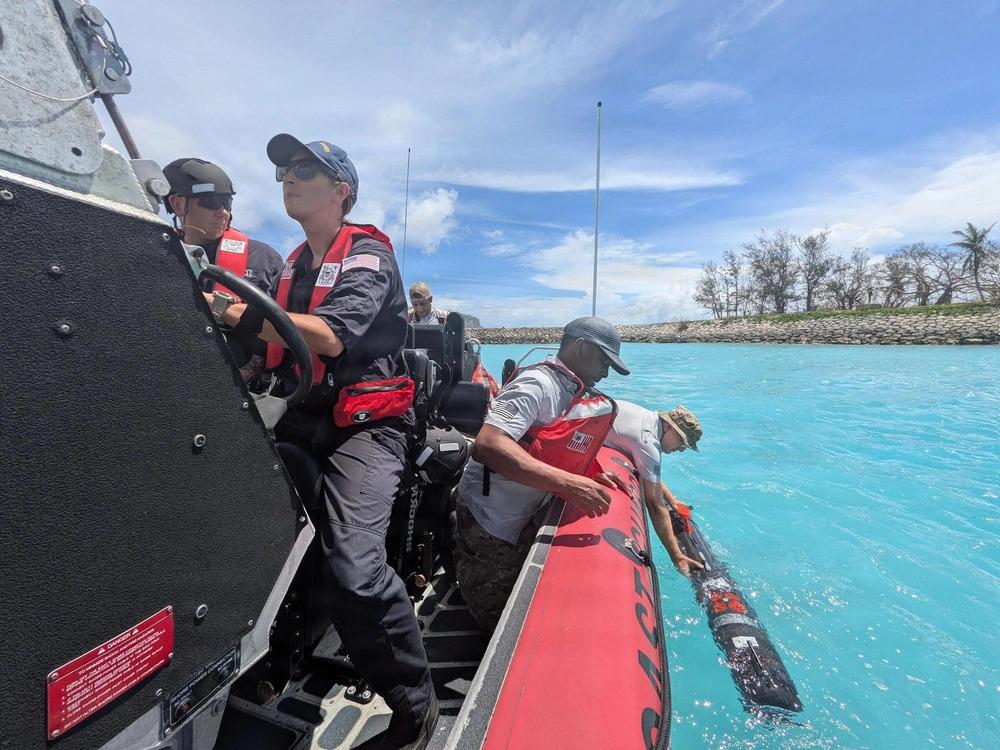
Capt. Jessica Worst, commander, U.S. Coast Guard Forces Micronesia/Sector Guam and Captain of the Port Guam and the Northern Mariana Islands, highlighted the extensive scale of the ongoing interagency recovery effort. "More than 85 people across our U.S. Coast Guard teams, with critical assistance from our partners and Navy Explosive Ordnance Disposal Mobile Unit Five, are actively engaged in the maritime space and on port recovery right now," Worst said.
"I want to thank our crews for their dedication and the long days they've put in, going on a week now. That work is what allowed us to reopen these ports. But I also want to be clear with the public: the waterways are not back to normal. VHF outages and aids to navigation that are off station or damaged mean the margin for error on the water is smaller than usual. This is a time for increased caution and preparedness."
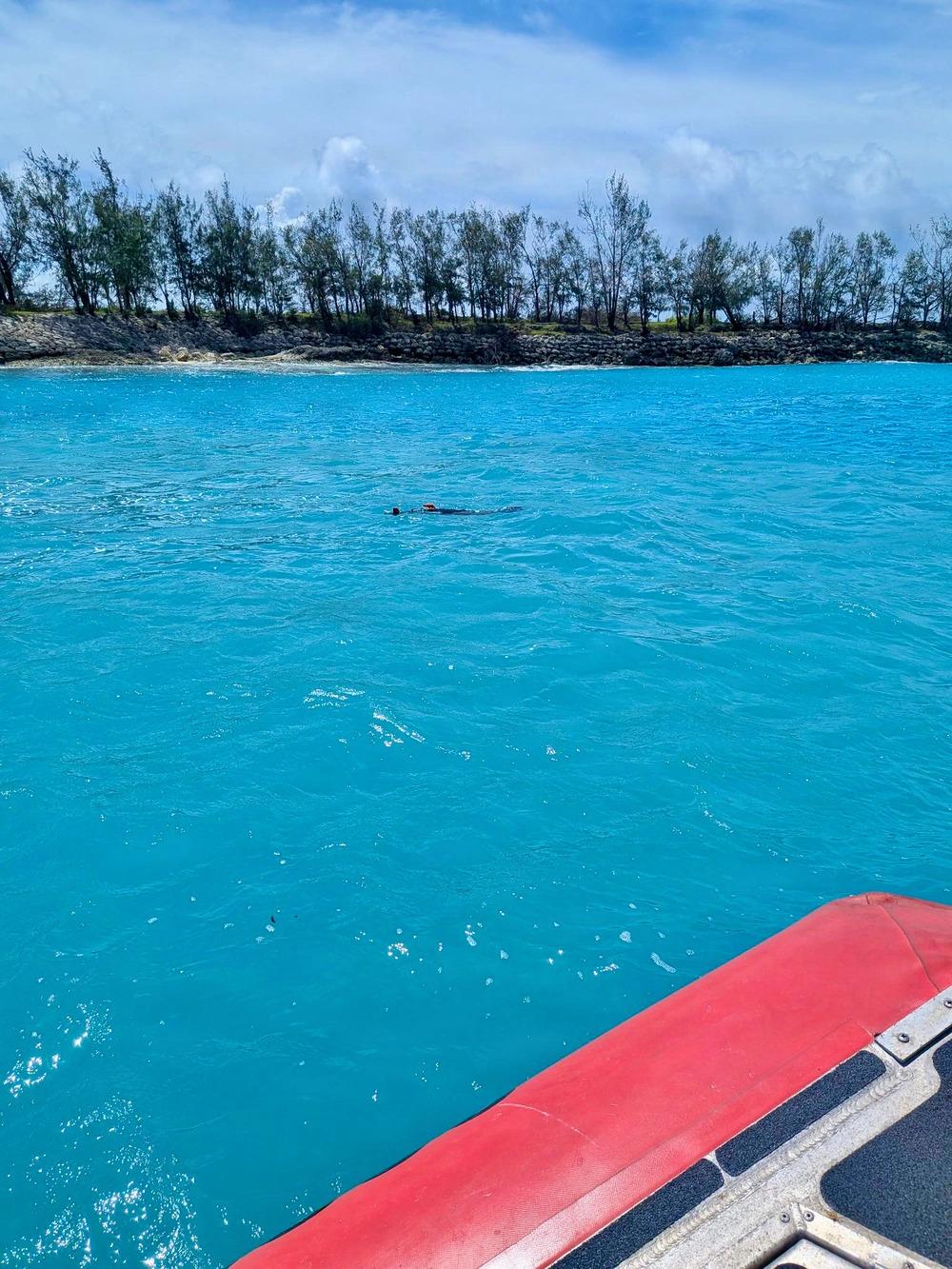
Operational assets remain deployed throughout the region to locate hazards and repair infrastructure. The cutter Myrtle Hazard operated near Rota alongside a Navy explosive ordnance disposal team conducting sonar assessments, while the cutter Hickory and a specialized dive team evaluated urgent navigation repair needs.
On Guam, response teams are mitigating hazards from four storm-displaced sailboats that sank or became partially submerged in Agat Marina, including one presenting potential environmental impacts, while searching for a missing recreational vessel near the Sumay Marina that may present an underwater navigation hazard.
Infrastructural recovery is further limited by severe near-shore communication vulnerabilities across the archipelago. Although connectivity was successfully restored to the Mt. Alutom communications tower on Guam using a Federal Emergency Management Agency generator, VHF radio towers on Saipan and Rota remain completely offline.
Super Typhoon Bavi caused significant structural damage to the Rota tower, leaving emergency officials working to develop interim solutions for emergency radio coverage.
Safety officials continue to mandate that the public remain completely out of the water and stay off affected beaches, reefs, jetties, and piers due to persistent dangerous surf and life-threatening rip currents.
High surf advisories, high rip current risks, and small craft advisories remain in effect, with large breaking waves up to 12 feet expected along south- and west-facing reefs alongside seas of seven to 10 feet. Waterway users are strictly advised to carry multiple forms of communication and report all maritime emergencies directly to 911 or VHF channel 16, as responders continue active storm recovery operations across the region. mbj
Journal Staff
The U.S. Coast Guard Captain of the Port for Guam and the Northern Mariana Islands has officially reopened the ports of Rota and Tinian to commercial maritime traffic and cargo operations after resetting Port Heavy Weather Condition (PHWC) WHISKEY.
The policy directive restores the flow of critical maritime commerce across the region following disruptions caused by Super Typhoon Bavi.
The partial lifting of restrictions allowed full commercial access to the Port of Rota effective at 8:00 p.m. on Saturday, July 11, while a modified directive reopened the Port of Tinian to daylight-only commercial traffic at noon on Friday, July 10.
Commercial vessel operators utilizing Tinian's facilities are required to coordinate all activities directly with the Commonwealth Port Authority. Despite the reopening of the waterways, maritime officials warned that commercially regulated facilities in Rota may experience facility-specific operational limitations, and potential shifting or shoaling within the Rota West Harbor channel requires increased navigational caution.
Comprehensive post-storm facility and port assessments have now concluded across Guam, Rota, Tinian, and Saipan, with initial verifications of aids to navigation finalized for all ports.
However, widespread system discrepancies persist, prompting the Coast Guard to issue broadcast notices to mariners detailing hazards across all four commercial harbors in the NMI and Guam. In Apra Harbor, crew members successfully returned the entrance lighted buoy two to its charted position, though its light remains extinguished pending further repairs, while localized restoration work on the Polaris Point and Inner Harbor ranges continues to be delayed by regional weather conditions.
Capt. Jessica Worst, commander, U.S. Coast Guard Forces Micronesia/Sector Guam and Captain of the Port Guam and the Northern Mariana Islands, highlighted the extensive scale of the ongoing interagency recovery effort. "More than 85 people across our U.S. Coast Guard teams, with critical assistance from our partners and Navy Explosive Ordnance Disposal Mobile Unit Five, are actively engaged in the maritime space and on port recovery right now," Worst said.
"I want to thank our crews for their dedication and the long days they've put in, going on a week now. That work is what allowed us to reopen these ports. But I also want to be clear with the public: the waterways are not back to normal. VHF outages and aids to navigation that are off station or damaged mean the margin for error on the water is smaller than usual. This is a time for increased caution and preparedness."
Operational assets remain deployed throughout the region to locate hazards and repair infrastructure. The cutter Myrtle Hazard operated near Rota alongside a Navy explosive ordnance disposal team conducting sonar assessments, while the cutter Hickory and a specialized dive team evaluated urgent navigation repair needs.
On Guam, response teams are mitigating hazards from four storm-displaced sailboats that sank or became partially submerged in Agat Marina, including one presenting potential environmental impacts, while searching for a missing recreational vessel near the Sumay Marina that may present an underwater navigation hazard.
Infrastructural recovery is further limited by severe near-shore communication vulnerabilities across the archipelago. Although connectivity was successfully restored to the Mt. Alutom communications tower on Guam using a Federal Emergency Management Agency generator, VHF radio towers on Saipan and Rota remain completely offline.
Super Typhoon Bavi caused significant structural damage to the Rota tower, leaving emergency officials working to develop interim solutions for emergency radio coverage.
Safety officials continue to mandate that the public remain completely out of the water and stay off affected beaches, reefs, jetties, and piers due to persistent dangerous surf and life-threatening rip currents.
High surf advisories, high rip current risks, and small craft advisories remain in effect, with large breaking waves up to 12 feet expected along south- and west-facing reefs alongside seas of seven to 10 feet. Waterway users are strictly advised to carry multiple forms of communication and report all maritime emergencies directly to 911 or VHF channel 16, as responders continue active storm recovery operations across the region. mbj