











BY DANIEL M. PEREZ
Journal Staff
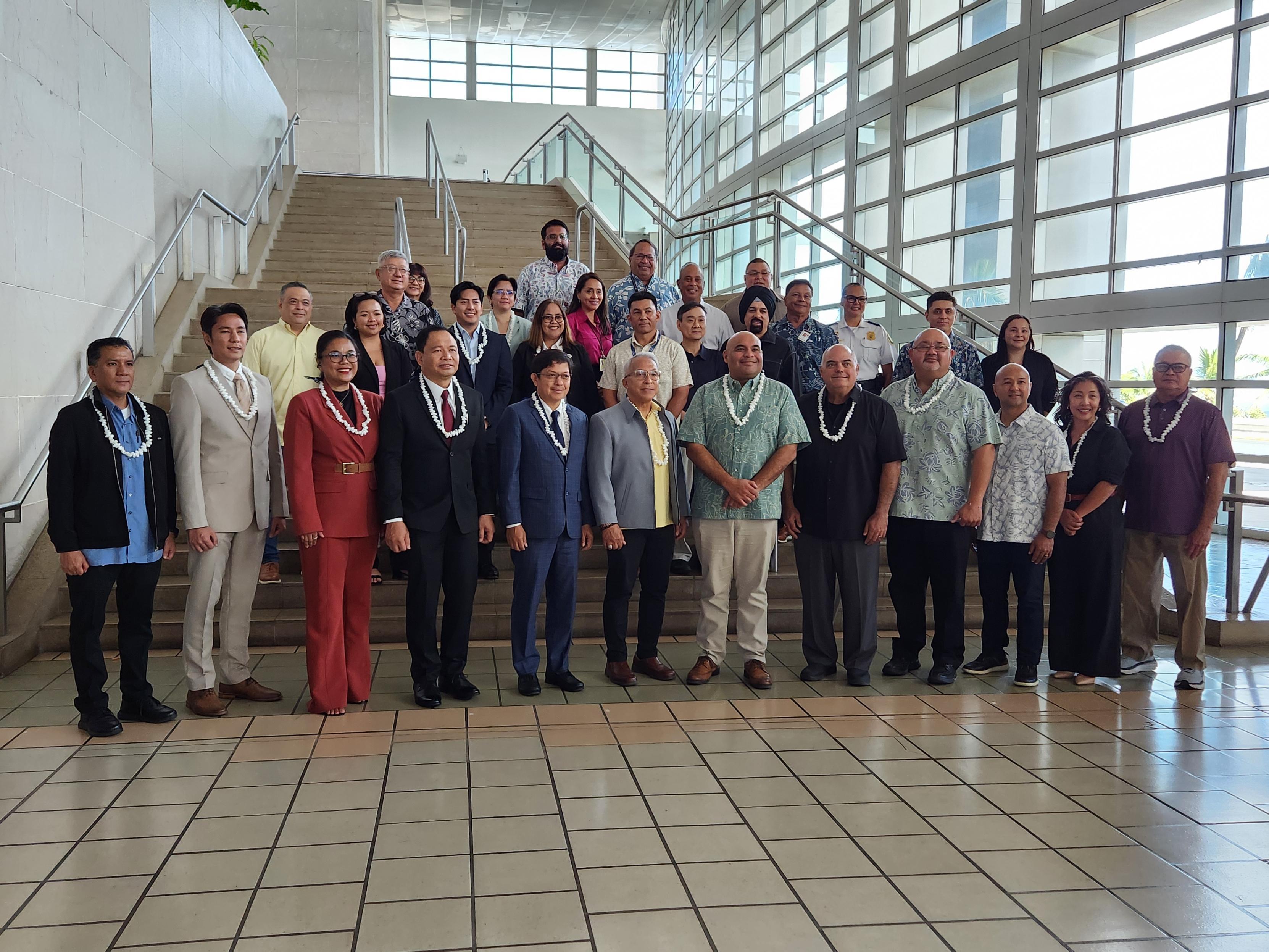
Regional leaders, government officials, and industry executives gathered at the Guam International Airport Authority on Wednesday, July 22 for the inaugural session of the Guam-CNMI Visa Waiver Working Group, driving a unified regional effort to expand the Guam-CNMI Visa Waiver Program to include the Philippines.
The joint task force brings together key stakeholders from Guam, the Northern Mariana Islands, and the Philippines to assemble the security safeguards, administrative frameworks, and economic data required to secure federal approval from the U.S. Department of Homeland Security.
Sen. Jesse Lujan, chairman of the Committee on Tourism, Transportation, Customs, Utilities, Federal and Foreign Affairs of the 38th Guam Legislature, opened the meeting by highlighting the historic alignment between Guam, the Philippines and the CNMI as they advocate with a single voice. "Economic opportunities and border security are not competing priorities. They go hand in hand," Lujan said, adding that expanding travel access strengthens existing connections built on family, history, commerce, tourism, education, and military partnerships.
Presenting economic data during the summit, Roseann M. Jones, dean and professor of economics at the University of Guam School of Business and Public Administration, outlined structural concentration risks facing the regional visitor market.
According to Jones economic data, Guam welcomed 781,532 visitors in calendar year 2025, up 5.8% from the previous year, but well below pre-pandemic peak levels of approximately 1.6 million visitors. Jones noted that roughly four out of five visitors to Guam currently arrive from just two source markets, Korea and Japan, exposing the regional visitor economy to significant concentration risk while military buildup activity masks underlying market vulnerabilities.
Meanwhile, scheduled air-seat capacity in the NMI collapsed by 67%, plummeting from approximately 760,000 seats in fiscal year 2018 to roughly 250,000 seats in fiscal year 2025. To build market diversification, proponents are targeting the Philippines as the largest untapped visitor market within a four-hour flight radius.
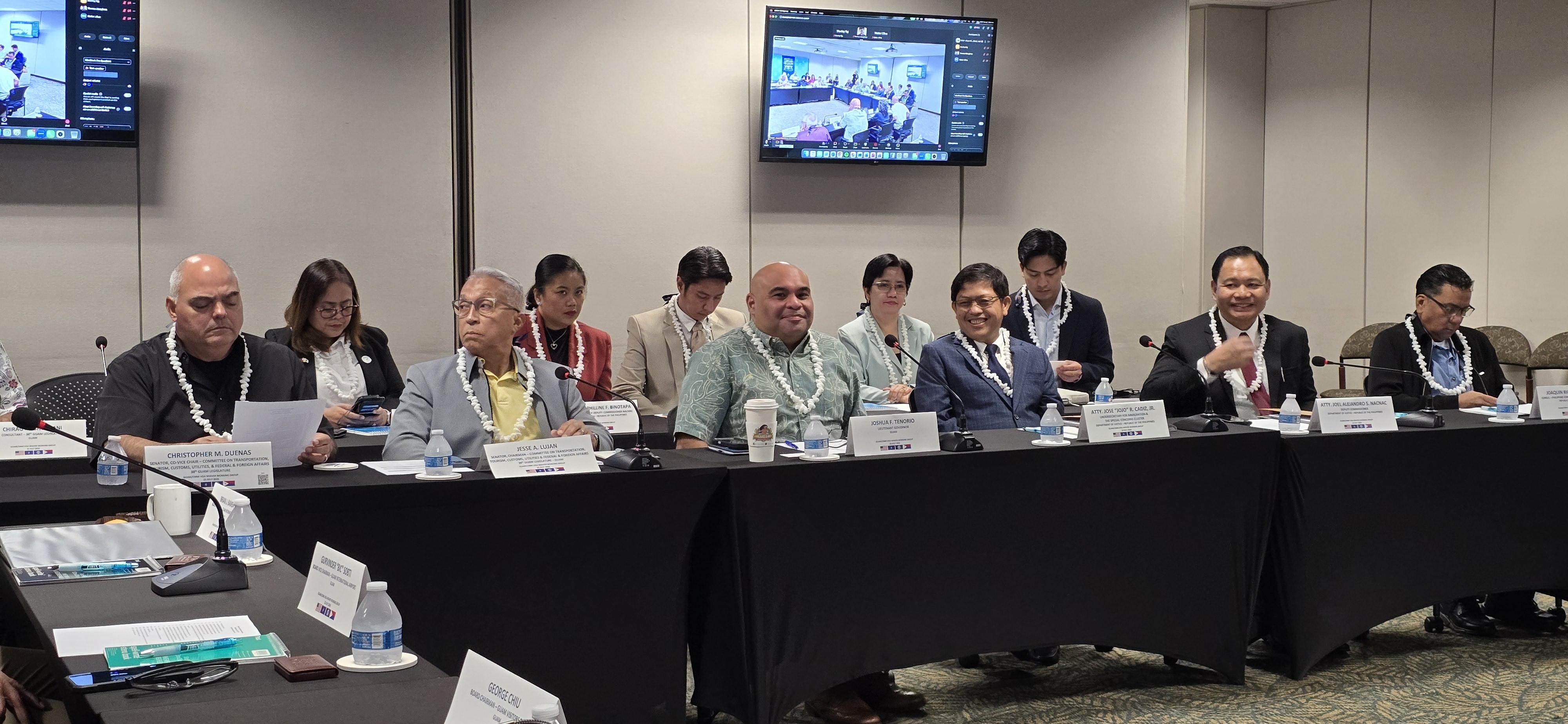
Working group baseline data indicates that approximately 25,000 Philippine visitors arrive in Guam annually despite full visa application costs and processing friction, while roughly 35,000 Guam residents travel to the Philippines each year. Under Jones’ central economic model, granting short-term, visa-free entry for business or pleasure for up to 45 days under Section 212(l) of the Immigration and Nationality Act would double annual Philippine visitor arrivals, generating $11.3 million in new direct visitor spending annually and between $55 million and $60 million over five years.
The administrative request, previously submitted in a joint letter to federal cabinet officials by Gov. Lourdes A. Leon Guerrero, and then CNMI Gov. Arnold Palacios, seeks a strictly bounded tourist waiver that prohibits local employment, study, or onward travel to the U.S. mainland.
Addressing federal compliance requirements, Atty. Joel Alejandro S. Nacnac, deputy commissioner of the Philippine Bureau of Immigration, detailed ongoing reforms within the bureau, including biometric e-passport controls, electronic travel authorization compliance, and automated data sharing with international law enforcement databases.
“We share Guam, CNMI and regional commitment, the expanding lawful travel, boosting tourism, fostering economic prosperity and supporting family connections.” Atty. Nacnac said. “Ultimately, our deep historical, cultural, economic and people-to-people ties serve as the bedrock of this enduring bilateral bond. Our meeting today is a clear testament, our openness and willingness to work together to solidify our partnership.”
The working group will now focus on drafting a four-part action plan consisting of a joint data protocol, a security safeguards architecture, a phased pilot program design, and an economic monitoring plan to present to federal partners in Washington, D.C. mbj
Journal Staff
Regional leaders, government officials, and industry executives gathered at the Guam International Airport Authority on Wednesday, July 22 for the inaugural session of the Guam-CNMI Visa Waiver Working Group, driving a unified regional effort to expand the Guam-CNMI Visa Waiver Program to include the Philippines.
The joint task force brings together key stakeholders from Guam, the Northern Mariana Islands, and the Philippines to assemble the security safeguards, administrative frameworks, and economic data required to secure federal approval from the U.S. Department of Homeland Security.
Sen. Jesse Lujan, chairman of the Committee on Tourism, Transportation, Customs, Utilities, Federal and Foreign Affairs of the 38th Guam Legislature, opened the meeting by highlighting the historic alignment between Guam, the Philippines and the CNMI as they advocate with a single voice. "Economic opportunities and border security are not competing priorities. They go hand in hand," Lujan said, adding that expanding travel access strengthens existing connections built on family, history, commerce, tourism, education, and military partnerships.
Presenting economic data during the summit, Roseann M. Jones, dean and professor of economics at the University of Guam School of Business and Public Administration, outlined structural concentration risks facing the regional visitor market.
According to Jones economic data, Guam welcomed 781,532 visitors in calendar year 2025, up 5.8% from the previous year, but well below pre-pandemic peak levels of approximately 1.6 million visitors. Jones noted that roughly four out of five visitors to Guam currently arrive from just two source markets, Korea and Japan, exposing the regional visitor economy to significant concentration risk while military buildup activity masks underlying market vulnerabilities.
Meanwhile, scheduled air-seat capacity in the NMI collapsed by 67%, plummeting from approximately 760,000 seats in fiscal year 2018 to roughly 250,000 seats in fiscal year 2025. To build market diversification, proponents are targeting the Philippines as the largest untapped visitor market within a four-hour flight radius.
Working group baseline data indicates that approximately 25,000 Philippine visitors arrive in Guam annually despite full visa application costs and processing friction, while roughly 35,000 Guam residents travel to the Philippines each year. Under Jones’ central economic model, granting short-term, visa-free entry for business or pleasure for up to 45 days under Section 212(l) of the Immigration and Nationality Act would double annual Philippine visitor arrivals, generating $11.3 million in new direct visitor spending annually and between $55 million and $60 million over five years.
The administrative request, previously submitted in a joint letter to federal cabinet officials by Gov. Lourdes A. Leon Guerrero, and then CNMI Gov. Arnold Palacios, seeks a strictly bounded tourist waiver that prohibits local employment, study, or onward travel to the U.S. mainland.
Addressing federal compliance requirements, Atty. Joel Alejandro S. Nacnac, deputy commissioner of the Philippine Bureau of Immigration, detailed ongoing reforms within the bureau, including biometric e-passport controls, electronic travel authorization compliance, and automated data sharing with international law enforcement databases.
“We share Guam, CNMI and regional commitment, the expanding lawful travel, boosting tourism, fostering economic prosperity and supporting family connections.” Atty. Nacnac said. “Ultimately, our deep historical, cultural, economic and people-to-people ties serve as the bedrock of this enduring bilateral bond. Our meeting today is a clear testament, our openness and willingness to work together to solidify our partnership.”
The working group will now focus on drafting a four-part action plan consisting of a joint data protocol, a security safeguards architecture, a phased pilot program design, and an economic monitoring plan to present to federal partners in Washington, D.C. mbj