SUSUPE, Saipan — The Northern Mariana Islands has lost more than half of its workforce over the past two decades, while businesses continue to struggle with worker shortages and the outmigration of skilled residents, according to a recent U.S. Government Accountability Office report and local stakeholders.
In its report in May, the GAO found that the number of workers in the commonwealth fell by roughly 28,000, or 56%, between 2004 and 2024. The decline coincided initially with the collapse of the garment industry. More recent factors were Super Typhoon Yutu, the Covid 19 pandemic, the closure of the casino industry, and the prolonged downturn in tourism.
WiseJoshua Wise, pharmacist and general manager of PHI Pharmacy, and president of the Saipan Chamber of Commerce, said the numbers reflect what employers have been experiencing firsthand.
“The chamber’s view is that the CNMI’s workforce has been shrinking for years, and the latest GAO report reinforces what employers have been experiencing for some time. Businesses across our islands are facing smaller applicant pools, longer vacancies, and additional strain on existing staff,” he said.
Wise said shortages are especially apparent in construction, hospitality, healthcare, skilled trades, maintenance, and technical positions.
The workforce contraction is closely tied to the NMI’s broader population and economic decline. The population dropped from 53,800 in 2010 to 47,300 in 2020, according to U.S. Census figures cited by GAO, and officials estimate the population has continued to decline since then. The number of workers in 2024 also remained below its 2019 level.
Worldometer estimates the population this year at 42,914.
Outmigration is making the problem more difficult. GAO said greater economic opportunities in Guam and the U.S. mainland continue to draw skilled local workers away from the NMI. A 2025 survey commissioned by the NMI government found that 20% of respondents planned to move away from the territory within the following year.
“At the same time, we continue to see out migration of experienced local workers seeking better pay and opportunity elsewhere, and for a small island economy, even modest outmigration has an outsized impact,” Wise said.
The problem extends to efforts to develop new industries. GAO reported that workforce training initiatives in construction and information technology have had limited success, partly because graduates frequently receive offers for higher-paying jobs off island. Officials also said a shortage of skilled local workers has hampered efforts to leverage military investment for economic diversification.
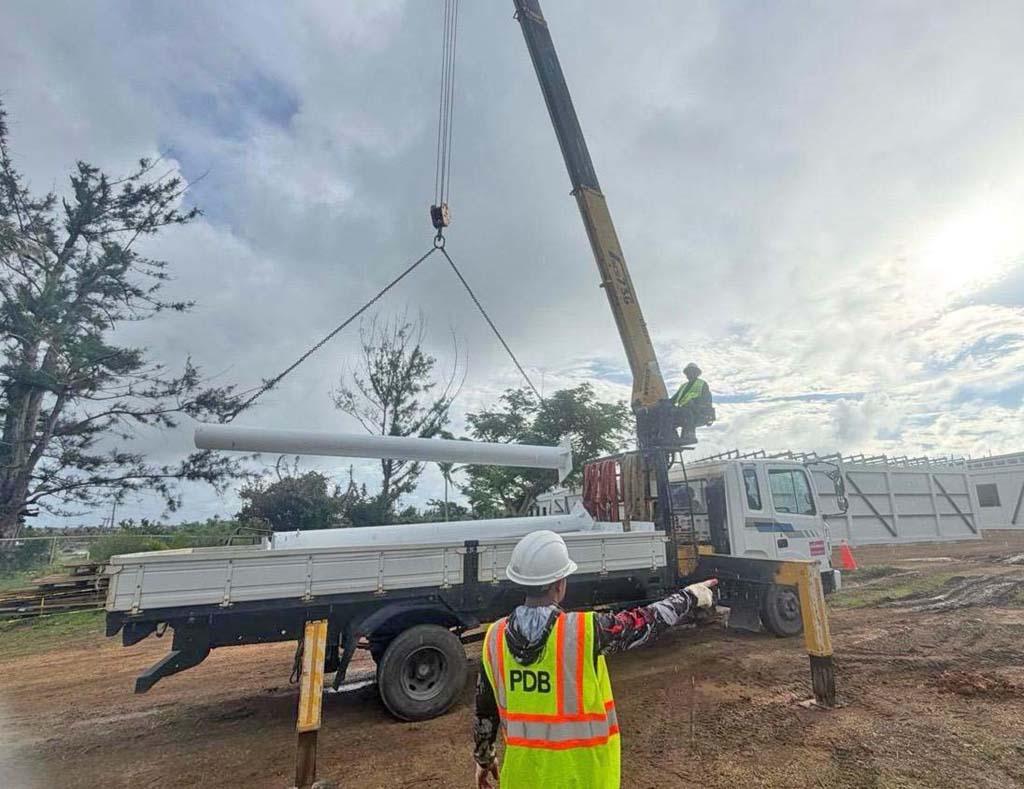
Construction is one of the industries in the Northern Marianas challenged by a lack of labor. Photo by Mark Rabago
Construction has been particularly affected. From fiscal years 2020 through 2024, construction jobs were consistently the most advertised positions on the NMI Department of Labor job board. Yet most CW-1 workers are restricted from taking construction jobs, while local workers have not gravitated toward those positions, according to officials interviewed by GAO.
The commonwealth’s continuing shortage of resident workers has left foreign labor as a significant part of the economy.
GAO found that foreign workers accounted for at least 31% of the NMI workforce on average between 2020 and 2024. Their share ranged from at least 29% to at least 34% during that period. In 2024, the commonwealth had about 7,220 foreign workers, representing approximately 32% of all workers.
Most foreign workers in 2024 were from the Philippines, followed by China and South Korea.
GAO’s foreign-worker figures are broader than the CW-1 program alone. Its classifications were based on NMI tax data and the definition of a U.S. worker under the Northern Mariana Islands U.S. Workforce Act of 2018.
RodeoCW advocate Kelvin Rodeo said the figures demonstrate how deeply foreign workers remain embedded in the commonwealth’s economy. “The GAO report makes clear that foreign workers are not peripheral to the CNMI economy; they remain a major part of it,” Rodeo said.
GAO similarly found that there are not enough local U.S. workers with the necessary skills to meet current economic needs and that economic recovery would require additional workers from outside the commonwealth.
Wise said workforce policy therefore should be viewed in a broader context.
“This should not be framed as a choice between local or foreign workers. In an ideal world, it’s about investing in education, apprenticeships, and opportunities for U.S. workers while also recognizing the immediate realities of a small island economy,” he said.
The issue is becoming more urgent because the CW-1 program is scheduled to end Dec. 31, 2029, unless the U.S. Congress extends it.
GAO warned that ending the program without an alternative could worsen labor shortages. Business leaders interviewed by GAO said hotels, for example, could have insufficient employees to maintain operations and might have to reduce services, potentially further weakening tourism. The report also noted that about 1,500 business establishments were recorded in the NMI in the 2022 Island Area Economic Census and that NMI Commerce officials said 140 businesses had closed since 2024.
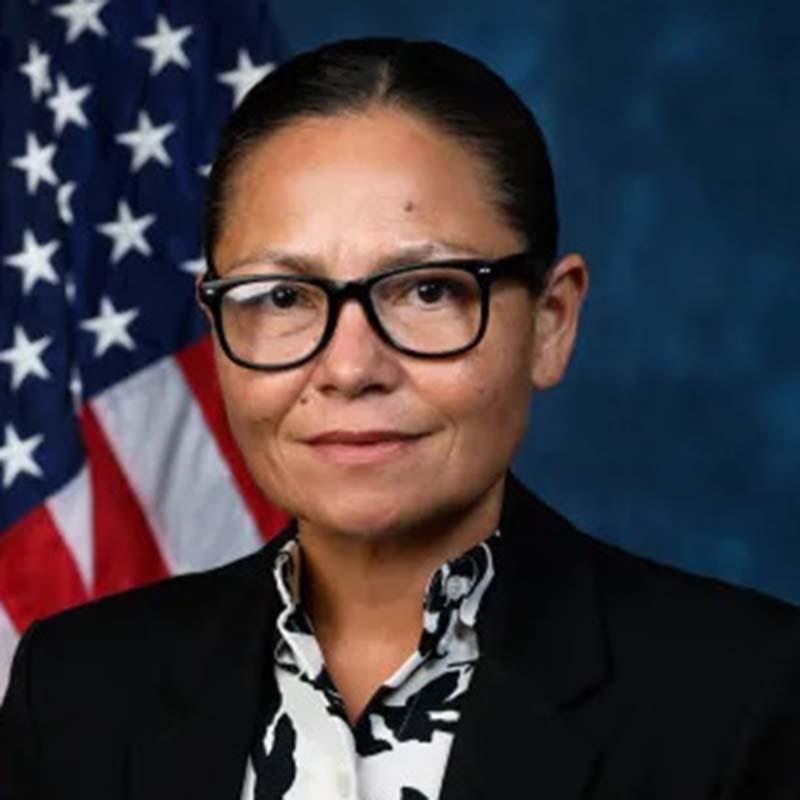
Kimberlyn King-Hinds, the NMI’s delegate to Congress, said the GAO findings come as policymakers consider what should follow the existing transition program.
King-Hinds“GAO, in its role as the nonpartisan research arm of Congress, found that the CNMI continues to rely on the presence of foreign workers to support its economy and that this reliance is expected to continue into the future,” she said.
The need has become even more pressing as the NMI recovers from Super Typhoons Sinlaku and Bavi, with workers needed for rebuilding and infrastructure repairs, she said.
King-Hinds pointed to the proposed Northern Mariana Islands Labor Stabilization Act and said the remaining years before the current program expires should be used to develop a unified CNMI position.
“I am committed to working with local stakeholders, federal partners, and the administration to ensure that we extend the program but also make necessary changes that will better position the Commonwealth for growth,” she said.
Rodeo, meanwhile, favors going beyond another extension of the temporary worker program. He said Congress should establish a pathway to lawful permanent residency, and ultimately eligibility for U.S. citizenship, for qualifying long-term foreign workers who have spent years or decades in the commonwealth.
“This doesn't require choosing between local workers and foreign workers. We should absolutely continue investing in education, apprenticeships, vocational training, higher wages and opportunities that encourage U.S. workers to remain in the CNMI,” he said.
GAO recommended that the U.S. Department of the Interior, working with the departments of Labor and Homeland Security, the NMI government, and other appropriate federal agencies, study the risks associated with the end of the CW-1 program and identify options for addressing them. The NMI government agreed with the recommendation and stressed the need for timely action to stabilize the workforce and prevent further economic decline.
The Journal reached out to the NMI Department of Labor for comment on the report but had not received a response as of press time.
For employers, Wise said certainty is needed well before 2029 because hiring and investment decisions are made years in advance.
“Our goal should be a long-term strategy that supports economic growth, provides certainty for employers, and creates greater opportunities for the people of the commonwealth,” he said. mbj
Just hours after Super Typhoon Champi passed south of Guam, President Donald Trump approved Gov. Lourdes A. Leon Guerrero's request for an emergency declaration, which authorizes the Department of Homeland Security's Federal Emergency Management Agency to coordinate emergency assistance.
SAIPAN, Northern Mariana Islands — For a growing number of Northern Mariana Islands entrepreneurs, a folding tent, a table, some inventory, and a few hours in front of a weekend crowd can be the first step toward something much bigger.
The Marianas are bracing for severe weather as Tropical Storm Champi steadily strengthens east of the region, prompting weather authorities to issue typhoon watches and forcing local tourism officials to postpone major regional events.