













BY DANIEL M. PEREZ
Journal Staff
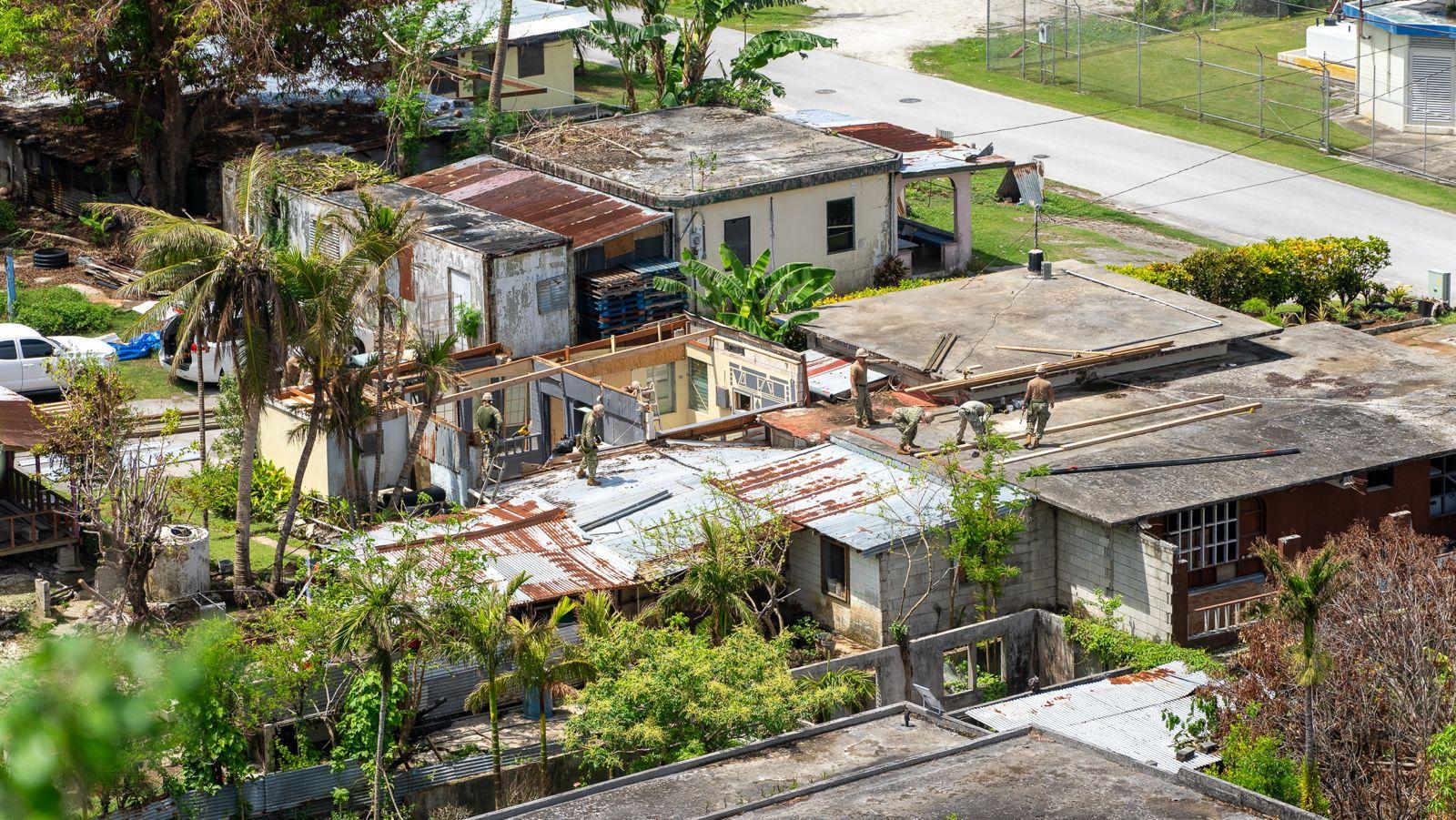
CAPITOL HILL, Saipan — Utility restoration and commercial transit infrastructure across the Northern Mariana Islands are nearing stabilization following Super Typhoon Sinlaku, though significant electrical grid damage continues to suppress recovery on Tinian.
According to a situational report released by the NMI Joint Information Center, 98% of the primary power lines on Saipan have been energized. The island's total available power generation capacity has reached 34.7 megawatts. This capacity surpasses the pre-typhoon peak demand of 30 megawatts, though full power delivery remains contingent upon ongoing distribution repairs to damaged power poles, transmission infrastructure, and lateral lines across local villages.
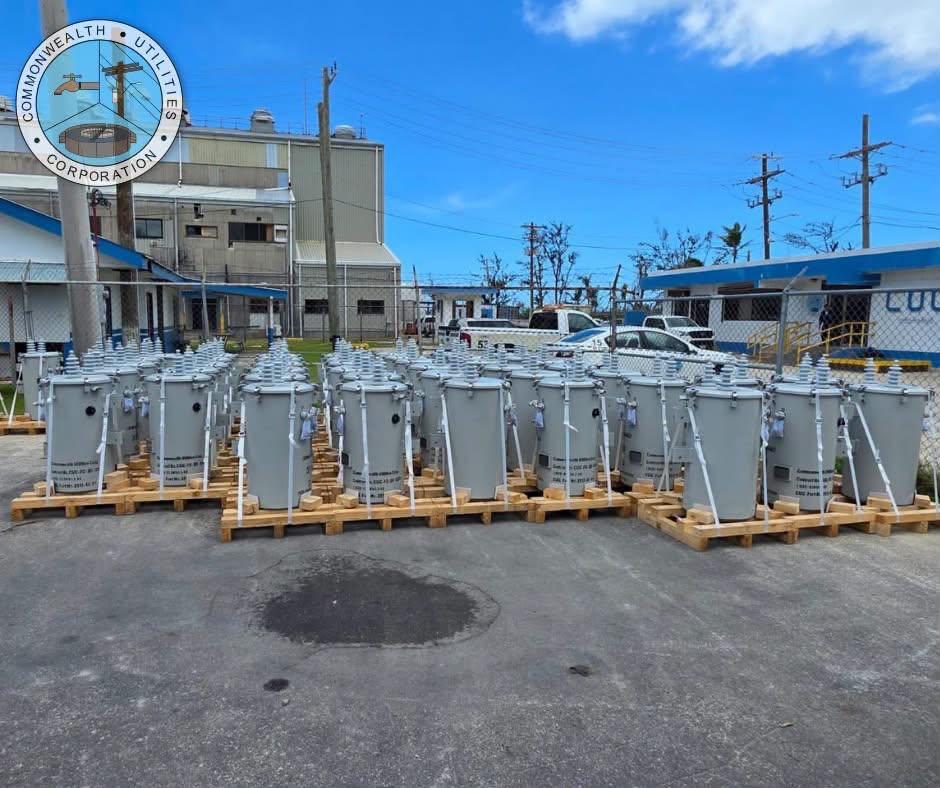
While power generation has stabilized, the Commonwealth Utilities Corp. continues to address extensive physical damage on Saipan, which includes 631 downed power poles, 552 disabled transformers, and 705 damaged crossarms.
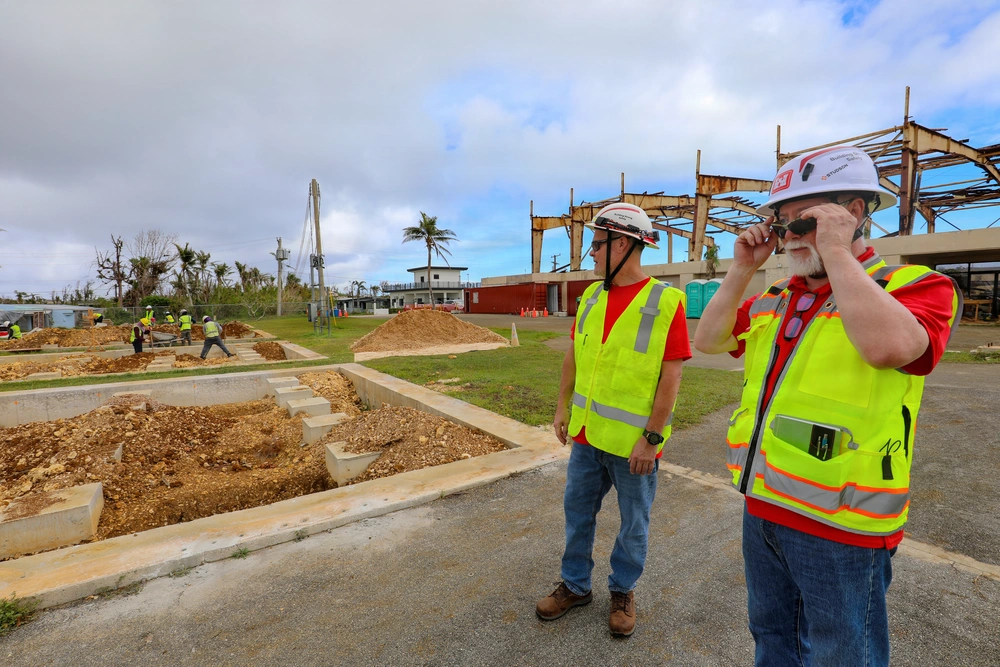
As of May 18, crews have replaced 107 poles and completed the energization of primary mainlines across multiple feeders, including feeders one, two, three, four, and seven. These efforts have successfully restored power to critical water and wastewater facilities, such as the Sadog Tasi Wastewater Treatment Plant and multiple lift stations, though restoration work on secondary laterals remains in progress.
Water services on Saipan have also seen substantial recovery, with total production reaching 9.7 million gallons per day, or 84% of the island's standard 11.5 million gallons per day capacity. Approximately 90% of Saipan customers have been returned to 24-hour water service, while 10% receive non-24-hour service depending on tank levels and backup power availability.
Currently, 73% of the island's wells and facilities are online, with 25 operating on the power grid, 31 powered by utility generators, and 43 running on FEMA generators. Despite these advancements, a boil water notice remains in effect for all Saipan consumers. Even as broader recovery moves forward, localized utility challenges persist. On Tuesday, May 19, CUC Executive Director Kevin O. Watson announced an emergency water service interruption for portions of San Vicente from 9:00 a.m. to 4:00 p.m. The planned outage was executed to allow sufficient time for the Papago Water Tank to regain normal water distribution levels. CUC officials cautioned that customers in the affected area would experience low to no water pressure during those hours, with water lines requiring up to two hours to fully repressurize once service resumed. Motorists traveling through San Vicente were also advised to reduce speeds and drive with caution to ensure the safety of working utility crews.
In stark contrast, the recovery timeline on Tinian remains constrained. Although feeder assessments are 90% complete, all power feeders on Tinian remain offline, leaving 1,059 customers without power. Damage assessments confirmed 111 downed poles, 55 disabled transformers, 89 damaged streetlights, 116 broken residential weather heads, and 53,164 linear feet of downed aluminum conductors.
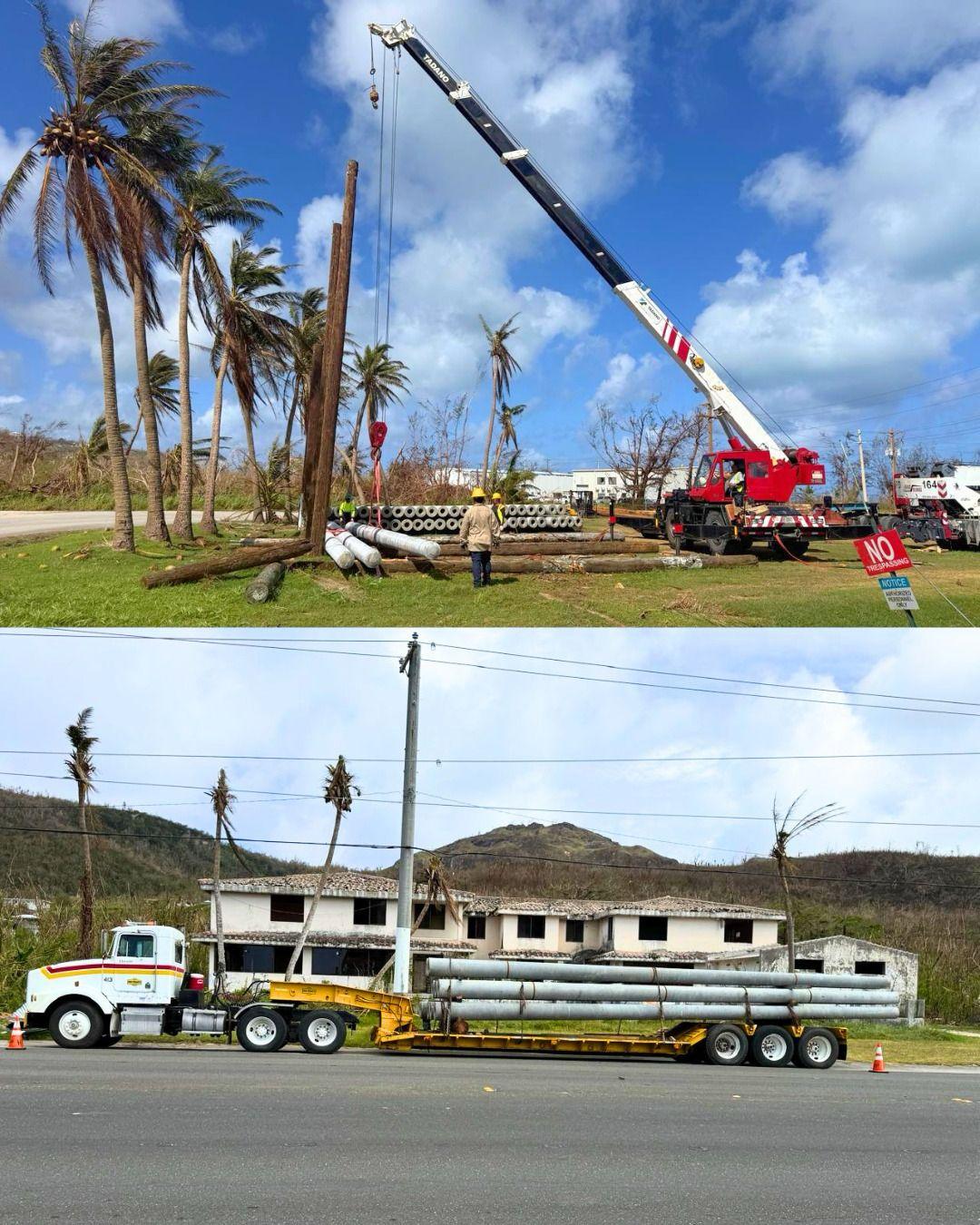
Joint teams from the utility company and the Guam Power Authority are currently working to repair the distribution network, replace conductors, and transition the clinic infrastructure to a higher-voltage system. Tinian's water services are 99% online with the Maui two well running on a backup generator, and the island's boil water notice was officially canceled as of May 06.
Commercial transportation hubs across the NMI are largely functional, supporting ongoing humanitarian and cargo logistics. The Port of Saipan and the Port of Tinian are fully open for commercial traffic with unrestricted cargo operations, while the Rota West Harbor remains partially restricted, with one berth limited and another suspended.
The Saipan International Airport is operating under limited daytime conditions utilizing generator power, enabling the resumption of United Airlines service from Guam and inter-island flights. Rota International Airport is fully open and operational under normal conditions, whereas Tinian International Airport remains restricted to humanitarian flights only due to an ongoing generator issue.
Public transportation and emergency housing services continue to assist displaced residents across the municipalities. The Commonwealth Office of Transit Authority has conducted 1,012 transports since April 10, maintaining a modified daylight schedule for its fixed routes on Saipan and providing fare-free demand-response services on Rota and Tinian through a grant-funded pilot program.
Meanwhile, the total NMI shelter population has decreased to 139 individuals residing across congregate facilities and non-congregate sheltering sites, down by 56 clients from previous counts. Government health clinics, public health programs, and specialized medical centers have also restored regular operating schedules to support long-term community recovery. mbj
Journal Staff
CAPITOL HILL, Saipan — Utility restoration and commercial transit infrastructure across the Northern Mariana Islands are nearing stabilization following Super Typhoon Sinlaku, though significant electrical grid damage continues to suppress recovery on Tinian.
According to a situational report released by the NMI Joint Information Center, 98% of the primary power lines on Saipan have been energized. The island's total available power generation capacity has reached 34.7 megawatts. This capacity surpasses the pre-typhoon peak demand of 30 megawatts, though full power delivery remains contingent upon ongoing distribution repairs to damaged power poles, transmission infrastructure, and lateral lines across local villages.
While power generation has stabilized, the Commonwealth Utilities Corp. continues to address extensive physical damage on Saipan, which includes 631 downed power poles, 552 disabled transformers, and 705 damaged crossarms.
As of May 18, crews have replaced 107 poles and completed the energization of primary mainlines across multiple feeders, including feeders one, two, three, four, and seven. These efforts have successfully restored power to critical water and wastewater facilities, such as the Sadog Tasi Wastewater Treatment Plant and multiple lift stations, though restoration work on secondary laterals remains in progress.
Water services on Saipan have also seen substantial recovery, with total production reaching 9.7 million gallons per day, or 84% of the island's standard 11.5 million gallons per day capacity. Approximately 90% of Saipan customers have been returned to 24-hour water service, while 10% receive non-24-hour service depending on tank levels and backup power availability.
Currently, 73% of the island's wells and facilities are online, with 25 operating on the power grid, 31 powered by utility generators, and 43 running on FEMA generators. Despite these advancements, a boil water notice remains in effect for all Saipan consumers. Even as broader recovery moves forward, localized utility challenges persist. On Tuesday, May 19, CUC Executive Director Kevin O. Watson announced an emergency water service interruption for portions of San Vicente from 9:00 a.m. to 4:00 p.m. The planned outage was executed to allow sufficient time for the Papago Water Tank to regain normal water distribution levels. CUC officials cautioned that customers in the affected area would experience low to no water pressure during those hours, with water lines requiring up to two hours to fully repressurize once service resumed. Motorists traveling through San Vicente were also advised to reduce speeds and drive with caution to ensure the safety of working utility crews.
In stark contrast, the recovery timeline on Tinian remains constrained. Although feeder assessments are 90% complete, all power feeders on Tinian remain offline, leaving 1,059 customers without power. Damage assessments confirmed 111 downed poles, 55 disabled transformers, 89 damaged streetlights, 116 broken residential weather heads, and 53,164 linear feet of downed aluminum conductors.
Joint teams from the utility company and the Guam Power Authority are currently working to repair the distribution network, replace conductors, and transition the clinic infrastructure to a higher-voltage system. Tinian's water services are 99% online with the Maui two well running on a backup generator, and the island's boil water notice was officially canceled as of May 06.
Commercial transportation hubs across the NMI are largely functional, supporting ongoing humanitarian and cargo logistics. The Port of Saipan and the Port of Tinian are fully open for commercial traffic with unrestricted cargo operations, while the Rota West Harbor remains partially restricted, with one berth limited and another suspended.
The Saipan International Airport is operating under limited daytime conditions utilizing generator power, enabling the resumption of United Airlines service from Guam and inter-island flights. Rota International Airport is fully open and operational under normal conditions, whereas Tinian International Airport remains restricted to humanitarian flights only due to an ongoing generator issue.
Public transportation and emergency housing services continue to assist displaced residents across the municipalities. The Commonwealth Office of Transit Authority has conducted 1,012 transports since April 10, maintaining a modified daylight schedule for its fixed routes on Saipan and providing fare-free demand-response services on Rota and Tinian through a grant-funded pilot program.
Meanwhile, the total NMI shelter population has decreased to 139 individuals residing across congregate facilities and non-congregate sheltering sites, down by 56 clients from previous counts. Government health clinics, public health programs, and specialized medical centers have also restored regular operating schedules to support long-term community recovery. mbj