














BY DANIEL M. PEREZ
Journal Staff
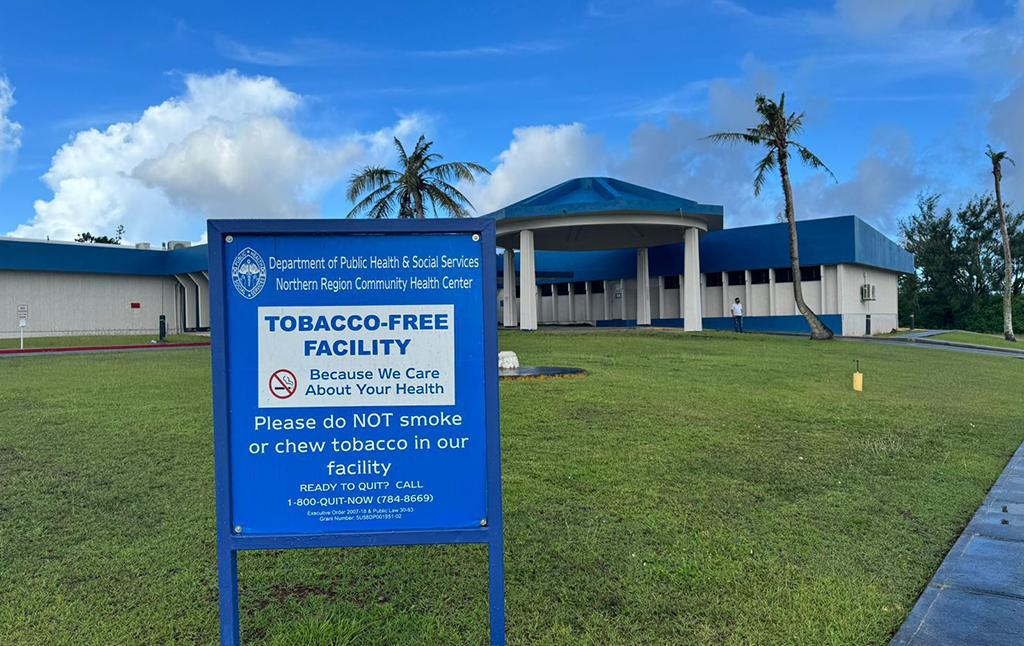
HAGÅTÑA, Guam — The Department of Public Health and Social Services is executing a major structural centralization of its sprawling divisions through newly secured commercial leases, a transition unfolding alongside a massive operational surge driven by the expiration of federal welfare waivers.
During a legislative oversight hearing, Teresa M. Arriola, director of the Department of Public Health and Social Services, detailed the agency's new multi-year agreements designed to bring fragmented divisions together under unified roofs.
Under the updated transition plan, the Division of General Administration will relocate to ParkPlace, while the Division of Public Welfare has secured a two-year lease at the University Castle Mall with a three-year option to renew. The agency is actively working on separate solicitations for its remaining units, though specialized facilities, including the federally certified Public Health Laboratory, will remain stationed at its current site until a permanent facility opens in Mangilao this August.
Arriola explained that consolidation was necessary to break down organizational bottlenecks, noting that keeping administrative teams physically separated "made it very difficult for collaboration" across the agency's diverse programs. The massive relocation strategy coincides with a severe administrative bottleneck following the March implementation of the Supplemental Nutrition Assistance Program able-bodied adults without dependents work requirements.
After a long-standing federal waiver expired, beneficiaries were given three months to comply with a mandatory 20-hour weekly work or volunteer threshold. The sudden policy shift triggered an immediate wave of unregistered clients visiting local offices as reductions hit their Electronic Benefit Transfer cards. The agency recorded 567 in-person visitors during the first four days of June, a dramatic increase compared to the 250 visitors recorded over the exact same period in May.
"Oversight is not about assigning blame," said Sabrina Salas Matanane, chairperson of the Committee on Health and Veterans Affairs at the 38th Guam Legislature. Matanane emphasized that the goal of the legislative inquiry was to guarantee "accountability, transparency, and ensuring that government programs and services are working effectively for the people that we serve." Despite the administrative strain caused by the new food assistance mandates, Arriola revealed that Guam has found major success in other federal sectors.
The federal government recently commended the island for its Temporary Assistance for Needy Families program, where Guam achieved a 5.6% overall participation rate and an 18.1% rate for two-parent families, easily surpassing the adjusted federal targets of 0% and 9.5%, respectively. To optimize its remaining resources, the department has entered a memorandum of understanding with the State of West Virginia to leverage and reuse its established project management software infrastructure, cutting down on modernization costs.
The agency is also finalizing a department-wide website reconstruction funded through a seven-year federal grant. According to administrative officials, the digital portal is undergoing final divisional reviews and is scheduled to go live within approximately three weeks. mbj
Journal Staff
HAGÅTÑA, Guam — The Department of Public Health and Social Services is executing a major structural centralization of its sprawling divisions through newly secured commercial leases, a transition unfolding alongside a massive operational surge driven by the expiration of federal welfare waivers.
During a legislative oversight hearing, Teresa M. Arriola, director of the Department of Public Health and Social Services, detailed the agency's new multi-year agreements designed to bring fragmented divisions together under unified roofs.
Under the updated transition plan, the Division of General Administration will relocate to ParkPlace, while the Division of Public Welfare has secured a two-year lease at the University Castle Mall with a three-year option to renew. The agency is actively working on separate solicitations for its remaining units, though specialized facilities, including the federally certified Public Health Laboratory, will remain stationed at its current site until a permanent facility opens in Mangilao this August.
Arriola explained that consolidation was necessary to break down organizational bottlenecks, noting that keeping administrative teams physically separated "made it very difficult for collaboration" across the agency's diverse programs. The massive relocation strategy coincides with a severe administrative bottleneck following the March implementation of the Supplemental Nutrition Assistance Program able-bodied adults without dependents work requirements.
After a long-standing federal waiver expired, beneficiaries were given three months to comply with a mandatory 20-hour weekly work or volunteer threshold. The sudden policy shift triggered an immediate wave of unregistered clients visiting local offices as reductions hit their Electronic Benefit Transfer cards. The agency recorded 567 in-person visitors during the first four days of June, a dramatic increase compared to the 250 visitors recorded over the exact same period in May.
"Oversight is not about assigning blame," said Sabrina Salas Matanane, chairperson of the Committee on Health and Veterans Affairs at the 38th Guam Legislature. Matanane emphasized that the goal of the legislative inquiry was to guarantee "accountability, transparency, and ensuring that government programs and services are working effectively for the people that we serve." Despite the administrative strain caused by the new food assistance mandates, Arriola revealed that Guam has found major success in other federal sectors.
The federal government recently commended the island for its Temporary Assistance for Needy Families program, where Guam achieved a 5.6% overall participation rate and an 18.1% rate for two-parent families, easily surpassing the adjusted federal targets of 0% and 9.5%, respectively. To optimize its remaining resources, the department has entered a memorandum of understanding with the State of West Virginia to leverage and reuse its established project management software infrastructure, cutting down on modernization costs.
The agency is also finalizing a department-wide website reconstruction funded through a seven-year federal grant. According to administrative officials, the digital portal is undergoing final divisional reviews and is scheduled to go live within approximately three weeks. mbj