











BY DANIEL M. PEREZ
Journal Staff
TAMUNING, Guam — The Guam Solid Waste Authority discontinued its bulky waste self-haul service at the Harmon, Agat, and Malojloj residential transfer stations effective June 1, officially reverting to an appointment-only curbside collection model.
Irvin Slike, general manager of the Guam Solid Waste Authority, said the policy shift followed a trial period for self-hauling white goods that exceeded the agency's budget by $341,000.
The self-drop-off option was originally enacted several months ago to address a severe scheduling backlog and internal employee attendance issues within the standard curbside program. Slike noted that the agency has since made significant progress in reducing appointment wait times and improving scheduling availability for local residents.
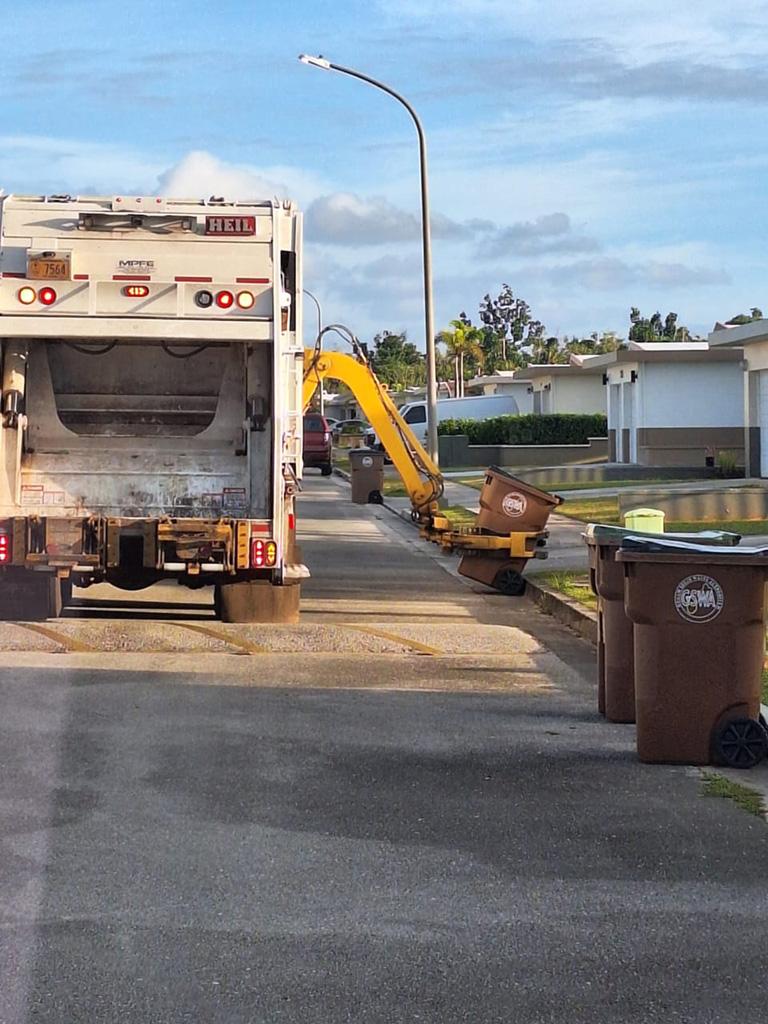
Under the reinstated curbside framework, residential customers in good standing are eligible for two free bulky waste collections per calendar year by appointment, with a limit of up to five allowable items per pickup. Non-GSWA residential customers may schedule a curbside collection of up to five items for a fee of $25. While any Guam resident can still drop off up to five non-metal bulky items, including mattresses, couches, furniture, and box springs, at the transfer stations for the $25 fee, white goods are now strictly accepted via curbside collection from registered customers. Slike explained that the authority services 21,000 households out of the 43,000 total households on the island.
The budget overrun occurred when non-paying residents bypassed regulations by borrowing customer vehicles to dump major appliances, he said.
The policy reversal drew immediate criticism from Robert Sargee, a local community cleanup organizer widely known as "Mr. Clean". In a public social media statement, Sargee warned that closing the transfer stations to self-hauled bulky waste would turn the island into a wasteland and announced that his independent cleanup initiative would halt certain island-wide trash and vehicle collections until government leaders resolve the issue.
Slike dismissed these concerns directly. "Dumping is illegal," Slike said. "So, if people choose to break the law, that's not on an agency that handles waste. That's on the person." He said the transition merely returns operations to the exact protocols utilized six months ago, which had generated no public complaints from Sargee at the time. "Free doesn't mean that it's suddenly going to solve the problem," Slike added, recalling that illegal roadside dumping persisted even when free emergency disposal sites were opened during past typhoon recovery efforts.
To address chronic illegal dumping across the island, Slike said he has held extensive discussions with local senators and the governor. The current $1,000 littering fine does not present a "credible threat" to violators because the island completely lacks enforcement, he said.
Slike proposed that Guam adopt an enforcement model similar to programs in New York City and New Jersey, where illegal dumping fines were raised to $2,000 and half of the collected amount is rewarded to citizens who provide authorities with actionable evidence.
Implementing a system driven by community diligence and reliable citizen reporting would significantly curb the problem, Slike said, noting that legal disposal alternatives at local transfer stations remain highly affordable at $7.50 or $11 per load. mbj
Journal Staff
TAMUNING, Guam — The Guam Solid Waste Authority discontinued its bulky waste self-haul service at the Harmon, Agat, and Malojloj residential transfer stations effective June 1, officially reverting to an appointment-only curbside collection model.
Irvin Slike, general manager of the Guam Solid Waste Authority, said the policy shift followed a trial period for self-hauling white goods that exceeded the agency's budget by $341,000.
The self-drop-off option was originally enacted several months ago to address a severe scheduling backlog and internal employee attendance issues within the standard curbside program. Slike noted that the agency has since made significant progress in reducing appointment wait times and improving scheduling availability for local residents.
Under the reinstated curbside framework, residential customers in good standing are eligible for two free bulky waste collections per calendar year by appointment, with a limit of up to five allowable items per pickup. Non-GSWA residential customers may schedule a curbside collection of up to five items for a fee of $25. While any Guam resident can still drop off up to five non-metal bulky items, including mattresses, couches, furniture, and box springs, at the transfer stations for the $25 fee, white goods are now strictly accepted via curbside collection from registered customers. Slike explained that the authority services 21,000 households out of the 43,000 total households on the island.
The budget overrun occurred when non-paying residents bypassed regulations by borrowing customer vehicles to dump major appliances, he said.
The policy reversal drew immediate criticism from Robert Sargee, a local community cleanup organizer widely known as "Mr. Clean". In a public social media statement, Sargee warned that closing the transfer stations to self-hauled bulky waste would turn the island into a wasteland and announced that his independent cleanup initiative would halt certain island-wide trash and vehicle collections until government leaders resolve the issue.
Slike dismissed these concerns directly. "Dumping is illegal," Slike said. "So, if people choose to break the law, that's not on an agency that handles waste. That's on the person." He said the transition merely returns operations to the exact protocols utilized six months ago, which had generated no public complaints from Sargee at the time. "Free doesn't mean that it's suddenly going to solve the problem," Slike added, recalling that illegal roadside dumping persisted even when free emergency disposal sites were opened during past typhoon recovery efforts.
To address chronic illegal dumping across the island, Slike said he has held extensive discussions with local senators and the governor. The current $1,000 littering fine does not present a "credible threat" to violators because the island completely lacks enforcement, he said.
Slike proposed that Guam adopt an enforcement model similar to programs in New York City and New Jersey, where illegal dumping fines were raised to $2,000 and half of the collected amount is rewarded to citizens who provide authorities with actionable evidence.
Implementing a system driven by community diligence and reliable citizen reporting would significantly curb the problem, Slike said, noting that legal disposal alternatives at local transfer stations remain highly affordable at $7.50 or $11 per load. mbj